 Save
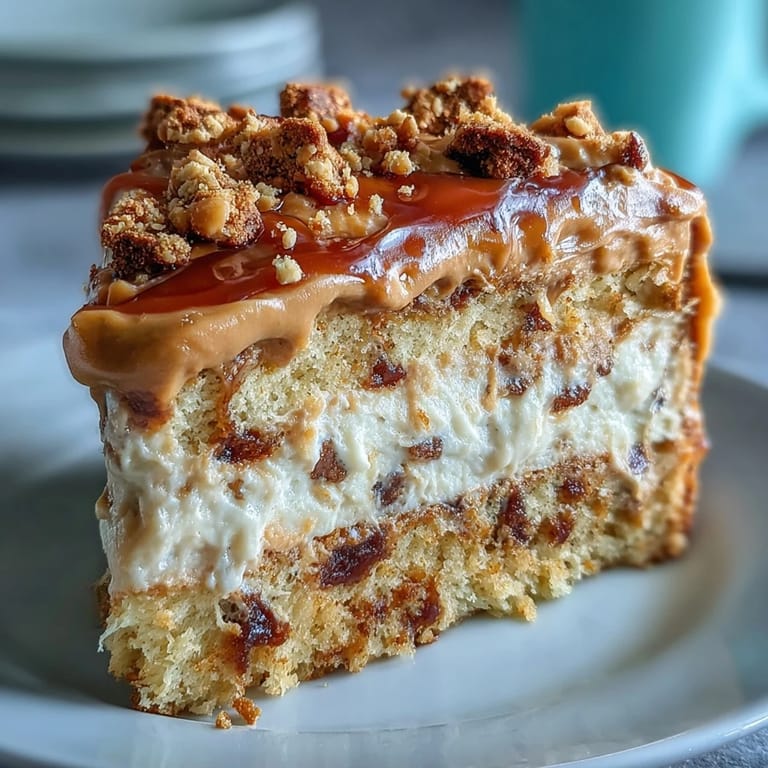
Save My sister brought a jar of Lotus spread home from a trip abroad, and I stared at it for weeks before finally stirring a spoonful into cake batter on a rainy Sunday. The kitchen smelled like cinnamon toast and caramel, and when I pulled that first cake from the oven, the edges had crisped into sweet, crackly waves. I frosted it while it was still too warm, and the buttercream slid down the sides in glossy rivers. We ate it with forks straight from the pan, and no one said a word until it was half gone.
I made this for my neighbors birthday, and she told me later she ate a slice for breakfast three days in a row. Her kids kept sneaking into the kitchen to scrape frosting off the sides with their fingers. I found one of them sitting on the floor with the cake plate in his lap, and he just looked up at me and grinned.
Ingredients
- Biscoff biscuits, crushed: These bring the signature spiced crunch and caramel notes, and I crush them by hand in a bag so some pieces stay chunky.
- All-purpose flour: The backbone of the sponge, giving structure without heaviness when you dont overmix.
- Baking powder and baking soda: Together they lift the batter into something airy and soft, with a delicate crumb that melts on your tongue.
- Salt: Just a pinch sharpens the sweetness and makes the Biscoff flavor pop.
- Unsalted butter, softened: Creaming it with sugar creates tiny air pockets that make the cake light, and it carries the vanilla and spice beautifully.
- Granulated sugar: Sweetens and helps the butter whip into a fluffy cloud, which is the secret to a tender cake.
- Large eggs: They bind everything and add richness, and adding them one at a time keeps the batter smooth and emulsified.
- Vanilla extract: A warm, floral note that supports the spiced cookies without competing.
- Whole milk: Keeps the crumb moist and tender, and I always use it at room temperature so it doesnt seize the butter.
- Lotus spread (Biscoff spread): Swirled into the batter, it creates pockets of creamy caramel that taste like melted cookies.
- Powdered sugar: Dissolves instantly into the frosting, making it silky and spreadable with no grit.
- Heavy cream or milk: Loosens the frosting to a pipeable consistency, and I add it a tablespoon at a time until it feels right.
Tired of Takeout? 🥡
Get 10 meals you can make faster than delivery arrives. Seriously.
One email. No spam. Unsubscribe anytime.
Instructions
- Prep the pan and oven:
- Preheat to 180°C (350°F) and grease your pan well, then dust it with flour or line it with parchment so the cake releases cleanly. I always tap out the excess flour over the sink.
- Combine the dry ingredients:
- Sift the flour, baking powder, baking soda, and salt into a bowl to remove lumps and aerate the mixture. This makes the cake lighter and helps everything mix evenly.
- Cream the butter and sugar:
- Beat the softened butter and granulated sugar on medium speed for 3 to 5 minutes until pale and fluffy, scraping down the sides halfway through. This step builds volume, so dont rush it.
- Add the eggs and vanilla:
- Beat in the eggs one at a time, letting each one disappear before adding the next, then stir in the vanilla. The batter should look smooth and glossy.
- Alternate the dry and wet:
- Add the flour mixture in three parts, alternating with the milk, starting and ending with flour. Mix just until you dont see streaks, because overmixing makes the cake tough.
- Fold in the Biscoff:
- Gently stir in the crushed biscuits and Lotus spread with a spatula, folding until evenly distributed. The batter will look marbled and smell like heaven.
- Bake the cake:
- Pour the batter into the pan, smooth the top, and bake for 35 to 40 minutes until a toothpick comes out clean. The edges will pull away slightly and the top will spring back when touched.
- Cool completely:
- Let the cake rest in the pan for 10 minutes, then turn it out onto a wire rack to cool fully before frosting. Frosting a warm cake will melt into a puddle.
- Make the frosting:
- Beat the softened butter until creamy, then gradually add powdered sugar on low speed to avoid a sugar cloud. Beat in the Lotus spread, cream, and salt, then whip on medium-high for 3 minutes until fluffy.
- Frost and decorate:
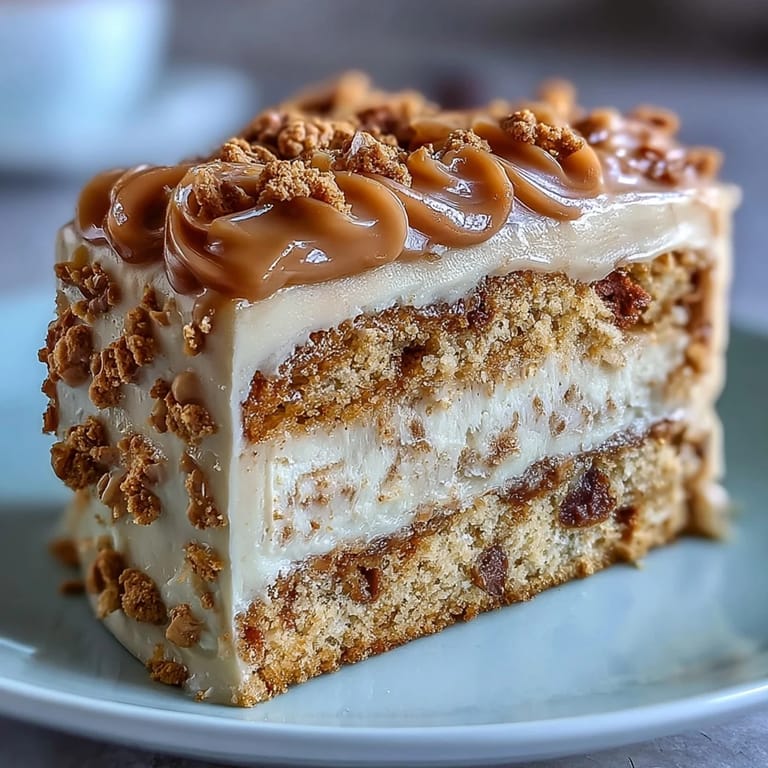
- Spread the frosting over the cooled cake with an offset spatula, swirling it into peaks or smoothing it flat. Sprinkle crushed Biscoff on top or drizzle extra Lotus spread in thin ribbons.
 Save
Save I brought this to a potluck once, and three people asked for the recipe before I even set it down. Someone cut into it while I was still getting napkins, and by the time I turned around, half the cake was gone. One woman told me she dreamed about it that night, and I believed her.
Storing and Serving
This cake sits happily on the counter under a dome or in an airtight container for up to three days, and the flavors actually deepen as the Biscoff pieces soften slightly into the crumb. I like to slice it thick and serve it with strong coffee or black tea, because the bitterness cuts through the sweetness in the best way. If you want to keep it longer, wrap individual slices in plastic and freeze them for up to a month, then thaw at room temperature for an hour.
Customizing the Flavor
You can fold a handful of chocolate chips or chopped toasted hazelnuts into the batter for extra texture, or swirl a spoonful of Nutella through the frosting for a deeper, nuttier finish. I once added a pinch of cinnamon and cardamom to the dry ingredients, and it tasted like a spiced cookie came to life. If you want a two-layer cake, double the recipe and bake in two pans, then stack them with frosting in between and on top.
Troubleshooting and Final Tips
If your cake domes too much in the center, lower the oven temperature by 10 degrees and bake a few minutes longer for a more even rise. A sunken middle usually means the batter was overmixed or the oven door was opened too early, so resist peeking until at least 30 minutes in. The frosting can be piped through a star tip for a bakery look, or spread rustic and thick for a homemade feel.
- Use room temperature ingredients for the smoothest batter and the fluffiest frosting.
- Tap the filled pan on the counter a few times before baking to release air bubbles.
- Taste the frosting before spreading it, and adjust the sweetness or salt to your liking.
 Save
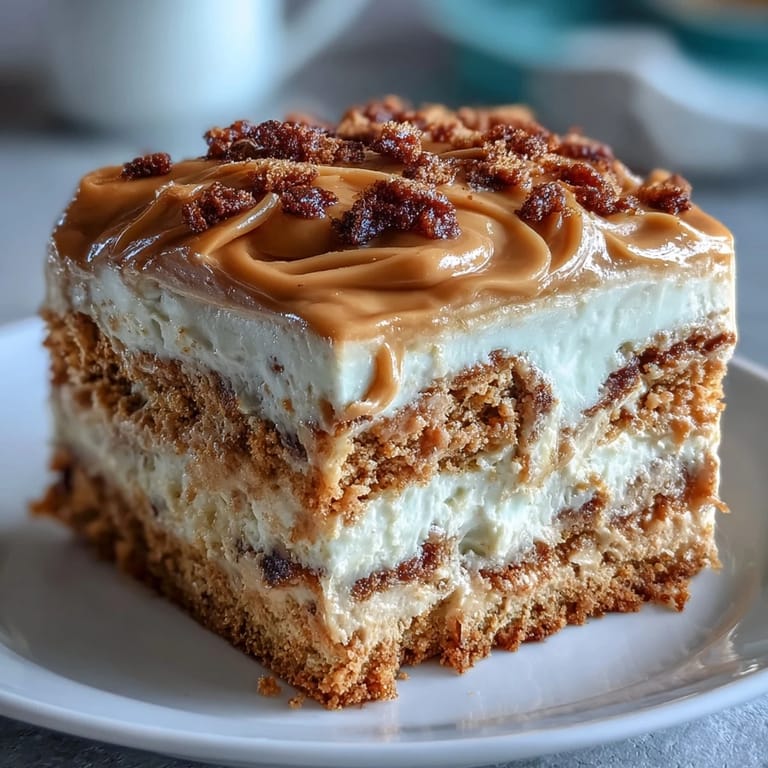
Save This cake has a way of turning quiet afternoons into small celebrations, and every time I make it, someone asks when Ill bake it again. I hope it fills your kitchen with the same warm, sweet smell and leaves crumbs on everyones plates.
Recipe FAQs
- → What makes Biscoff spread unique?
Lotus Biscoff spread is made from the same spiced caramelized biscuits that originated in Belgium. It delivers distinctive notes of cinnamon, brown sugar, and caramel that create a depth of flavor beyond typical cookie butter or nut spreads.
- → Can I make this cake ahead of time?
The unfrosted sponge can be wrapped tightly and stored at room temperature for up to 2 days. Frost fresh before serving, or complete the entire cake and store in an airtight container for up to 3 days. The flavors actually improve after resting overnight.
- → What's the best way to crush Biscoff biscuits?
Pulse whole biscuits in a food processor until you reach your desired texture. For larger crunchy pieces, pulse briefly 2-3 times. For finer crumbs similar to graham cracker crust, process longer. A rolling pin and resealable bag also work well for manual crushing.
- → Why must the cake cool completely before frosting?
Warm cake will cause the butter-based frosting to melt and slide off. Allowing the cake to cool fully—ideally 2-3 hours—ensures the frosting adheres properly and maintains its fluffy texture. You can speed cooling by refrigerating the room-temperature cake for 30 minutes.
- → Can I substitute the Lotus spread?
Speculoos cookie butter offers the closest alternative with similar spiced caramel notes. For a different flavor profile, try salted caramel sauce or chocolate hazelnut spread. However, these substitutes will alter the traditional European spiced cookie essence that makes this dessert distinctive.
- → How do I know when the cake is done baking?
Insert a toothpick into the center—it should emerge clean or with just a few moist crumbs. The edges will begin pulling away from the pan slightly, and the top will spring back when gently pressed. If the top browns too quickly, tent with foil after 25 minutes.