 Save
Save I used to think the local bistro had some secret ingredient hidden in their French onion soup until I tried making it on a rainy Tuesday. The scent of onions slowly melting in butter filled every corner of my apartment making it feel like a cozy sanctuary. It takes patience to get that deep mahogany color but the rhythm of stirring becomes almost meditative. This is not just a starter it is a labor of love that rewards you with every cheese laden spoonful.
One winter I made a massive pot for a group of friends who were shivering after a day in the snow. We sat around the kitchen island eyes watering slightly from the steam waiting for the cheese to blister under the broiler. There is something magical about the sound of a spoon cracking through a golden crust of Gruyere. It turned a cold evening into a memory of warmth and laughter that we still talk about.
Ingredients
- Yellow Onions: These provide the foundational sweetness and body that defines a classic base.
- Leeks and Shallots: Adding these elevates the flavor profile with subtle earthy and garlicky notes.
- Butter and Olive Oil: A mix of both ensures high heat tolerance while maintaining that rich dairy flavor.
- Beef Broth: Choosing a high quality broth is crucial since it forms the backbone of the entire liquid.
- Dry White Wine: The acidity cuts through the sweetness of the caramelized onions perfectly.
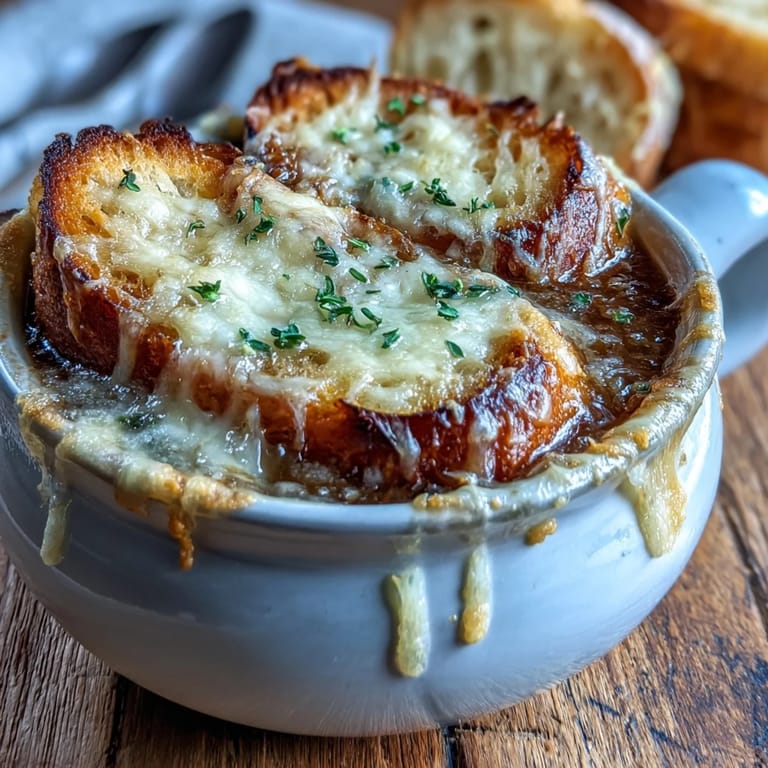
- Gruyere Cheese: Its nutty meltability is the gold standard for creating that iconic stretchy lid.
Tired of Takeout? 🥡
Get 10 meals you can make faster than delivery arrives. Seriously.
One email. No spam. Unsubscribe anytime.
Instructions
- Sweating the alliums:
- Melt your fats and toss in the onions leeks and shallots to soften slowly over medium heat. Stir frequently to ensure every piece gets coated in that rich butter and oil mixture.
- Caramelizing for color:
- Keep stirring for about 40 minutes until the mixture reaches a deep golden brown which builds the base flavor. Add the garlic at the very end to prevent it from becoming bitter.
- Deglazing the pot:
- Pour in the white wine and scrape up all those flavorful browned bits from the bottom of the pan. This step incorporates all that concentrated onion essence back into the soup.
- Simmering the soup:
- Add the broth and aromatics then let it bubble away for 30 minutes to meld the flavors together. This quiet simmering time is when the magic really happens as the liquid darkens.
- Toasting the bread:
- Slice your baguette into rounds and crisp them in the oven until they are sturdy enough to hold the cheese. A well toasted crouton prevents the bread from turning into mush immediately.
- The final broil:
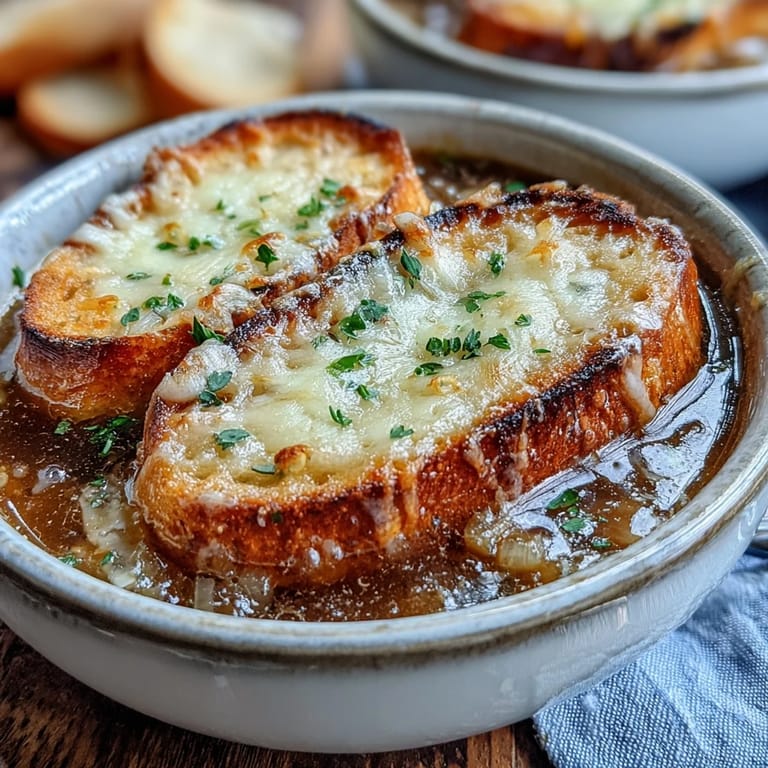
- Ladle soup into bowls top with bread and cheese then melt under the broiler until bubbly. Watch closely to catch that perfect moment when the cheese starts to brown and blister.
 Save
Save My first attempt at this resulted in a pot of very pale very salty onion water because I was too hungry to wait. Since that day I always pour a glass of the white wine for myself and turn on a podcast while the onions cook. It taught me that the best things in the kitchen usually require a bit of time and a lot of patience. Now the slow sizzle of onions is my favorite sound of a quiet weekend afternoon.
A Touch of Umami
I found that a tiny splash of soy sauce and Worcestershire sauce acts like a volume knob for the savory notes. It does not make the soup taste like steak sauce but it grounds the sweetness of the onions. Sometimes I even add a bit of cognac right before the broth if I am feeling particularly fancy. These little additions are what make a home cooked version feel better than any restaurant.
The Cheese Choice
While Gruyere is the traditional pick I have successfully experimented with Swiss and Emmental when the store was out. The key is using a cheese that melts smoothly and has a bit of a salty kick. I often throw a handful of Parmesan on top because it browns beautifully under the broiler. This creates a multi layered crust that is incredibly satisfying to break through with your spoon.
Serving and Storage
This soup actually tastes even better the next day after the flavors have had a chance to mingle in the fridge. I recommend storing the broth and onions separately from the bread and cheese to keep things fresh. Just reheat the liquid on the stove and do the broiler step right before you plan to eat.
- Keep extra baguette slices in a sealed container so they stay crunchy for leftovers.
- Always place your soup bowls on a baking sheet before putting them under the broiler.
- Use oven safe crocks to prevent any kitchen disasters with cracking ceramic.
 Save
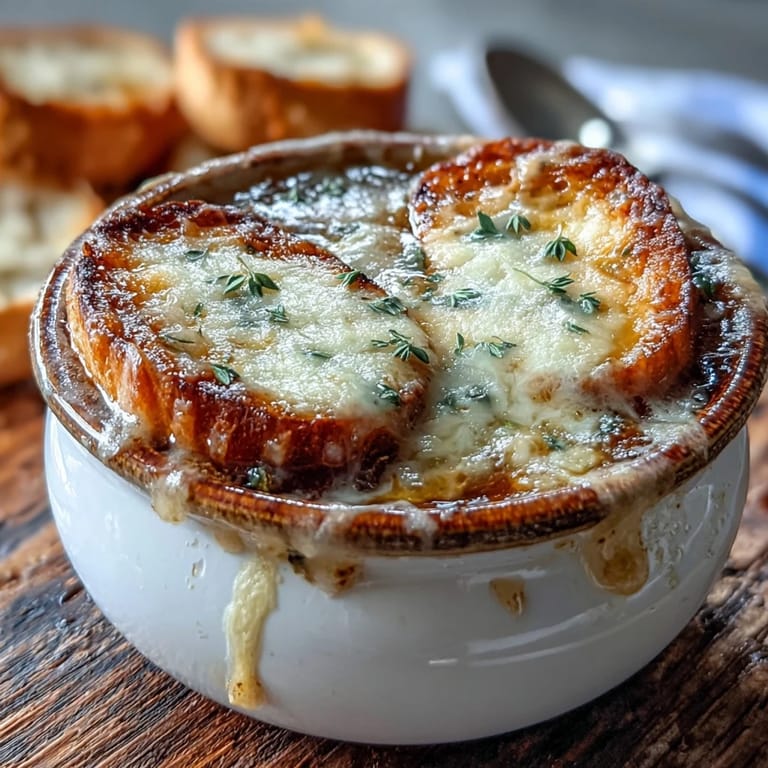
Save This bowl of liquid gold is proof that humble ingredients can transform into something truly extraordinary. I hope this soup brings as much warmth to your table as it has to mine.
Recipe FAQs
- → How long does it take to caramelize onions properly?
True caramelization takes 35–40 minutes over medium heat. The onions should transform from opaque white to deep golden brown, developing natural sweetness. Stir frequently to prevent burning and ensure even browning.
- → Can I make this vegetarian?
Absolutely. Substitute high-quality vegetable broth for beef broth and choose a vegetarian Worcestershire sauce or omit it entirely. The result remains deeply satisfying and umami-rich.
- → What cheese works best for the topping?
Gruyère is traditional for its nutty flavor and excellent melting properties. Swiss or Emmental make fine alternatives. Adding Parmesan creates an extra savory, salty dimension.
- → Why include leeks and shallots along with onions?
This allium trio creates complexity. Yellow onions provide sweetness, shallots add subtle sharpness, and leeks contribute mild, savory depth. The combination yields more nuanced flavor than onions alone.
- → Can I prepare this in advance?
The soup base actually improves after a day or two in the refrigerator. Make the soup through step 5, cool, and store. Reheat gently, then add the bread and cheese just before serving for best texture.
- → What type of bread works best?
A traditional French baguette sliced into rounds holds up well in the hot broth. Slightly stale bread actually works better as it absorbs less liquid, maintaining some chew beneath the melted cheese.