 Save
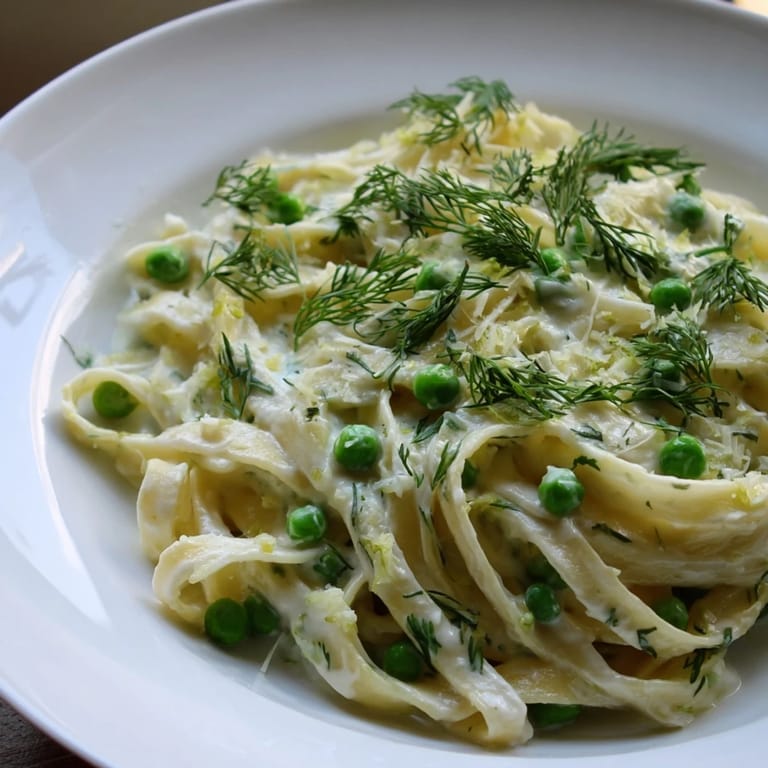
Save There's something about the smell of butter and fresh dill hitting a hot pan that just stops me mid-morning. I discovered this pasta on a Tuesday when I had nothing but cream, lemon, and herbs in the fridge, and somehow it became the dish I make when I want to feel like I've actually figured something out in the kitchen. The combination of bright citrus cutting through the richness is so simple it shouldn't work, but it does—every single time.
I made this for my neighbor last spring when she brought over homemade bread, and she ate it so quietly I thought something was wrong—then she asked for the recipe with her mouth half full. That's when I realized it wasn't just comfort food, it was the kind of dish that makes people slow down and actually taste what they're eating.
Ingredients
- Pasta (350 g dried): Use fettuccine, linguine, or penne—whatever you have works, though thinner shapes help the cream coat better.
- Unsalted butter (2 tbsp): This is where the sauce starts, so don't skip it or use margarine; the flavor difference matters here.
- Garlic (2 cloves, minced): Mince it small so it disappears into the sauce and infuses it rather than sitting in chunks.
- Lemon zest (from 1 lemon): This is the secret wake-up call for the whole dish—zest it before you cut the lemon in half for juice.
- Heavy cream (200 ml): The backbone of your sauce; don't water it down, it needs the richness to balance the acid.
- Fresh lemon juice (2 tbsp): Squeeze it fresh, never use bottled—the difference shows immediately in the brightness.
- Dijon mustard (1 tsp): This tiny amount adds a subtle tang that rounds out the sauce without making it taste like mustard.
- Salt (1 tsp, plus more for pasta water): Salt the pasta water generously like you're seasoning the sea—it's your only chance to season the pasta itself.
- Freshly ground black pepper (¼ tsp): Grind it fresh right over the sauce, not into your palm first.
- Parmesan cheese (40 g grated): Grate it fresh if you can; the pre-grated stuff has anti-caking agents that make the sauce grainy.
- Fresh dill (3 tbsp chopped, plus extra): Add it at the very end so it stays bright green and doesn't turn dark and sad.
Tired of Takeout? 🥡
Get 10 meals you can make faster than delivery arrives. Seriously.
One email. No spam. Unsubscribe anytime.
Instructions
- Salt your water like you mean it:
- Fill a large pot and add enough salt that it tastes like the sea—this is your only real seasoning for the pasta itself. Bring it to a rolling boil before adding the pasta so it cooks evenly.
- Cook the pasta to al dente:
- Follow the package time but taste it at the lower end; you want it to still have a tiny bit of resistance when you bite it. Drain it in a colander and set aside, but save about ½ cup of the starchy pasta water in a mug—you'll need this later.
- Build your sauce foundation:
- Melt the butter in a large skillet over medium heat until it's foaming. Add the minced garlic and lemon zest, and let it sizzle for about a minute—just until it becomes fragrant and you can smell the brightness.
- Create the creamy base:
- Pour in the heavy cream, lemon juice, and Dijon mustard all at once, stirring as you go. Let it simmer gently for 2 to 3 minutes until it thickens just slightly and coats the back of a spoon.
- Melt in the cheese and seasoning:
- Add the grated Parmesan, salt, and fresh pepper, stirring until the cheese melts completely and the sauce becomes smooth and glossy. Taste it now—this is your moment to adjust if something feels off.
- Bring it all together:
- Add the drained pasta to the skillet and toss it gently through the cream sauce, letting each strand get coated. If it looks too thick, pour in a splash of that reserved pasta water and toss again—the starches will help the sauce cling.
- Finish with freshness:
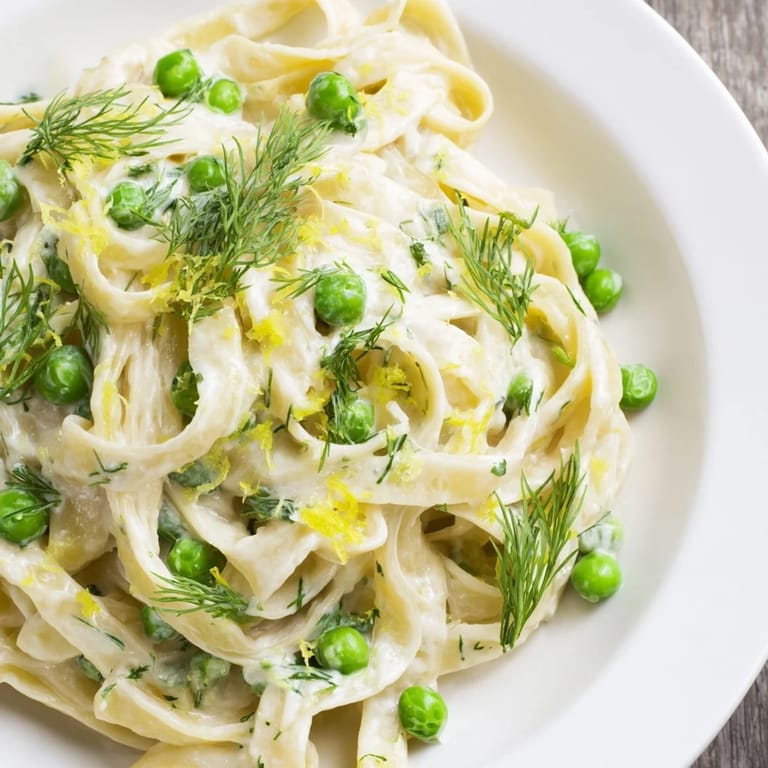
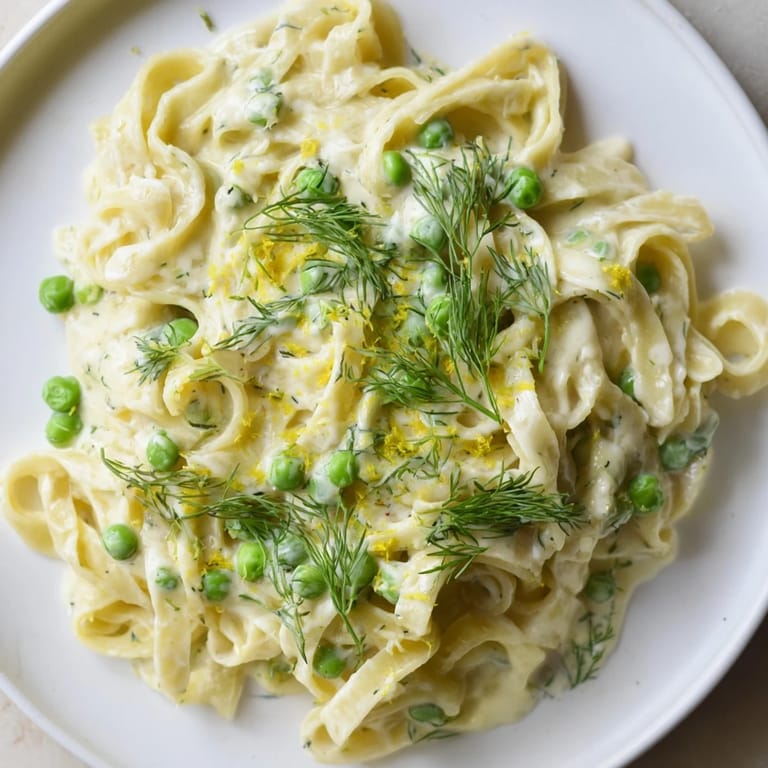
- Stir in the chopped fresh dill and any peas if you're using them, tossing everything until it's heated through and combined. Serve immediately while it's still creamy, scattered with extra dill and a crack of pepper.
 Save
Save The first time I made this for someone I was trying to impress, I was so nervous about the sauce breaking that I hovered over the pan like a worried parent. Then I realized the simplicity was the whole point—it let the ingredients speak for themselves, and somehow that felt more honest than anything complicated I could have done.
Why This Pasta Works Year-Round
In summer, the brightness of the lemon cuts through the heat and makes you feel refreshed even though you're eating something creamy. In winter, it's comforting without being heavy, and you can add roasted mushrooms or crispy sage if you want something more substantial. The dill keeps it feeling light no matter the season, which is probably why I end up making it more often than I expect to.
Variations That Actually Work
I've added everything from smoked salmon to roasted asparagus to this sauce, and it adapts beautifully without losing its character. The cream-and-dill base is flexible enough to welcome additions, but it's never needed them—sometimes the best version is the simplest one, with just the pasta and sauce and maybe a handful of fresh peas.
Serving and Pairing
Serve this immediately while the sauce is still silky, with maybe a simple green salad and crusty bread to wipe the plate. A cold glass of Sauvignon Blanc is the natural pairing—the acidity mirrors the lemon and makes everything taste even brighter.
- Grate fresh Parmesan over the top just before eating, not before serving, so it stays bright instead of melting into the sauce.
- If the sauce looks too thin when you plate it, that's fine—it'll continue to thicken as it cools slightly, and the pasta water starch helps with that.
- This dish doesn't keep well, so make it fresh and eat it right away for the best texture and flavor.
 Save
Save This is the kind of pasta I make when I want something that feels special but doesn't require me to pretend I'm a better cook than I actually am. It reminds me every time that sometimes the best meals come from working with what you have and letting good ingredients do the work.
Recipe FAQs
- → What type of pasta works best?
Fettuccine, linguine, or penne are ideal as they hold the creamy sauce well.
- → Can I use fresh instead of dried pasta?
Yes, fresh pasta can be used but adjust cooking time accordingly as it cooks faster.
- → How do I keep the sauce creamy without curdling?
Simmer gently after adding cream and avoid boiling; stirring constantly helps maintain smoothness.
- → Are there suitable substitutions for heavy cream?
Half-and-half or a blend of milk and butter can lighten the sauce but may reduce richness.
- → What herbs complement dill in this dish?
Parsley or chives can add mild freshness without overpowering the dill’s flavor.
- → Is smoked salmon recommended in vegetarian versions?
Smoked salmon is optional and omitted for vegetarian preferences; peas can add texture and color instead.