 Save
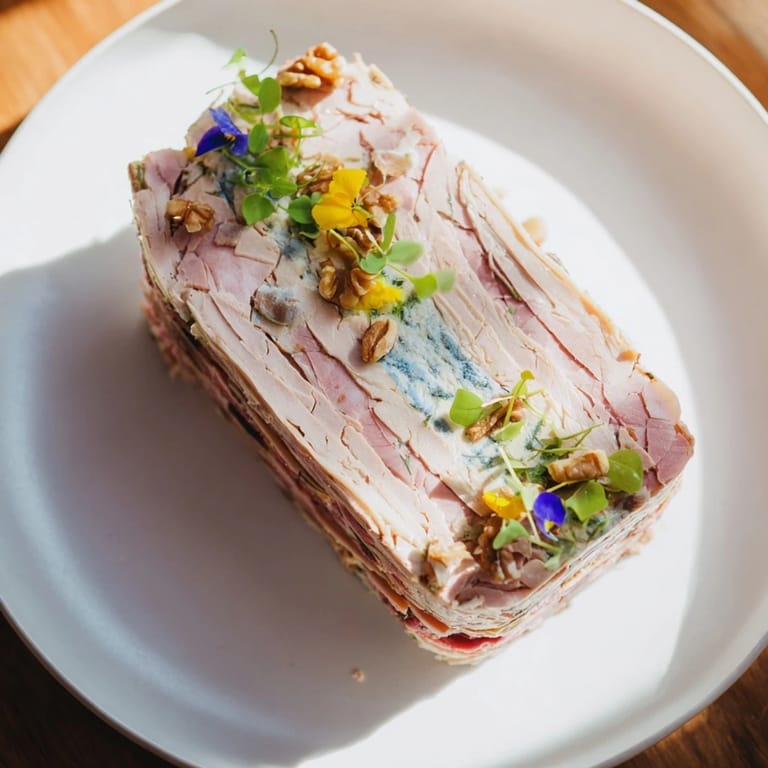
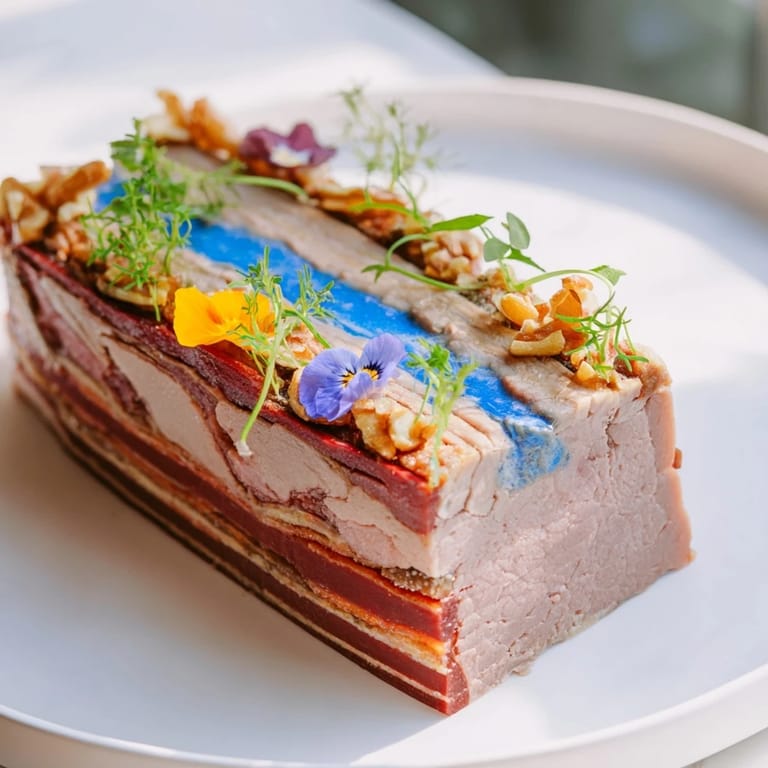
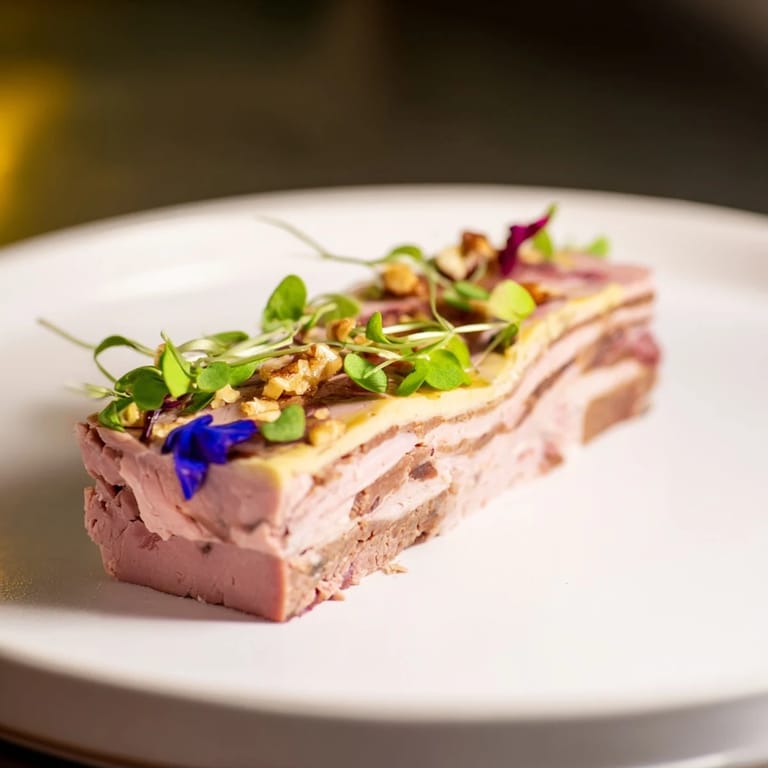
Save I first encountered the Grand Canyon Rim at a dinner party where a chef friend unveiled this architectural marvel—layers of meat spiraling down like actual canyon walls, with a shocking blue cheese vein cutting through the center. The moment I saw it sliced, I was mesmerized. I had to learn how to make it, partly for the spectacle, but mostly because it tasted like the landscape looked.
I made this the first time for my sister's birthday dinner, and I remember standing in front of the oven checking the water bath every ten minutes like I was monitoring something precious. When we finally unmolded it and the blue cheese river revealed itself in that perfect flow, everyone at the table went quiet for a second before erupting. That's when I knew this dish had staying power.
Ingredients
- Beef sirloin, thinly sliced (300 g): Gives the base layer a deeper color and rich flavor that anchors the whole structure.
- Turkey breast, thinly sliced (250 g): Lighter in color and flavor, turkey creates visual contrast between your meat layers.
- Smoked ham, thinly sliced (200 g): The smokiness adds complexity and a subtle salty edge that balances the blue cheese.
- Pork loin, thinly sliced (200 g): Tender and mild, it fills gaps and helps create that seamless cliff-face effect.
- Blue cheese, crumbled (150 g): This is your river—the star of the show, so use one you actually enjoy eating straight.
- Cream cheese, softened (100 g): Helps the blue cheese mousse stay smooth and spreadable without seizing up.
- Heavy cream (30 ml for mousse): Lightens the texture so your river flows instead of sits heavy.
- Fresh chives, finely chopped (1 tbsp): A whisper of onion flavor that doesn't overpower the cheese.
- Fresh parsley, finely chopped (1 tbsp): Green flecks that make the river look alive.
- Eggs, large (4): The binding agent that holds your layers together during the gentle bake.
- Whole milk (120 ml): Keeps the custard-like binding layer tender and silky.
- Heavy cream (60 ml for binding): Makes the egg mixture richer so layers don't dry out.
- Salt and black pepper: Season everything with intention, tasting as you go.
Tired of Takeout? 🥡
Get 10 meals you can make faster than delivery arrives. Seriously.
One email. No spam. Unsubscribe anytime.
Instructions
- Set the stage:
- Preheat your oven to 160°C and line your loaf pan with plastic wrap, letting it drape over the edges so you can fold it over the top later. This prevents mess and ensures clean unmolding.
- Whisk the binding custard:
- In a bowl, beat together the eggs, milk, heavy cream, salt, and pepper until completely smooth. This becomes the invisible glue holding your meat layers together.
- Create the blue cheese river:
- Blend the blue cheese, cream cheese, heavy cream, chives, parsley, and pepper until it's silky and pourable. It should feel luxurious, not grainy.
- Begin your canyon base:
- Arrange your first layer of beef slices overlapping slightly along one side of the pan, as if the meat is tumbling down a cliff. The slight slope is your canyon wall.
- Build the walls:
- Layer turkey, then ham, then pork, staggering them so each appears to cascade downward at a different angle. Think geological strata, not a neat stack.
- Bind as you build:
- Every two or three meat layers, brush lightly with the egg mixture—just enough to help everything hold together, not so much that it drowns the meat.
- Insert the river:
- When you're roughly halfway up the pan, spoon that blue cheese mixture down the center in a thick, winding line. Continue layering meats around and over it, maintaining your cliff pattern.
- Seal and prepare for water bath:
- Top with a final meat layer, fold the plastic wrap over, then cover everything tightly with foil. Place the loaf pan inside a larger roasting dish and fill the outer dish with hot water until it reaches halfway up the sides.
- Gentle bake and cool:
- Bake for 1 hour 15 minutes—the water bath keeps everything moist and prevents the meat from drying. Cool to room temperature before refrigerating.
- Chill and set:
- Give it at least 4 hours in the fridge, preferably overnight, so the custard sets and the flavors meld into something greater than their parts.
- Unmold and reveal:
- Turn it out onto your serving platter and slice thickly with a sharp, clean knife, revealing all those layers and that stunning blue cheese vein running through the middle.
 Save
Save I served this once on a slate board my friend brought back from Sedona, and somehow the presentation clicked in a way I hadn't expected. The dish became less about showing off and more about sharing something that felt like both art and history on a plate.
Slicing and Serving
The moment you bring the knife down through those layers, everything changes. The blade should be sharp and clean, and you should take your time—long, decisive cuts reveal the structure without tearing or smudging the blue cheese river. Each slice is its own small landscape, and people will linger over the plate just looking before they eat.
Pairing This Dish
I've found this terrine works best alongside something light that won't compete with all those rich, intertwined flavors. A crisp white wine cuts through the blue cheese and smoke beautifully, or a light red wine if you want something more substantial. Toasted brioche softens the richness, while a fresh salad with a sharp vinaigrette provides necessary contrast.
Variations and Swaps
Once you understand the basic architecture, you can play with the ingredients in ways that keep surprising you. I've experimented with substituting the blue cheese for herbed goat cheese on nights when I wanted something lighter, and I've added smoked duck or prosciutto when I was after more intensity. The structure stays the same; the flavors shift and evolve.
- Swap the blue cheese for herbed goat cheese if you want a milder, tangier river.
- Mix in smoked duck or prosciutto for deeper, smokier notes.
- Toast walnuts and press them into the sides for added texture and earthiness.
 Save
Save This terrine taught me that sometimes the most impressive dishes aren't the most complicated—they're just the ones built with intention and patience. Every layer tells a story, and when you slice into it, you're revealing something you created with your own hands.
Recipe FAQs
- → How do I achieve the layered cliff effect?
Arrange thinly sliced meats in overlapping layers sloping downward to mimic canyon walls; brush with egg mixture between layers to bind.
- → What is the purpose of the blue cheese mixture?
The blue cheese and herb mousse creates a vibrant 'river' that adds creaminess and sharpness, contrasting the savory meat layers.
- → Why is a bain-marie used during cooking?
Cooking in a bain-marie ensures gentle, even heat, preventing the terrine from drying and helping it set smoothly.
- → Can I substitute the meats used in the layers?
Yes, smoked duck or prosciutto can replace some meats to add smoky flavor and variety.
- → How long should the terrine chill before serving?
After baking, refrigerate for at least 4 hours or overnight to allow firm setting and flavor melding.