 Save
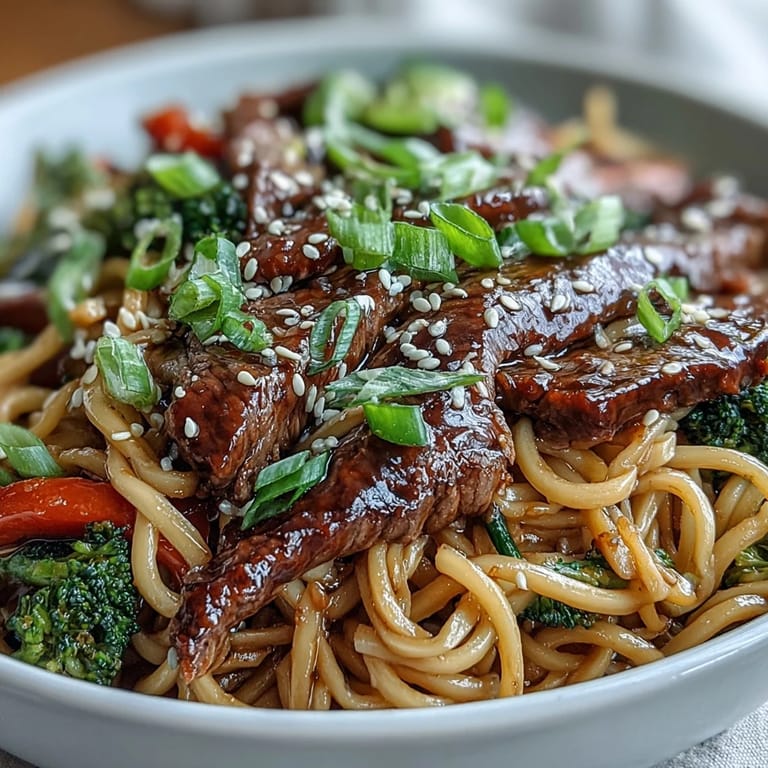
Save My neighbor showed up at my door one rainy Tuesday with a container of something that smelled like garlic, ginger, and pure comfort. She called it her weeknight savior, a skillet full of beef and noodles that came together faster than takeout. I stood in her kitchen the following week, watching her toss everything in one pan with the kind of confidence that only comes from making something a hundred times. The sauce clung to every strand of noodle, glossy and sweet-salty, and I knew I'd be making this on repeat. It's been my go-to ever since.
I made this for my sister after she had her second kid, and she texted me at midnight asking for the recipe. She said it was the first thing she'd eaten in days that didn't come from a box or a drive-thru. Watching her devour a bowl while her toddler napped on her shoulder reminded me that good food doesn't have to be complicated to matter. Sometimes it's just about something warm, flavorful, and easy enough to pull off when you're running on fumes.
Ingredients
- Rice noodles: These soak up the sauce beautifully and stay silky without getting gummy, just don't overcook them or they'll turn to mush.
- Flank steak: Slicing it thin against the grain is the secret to tenderness, and it browns fast over high heat for maximum flavor.
- Broccoli florets: They add a crisp bite and soak up just enough sauce to taste like part of the dish, not an afterthought.
- Bell pepper: Red or yellow brings sweetness and color, and it holds up to the high heat without turning limp.
- Carrot: Julienned thin so it cooks quickly and adds a slight crunch and natural sweetness to balance the savory sauce.
- Green onions: Chopped fresh on top, they add a sharp, bright note that cuts through the richness.
- Garlic: Minced fine so it blooms in the hot oil and perfumes the whole pan in seconds.
- Ginger: Grated fresh for a warm, spicy backbone that makes the dish taste alive.
- Soy sauce: The salty, umami foundation of the sauce, use low-sodium if you want more control over the saltiness.
- Brown sugar: It melts into the soy sauce and creates that glossy, slightly sweet coating that makes everything crave-worthy.
- Sesame oil: Just a tablespoon adds nutty depth and makes the whole dish smell like a proper stir-fry.
- Vegetable oil: High smoke point and neutral flavor, perfect for getting that skillet screaming hot.
- Sesame seeds: A sprinkle on top adds crunch and a toasty finish that looks as good as it tastes.
Tired of Takeout? 🥡
Get 10 meals you can make faster than delivery arrives. Seriously.
One email. No spam. Unsubscribe anytime.
Instructions
- Prep the noodles:
- Cook the rice noodles according to the package, then drain and rinse them under cool water to stop the cooking. This keeps them from sticking together while you work on everything else.
- Sear the beef:
- Heat vegetable oil in a large skillet or wok over medium-high until it shimmers, then add the sliced flank steak in a single layer and let it sear for 2 to 3 minutes without moving it. You want a good brown crust before you flip and remove it to a plate.
- Bloom the aromatics:
- In the same hot skillet, toss in the minced garlic and grated ginger, stirring constantly for about 30 seconds until the smell hits you. Don't let them burn or they'll taste bitter.
- Stir-fry the vegetables:
- Add the broccoli, bell pepper, and carrot to the skillet and keep everything moving for about 5 minutes. You want them tender but still crisp, with a little char on the edges.
- Mix the sauce:
- While the vegetables cook, whisk together the soy sauce, brown sugar, and sesame oil in a small bowl until the sugar dissolves completely. It should look glossy and smell incredible.
- Combine beef and sauce:
- Return the seared beef to the skillet and pour the sauce over everything, stirring to coat the beef and vegetables evenly. Let it bubble for a minute so the flavors meld.
- Toss in the noodles:
- Add the cooked rice noodles to the skillet and use tongs to gently toss everything together, making sure every strand gets coated in that glossy sauce. Heat through for about 2 minutes, stirring gently to avoid breaking the noodles.
- Garnish and serve:
- Transfer to bowls and top with chopped green onions and a generous sprinkle of sesame seeds. Serve immediately while everything is hot and glossy.
 Save
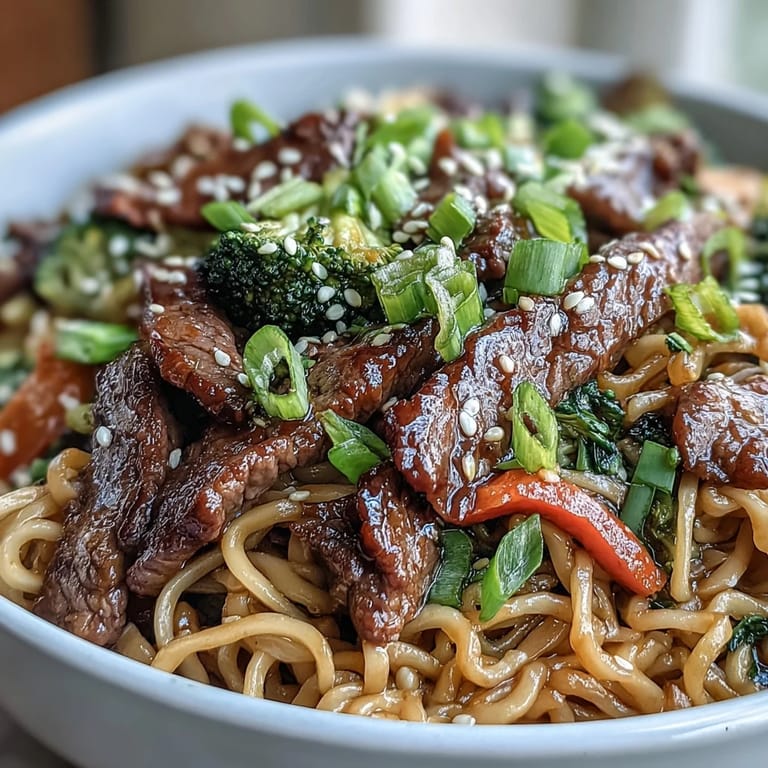
Save The first time I served this at a potluck, someone asked if I'd ordered it from a restaurant and just transferred it to my own bowl. I laughed, but honestly, that's the highest compliment a weeknight skillet meal can get. It's the kind of dish that makes people lean in, ask questions, and then text you the next day saying they made it themselves.
Swapping the Protein
I've made this with chicken thighs, shrimp, and even pressed tofu, and every version works. Chicken takes about the same time as beef, shrimp cooks in under 2 minutes, and tofu gets beautifully crispy if you sear it in a hot pan first. The sauce is forgiving enough to carry whatever protein you throw at it, so use what you have or what sounds good.
Adding Heat
If you like spice, stir a teaspoon of gochujang or a squirt of sriracha into the sauce before you add it to the skillet. It blooms in the heat and spreads evenly, giving you a warm, lingering kick without overwhelming the sweet-salty balance. I keep a bottle of chili crisp on the table for anyone who wants to dial it up even more.
Storage and Reheating
Leftovers keep in an airtight container in the fridge for up to 3 days, though the noodles will soak up more sauce as they sit. When you reheat, add a splash of water or a drizzle of sesame oil to the pan to loosen everything back up. I've eaten this cold straight from the fridge more times than I'd like to admit, and it still tastes good.
- Store in shallow containers so it cools quickly and reheats evenly.
- If you're meal prepping, keep the noodles separate and toss everything together when you're ready to eat.
- You can freeze the cooked beef and vegetables without the noodles for up to a month, then add fresh noodles when you reheat.
 Save
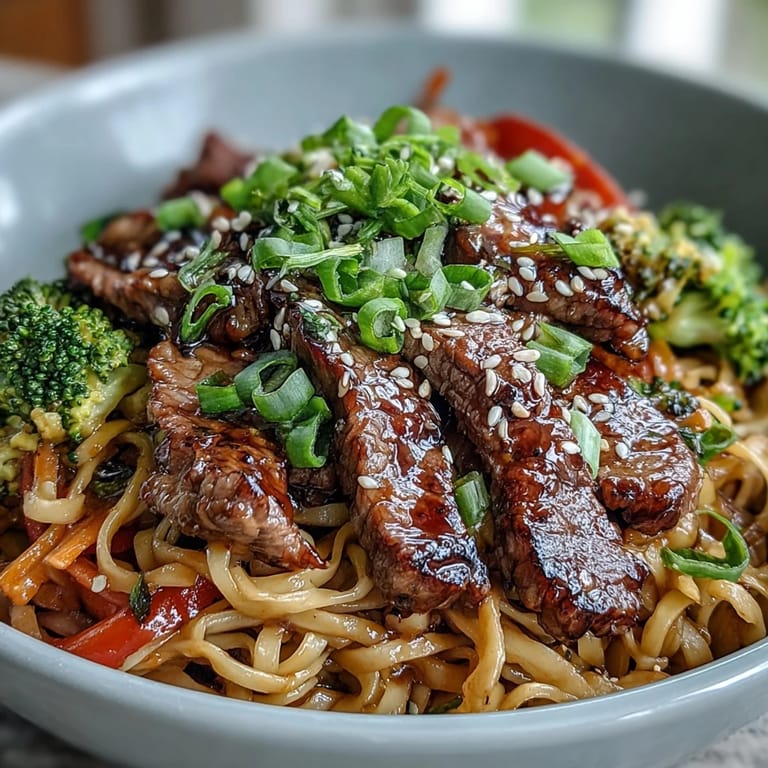
Save This is the kind of recipe that earns a permanent spot in your rotation, not because it's fancy, but because it delivers every single time. Make it once, and you'll know exactly why it became my neighbor's weeknight savior.
Recipe FAQs
- → What cut of beef works best?
Flank steak sliced thinly against the grain provides the most tender result. You can also use sirloin, skirt steak, or even ribeye slices for richness.
- → Can I make this spicy?
Absolutely. Stir in sriracha, gochujang (Korean chili paste), or red pepper flakes to the sauce for added heat according to your preference.
- → How do I prevent rice noodles from sticking?
Rinse cooked noodles under cold water after draining to remove excess starch. Toss with a small amount of sesame oil before adding to the skillet.
- → What vegetables can I substitute?
Snap peas, zucchini, baby corn, bok choy, or mushrooms work beautifully. Use whatever crisp vegetables you have on hand for variety.
- → Can I use other proteins?
Sliced chicken breast, shrimp, or firm tofu make excellent alternatives. Adjust cooking time accordingly—shrimp cooks quickly while tofu needs less time than beef.
- → How long do leftovers keep?
Store in an airtight container in the refrigerator for up to 3 days. Reheat gently in a skillet or microwave, adding a splash of water if noodles seem dry.