 Save
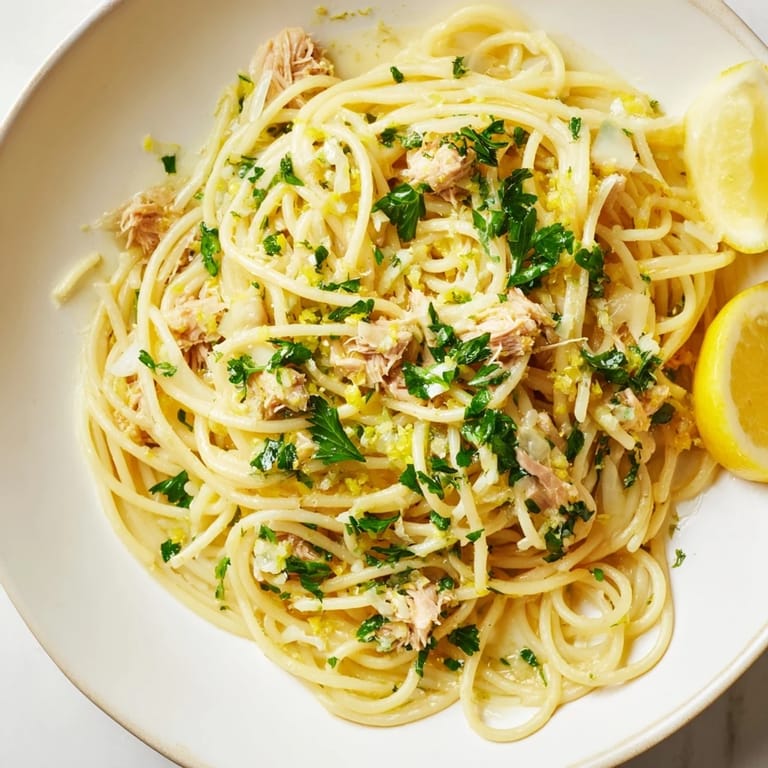
Save There's something about a dish that comes together in the time it takes to boil water that makes you feel like you've cracked some culinary code. This lemon-garlic tuna spaghetti fell into my life on a Tuesday night when I was staring at the pantry thinking about takeout, and instead found myself reaching for a tin of tuna and half a lemon sitting in the fruit bowl. Twenty-five minutes later, I had something so bright and satisfying that I wondered why I'd ever bothered ordering delivery in the first place.
I made this for a friend who'd mentioned being tired of the same rotation, and watching her face when she tasted it—that moment where she paused mid-bite and said, 'This is so simple, why does it taste so good?'—that's when I realized this dish had staying power. It's become the one I make when someone's coming over and I want to impress without the stress, a quiet kind of confidence in a bowl.
Ingredients
- Spaghetti (400 g / 14 oz): Use dried pasta, not fresh, so it has enough structure to hold the light sauce without clumping. The slight resistance of al dente spaghetti is crucial here.
- Olive oil (2 tbsp): Quality matters more than quantity in this dish—the oil becomes part of the flavor, not just a cooking medium.
- Garlic cloves (3, finely sliced): Slicing rather than mincing keeps the garlic pieces visible and lets them toast slightly, adding a gentle sweetness that raw garlic wouldn't give.
- Lemon (1, zested and juiced): Don't skip the zest; those tiny flecks carry concentrated flavor that the juice alone can't deliver.
- Tuna in olive oil (2 × 160 g cans, drained and flaked): The kind packed in oil makes a difference—water-packed tuna tends to be drier and less forgiving, and you lose that briny richness.
- Red pepper flakes (1/2 tsp, optional): A whisper of heat keeps this from feeling flat, but hold back if you're cooking for someone who prefers gentler flavors.
- Fresh flat-leaf parsley (1/4 cup, chopped): Fresh herbs transform this from a quick weeknight meal into something that feels thoughtful and alive.
- Pasta cooking water (1/4 cup reserved): This starchy liquid is your secret weapon for emulsifying the oil and lemon into something that actually coats the pasta instead of sliding off.
- Salt and freshly ground black pepper: Taste as you go; tuna already carries salt, so you might need less than you'd expect.
Tired of Takeout? 🥡
Get 10 meals you can make faster than delivery arrives. Seriously.
One email. No spam. Unsubscribe anytime.
Instructions
- Get everything ready:
- Bring a large pot of salted water to a boil while you slice the garlic, zest the lemon, and measure out your pasta water reserve. Having everything prepped means you're not scrambling once the cooking starts.
- Cook the pasta properly:
- Add spaghetti to the boiling water and cook to al dente—that slight firmness when you bite it. Before draining, scoop out 1/4 cup of that starchy water and set it aside; this is non-negotiable for your sauce.
- Start the garlic base:
- While pasta cooks, warm olive oil in a large skillet over medium heat and add sliced garlic. You're listening for a gentle sizzle and watching for the garlic to turn golden and fragrant after about 1–2 minutes, being careful not to let it brown and turn bitter.
- Add the tuna gently:
- Stir in your drained tuna, breaking it up slowly with a spoon rather than aggressively shredding it; you want tender, distinct flakes, not a paste. Add lemon zest, lemon juice, and red pepper flakes if using, then let it warm through for 2–3 minutes.
- Bring it together:
- Pour the drained pasta into the skillet and toss everything together, then start adding your reserved pasta water a splash at a time. The goal is a light, glossy coating on the pasta, not a heavy sauce, so go slowly and stop when it looks right.
- Finish and serve:
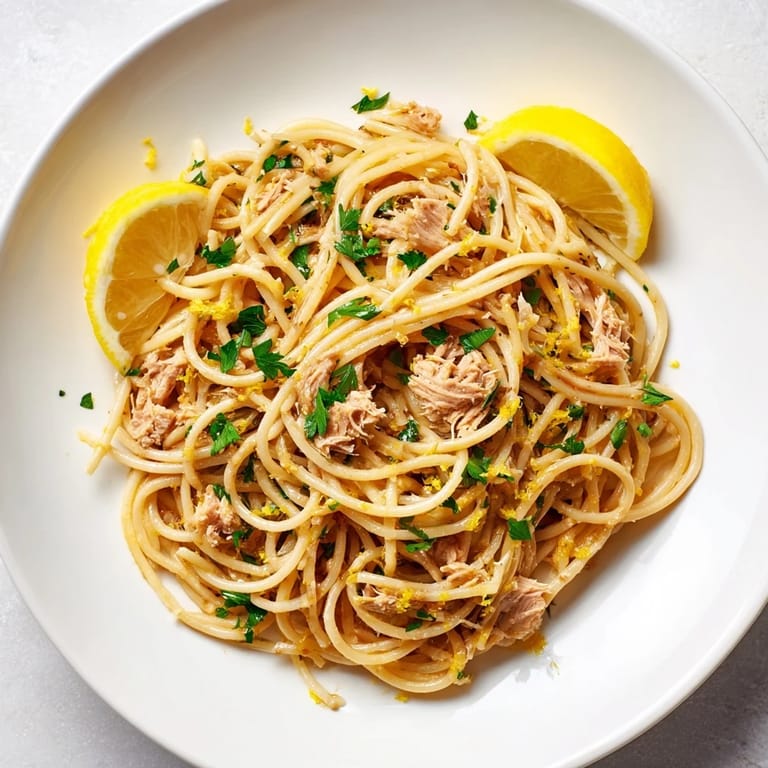
- Stir in the fresh parsley, taste, and adjust salt and pepper. Divide among plates, top with a little more parsley, and serve with lemon wedges so each person can add brightness to taste.
 Save
Save There's a quiet satisfaction in this meal, the kind that comes from knowing you've fed yourself and others something genuinely good without any fuss or pretense. It's the dish I reach for when I want to remember that the best cooking isn't complicated—it's just about respecting good ingredients and not getting in their way.
When You Want to Go Deeper
If basic lemon-garlic feels a little plain, consider this your license to improvise. A handful of halved cherry tomatoes adds brightness and a subtle sweetness that plays beautifully against the lemon. A tablespoon or two of capers brings a briny, sharp quality that makes tuna feel more interesting. Even a small handful of fresh basil or oregano changes the whole mood of the dish, pushing it toward Italian rather than Mediterranean.
Timing and Technique Matter
The speed of this recipe is genuine—not a marketing claim—but it only works if you move deliberately rather than frantically. Start your water before you do anything else, prep your ingredients while it heats, and time the garlic toasting so it's fragrant right when the pasta is nearly done. This isn't about rushing; it's about understanding the rhythm so the cooking feels calm instead of chaotic.
Building Flavor Beyond the Recipe
This dish is a springboard, not a rulebook, and the best versions often come from tasting as you go and trusting your own instincts. If you find the lemon too sharp, add less juice and rely more on zest. If the red pepper flakes feel overwhelming, don't use them next time. If the tuna feels dry despite the sauce, you've probably cooked it too long in the skillet—aim for just warming it through.
- High-quality tuna in olive oil makes a noticeable difference; if budget allows, it's worth the upgrade.
- A crisp white wine like Pinot Grigio or Sauvignon Blanc pairs beautifully and complements the lemon-forward flavors.
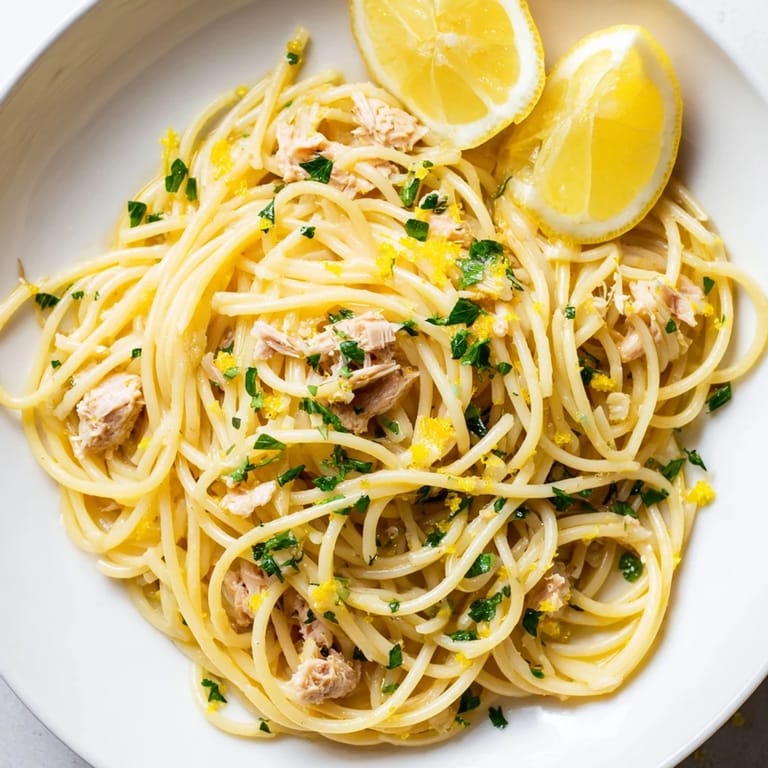
- Leftover pasta reheats gently with a splash of water or a drizzle of olive oil, though it's honestly best served immediately while the lemon brightness is at its peak.
 Save
Save This recipe proves that some of the most memorable meals don't require lengthy recipes or exotic ingredients—just good judgment and knowing when to stop tinkering. Make it tonight, make it again next week, and let it become one of those dishes you return to without thinking.
Recipe FAQs
- → How do I prevent the tuna from drying out when cooking?
Gently stir the tuna with lemon juice and olive oil over medium heat just until warmed through to retain moisture and flaky texture.
- → Can I use fresh tuna instead of canned?
Fresh tuna can be used if quickly seared and flaked, but canned tuna in olive oil offers convenience and consistent flavor for this dish.
- → What pasta water quantity is ideal for the sauce?
Reserve about 1/4 cup of pasta cooking water; add gradually to the tuna mixture to achieve a light, silky sauce coating the spaghetti.
- → Are there good variations for added flavor?
Adding capers or halved cherry tomatoes imparts extra complexity, enhancing the Mediterranean profile without overpowering the main flavors.
- → What wine pairs best with this dish?
A crisp white wine like Pinot Grigio or Sauvignon Blanc complements the bright lemon and garlic notes beautifully.