 Save
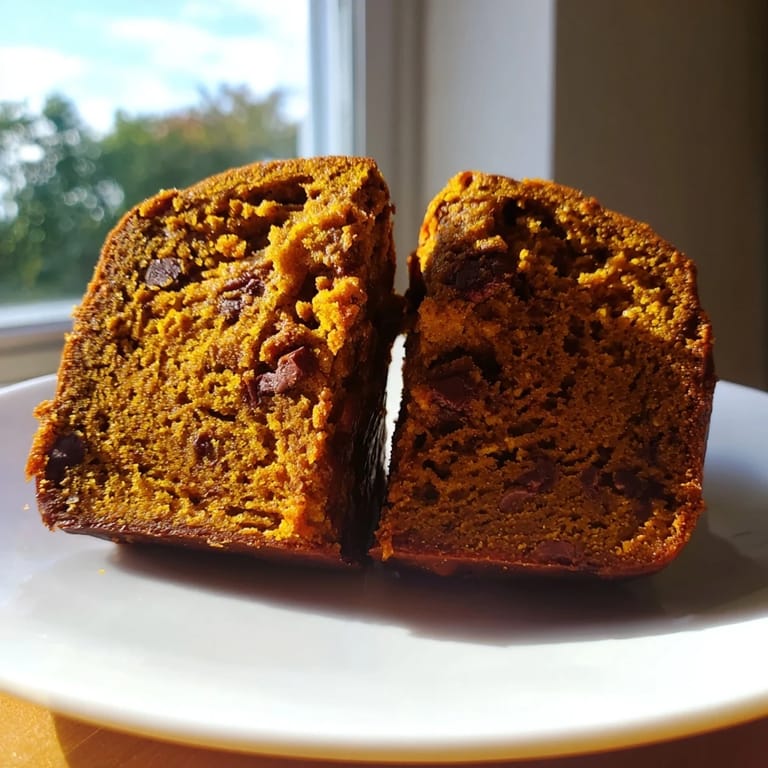
Save My kitchen smelled like a pumpkin patch the first autumn I decided to master this bread, and honestly, it was the aroma that hooked me before I ever tasted a slice. There's something about those warm spices hitting your nose while the loaf bakes that makes the whole house feel like home, even if you're living somewhere completely new. I'd been craving that specific combination of comfort and simplicity—nothing fancy, just a reliable recipe that actually delivers moisture and flavor without requiring a culinary degree.
I brought a loaf to work one October morning still warm from cooling, and my colleague literally stopped mid-sentence to ask for the recipe before even tasting it—just from the smell coming out of the bag. That's when I knew this wasn't just another fall baking project; it had become the bread people actually ask for by name.
Ingredients
- All-purpose flour (2 cups): This is your structure, so measure by spooning and leveling rather than scooping straight from the bag—it makes a real difference in how the loaf rises.
- Ground cinnamon (1 ½ teaspoons): Use fresh spices if you can because old cinnamon tastes dusty and flat compared to the real thing.
- Ground nutmeg (½ teaspoon), ground cloves (¼ teaspoon), ground ginger (¼ teaspoon): These three work together to create depth without anyone spice shouting over the others.
- Baking soda (1 teaspoon) and baking powder (½ teaspoon): Both matter here—the soda reacts with the acidic pumpkin while powder provides lift, so don't skip either one.
- Salt (½ teaspoon): This seems small but it actually makes the spices sing and keeps the bread from tasting one-dimensional.
- Pumpkin purée (1 ½ cups): Make absolutely sure it's plain pumpkin, not pie filling, or you'll end up with unwanted sugar and spices already built in.
- Granulated sugar (¾ cup) and brown sugar (½ cup, packed): The combination gives you sweetness plus a subtle molasses undertone that brown sugar alone wouldn't deliver.
- Eggs (2 large): These bind everything and add richness, so use room temperature eggs if you remember—they incorporate more smoothly.
- Vegetable oil (½ cup) or melted unsalted butter: Oil keeps the crumb tender and moist longer, though butter adds a luxurious flavor if you prefer.
- Milk (¼ cup): This loosens the batter to the right consistency without making it wet or heavy.
- Vanilla extract (1 teaspoon): A good vanilla rounds out the spices and makes the whole thing taste less one-note.
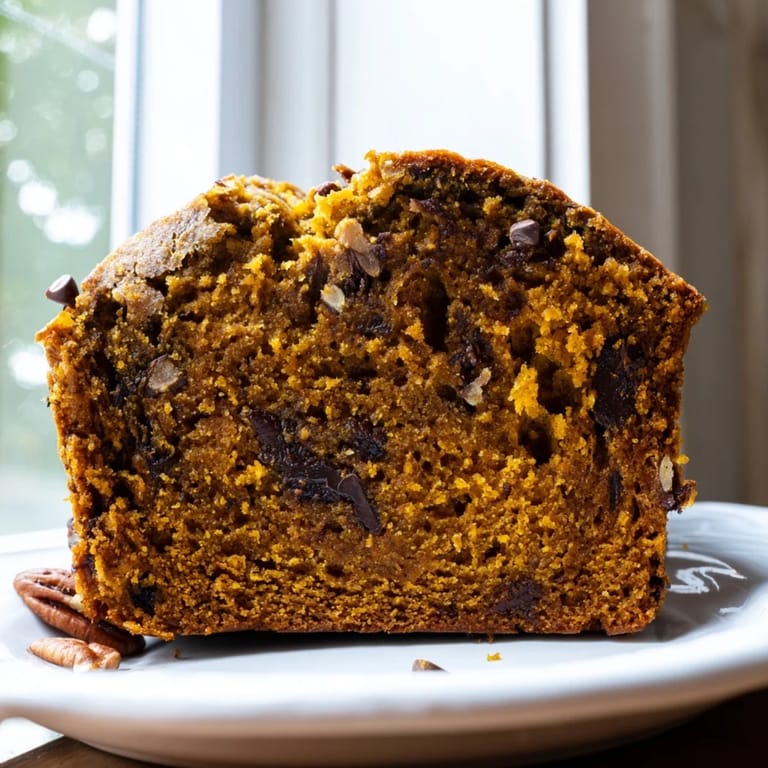
- Walnuts or pecans (½ cup, optional): Toast them lightly beforehand if you use them—it deepens their flavor and keeps them from tasting raw.
- Chocolate chips (½ cup, optional): These melt slightly and create pockets of richness throughout the crumb.
Tired of Takeout? 🥡
Get 10 meals you can make faster than delivery arrives. Seriously.
One email. No spam. Unsubscribe anytime.
Instructions
- Set the stage:
- Preheat your oven to 350°F while you work, and grease a 9x5-inch loaf pan generously—parchment paper lining makes pulling the bread out afterwards feel like a breeze instead of a wrestling match. Having everything ready before you start mixing means you won't have batter sitting while you hunt for a pan.
- Whisk the dry team together:
- Combine flour, cinnamon, nutmeg, cloves, ginger, baking soda, baking powder, and salt in a large bowl, whisking for about a minute to distribute the leavening and spices evenly. You want to see no streaks of baking soda hiding in the flour.
- Wake up the wet ingredients:
- In another bowl, whisk pumpkin purée, both sugars, eggs, oil, milk, and vanilla until the mixture looks smooth and the eggs are fully incorporated. This step takes maybe two minutes but it matters—the pumpkin should look uniform, not streaky.
- Bring them together gently:
- Pour the wet mixture into the dry ingredients and fold with a spatula using broad strokes, stopping as soon as you don't see flour streaks anymore. Overmixing activates gluten and makes the bread tough and dense, which is the opposite of what you want.
- Fold in your additions:
- If you're using nuts or chocolate chips, scatter them over the batter and fold them through with a few gentle turns of the spatula. They should be distributed throughout without getting crushed.
- Transfer and smooth:
- Pour the batter into your prepared loaf pan and use your spatula to smooth the top into an even layer. Don't worry about making it perfect—the slight dome that forms while baking is totally normal and actually looks beautiful.
- Bake until done:
- Place in the oven and bake for 55 to 65 minutes, checking at the 55-minute mark by inserting a toothpick into the center—it should come out clean or with just a few moist crumbs, not wet batter. If the top is browning too quickly, tent it loosely with foil for the last 10 minutes.
- Cool with patience:
- Let the bread sit in the pan for 10 minutes so it firms up enough to handle without breaking, then turn it out onto a wire rack to cool completely. Slicing it while it's still warm makes it crumbly, so this waiting period is genuinely important.
 Save
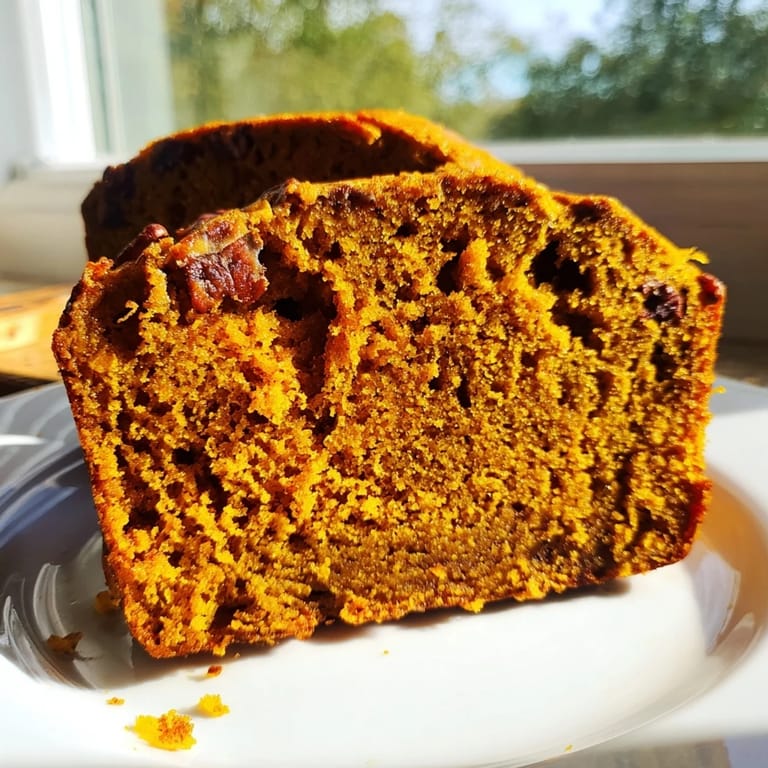
Save There's a moment right when you slice into a perfectly baked loaf and the knife glides through without crumbling, and you realize this simple recipe actually nailed something most complicated ones miss. That's when it stops being just bread and becomes the thing people ask for every single fall.
Making It Your Own
Once you've made this recipe once, you'll start noticing variations that actually improve it based on what you like. Dried cranberries add a tart note that cuts through the sweetness beautifully, while pumpkin seeds create a pleasant textural contrast without overshadowing the spice blend. Some mornings I mix in a handful of white chocolate chips, and on others I skip the add-ins entirely because the bread itself is honestly complete on its own.
Storage and Keeping
This bread actually tastes better on day two or three because the flavors deepen and the texture becomes even more moist as the moisture redistributes throughout the loaf. Keep it wrapped tightly at room temperature for up to three days, or slice it before freezing so you can grab individual pieces whenever you want a quick breakfast or snack without thawing the entire loaf.
That Little Extra Touch
The simplest way to make this feel more special is to sprinkle a little Demerara sugar on top before the loaf goes into the oven—it creates a subtle crunch and catches the light, making the finished bread look genuinely bakery-quality. You can also brush the top with melted butter as soon as it comes out of the oven for extra richness, or drizzle it with a thin glaze made from powdered sugar and milk if you're feeling fancy.
- A sprinkle of coarse sugar before baking creates a professional-looking crust with a delicate crunch.
- Toast any nuts or seeds you use so their flavor stands out instead of tasting flat.
- This bread actually freezes beautifully for up to two months, so make two loaves and save one for later.
 Save
Save This bread has become my go-to when I need something warm and comforting, whether it's October or any month I'm craving fall. Once you make it, you'll understand why it's become such a reliable favorite.
Recipe FAQs
- → Can I use canned pumpkin pie filling instead of pumpkin purée?
No, use pure pumpkin purée only. Pumpkin pie filling contains added sugars and spices that will alter the balance of your batter and result in an overly sweet loaf.
- → How do I know when the pumpkin bread is done baking?
Insert a toothpick into the center of the loaf. It should come out clean or with just a few moist crumbs. If wet batter clings to the toothpick, bake for another 5 minutes and test again.
- → Why is my pumpkin bread dense or gummy?
Overmixing the batter develops too much gluten, resulting in density. Fold wet and dry ingredients together gently until just combined. Also ensure you're using the correct amount of pumpkin purée and not pumpkin pie filling.
- → Can I substitute butter for vegetable oil?
Yes, melted unsalted butter works well as a one-to-one substitution. It will add a slightly richer flavor to your bread while maintaining the same moist texture.
- → How should I store leftover pumpkin bread?
Wrap cooled bread tightly in plastic wrap or store in an airtight container at room temperature for up to three days. For longer storage, wrap securely and freeze for up to two months. Thaw at room temperature before serving.
- → What add-ins can I use besides nuts and chocolate chips?
Try dried cranberries, pumpkin seeds, or dried blueberries for variety. You can also add a tablespoon of maple syrup to the wet ingredients for deeper fall flavor.