 Save
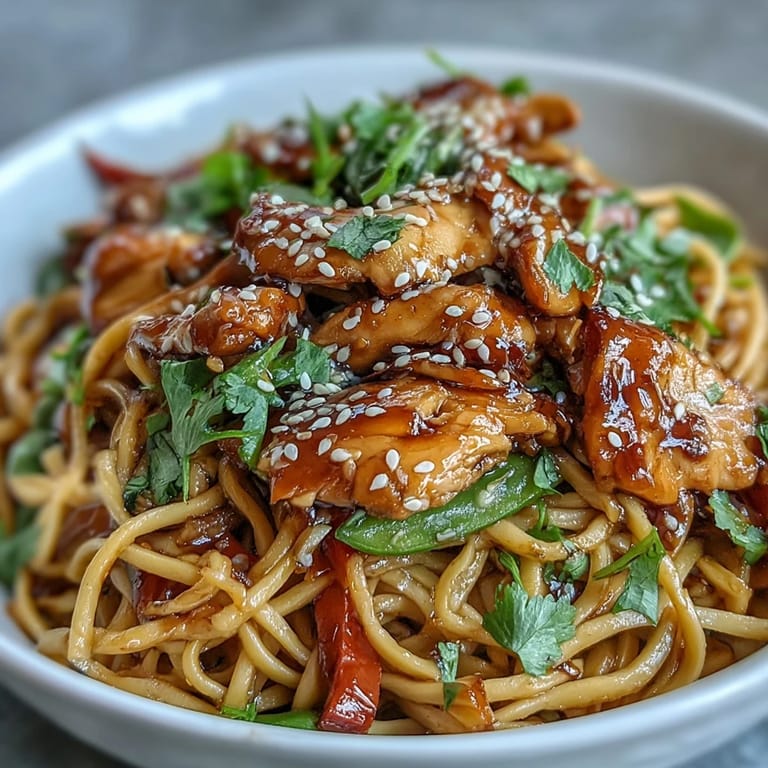
Save There's something about the smell of sesame oil hitting a hot pan that makes you stop whatever you're doing and pay attention. I discovered this bowl on a Tuesday night when I had exactly forty minutes before friends showed up, a chicken breast I'd forgotten about, and the stubborn conviction that I could pull off something restaurant-worthy. What started as panic became the kind of meal that people still ask me to make, the one where everything comes together in this perfect harmony of sweet, savory, and nutty that you can't quite put your finger on until you taste it.
My neighbor Marcus tasted this over the fence one summer evening and asked if he could grab a bowl—then ended up staying for an hour talking about how the crispy vegetables and tender chicken felt like a complete meal rather than just another noodle situation. That's when I realized this wasn't just a recipe I liked; it was something that made people linger, that turned a quick dinner into a moment worth sharing.
Ingredients
- Boneless, skinless chicken breast or thighs (500 g): Thighs are actually more forgiving and stay juicier, but breasts work if you watch them closely and don't overcook past that initial browning.
- Dried udon, soba, or rice noodles (250 g): Udon has this wonderful chewiness that holds the sauce better than thinner varieties, though any noodle works if it's what you have on hand.
- Red bell pepper, thinly sliced: The sweetness balances the salt in the soy sauce, and the color makes the whole bowl feel alive.
- Medium carrot, julienned: Slice them thin enough and they cook in minutes while keeping a satisfying bite.
- Sugar snap peas (100 g), trimmed: These don't need much heat at all; they're mostly about texture and a whisper of natural sweetness.
- Spring onions, sliced: The fresh onion flavor at the end is what keeps this from tasting heavy or one-note.
- Low-sodium soy sauce (60 ml): This is your base note; it anchors everything else, so don't skip it for regular soy or you'll oversalt the whole thing.
- Brown sugar (2 tbsp): The molasses depth matters here—white sugar would feel sharp and one-dimensional by comparison.
- Toasted sesame oil (1 tbsp): A little goes such a long way; it's pungent and should never be the cooking oil, only drizzled in at the end or mixed into the sauce.
- Rice vinegar (1 tbsp): This brightens the sauce and keeps it from becoming sticky-sweet, adding complexity that makes people wonder what the secret ingredient is.
- Fresh ginger, grated (2 tsp): If you can, grate it fresh rather than using jarred; the flavor is sharper and more alive.
- Garlic, minced (2 cloves): Raw garlic minced into the cold sauce develops flavor as it sits, so don't be shy here.
- Cornstarch (1 tsp, optional): This is for thickening if your sauce seems too thin, but honestly the noodles absorb a lot so you might not need it at all.
- Toasted sesame seeds (2 tbsp): The final flourish that adds crunch and that unmistakable nutty aroma that makes everyone lean in to smell their bowl.
- Fresh coriander or cilantro, chopped: This is your choice—cilantro brings a bright, almost citrus note if you're a fan, while coriander is more subtle and warm.
- Lime wedges (optional): A squeeze of acid at the end lifts everything and adds a layer of brightness that rounds out all the deeper flavors.
Tired of Takeout? 🥡
Get 10 meals you can make faster than delivery arrives. Seriously.
One email. No spam. Unsubscribe anytime.
Instructions
- Start your noodles first:
- Get a large pot of water boiling while you prep everything else—this is your timeline anchor. Cook the noodles according to the package, drain them, and rinse under cold water so they don't stick together or keep cooking.
- Whisk your sauce while everything's still raw:
- Combine soy sauce, brown sugar, sesame oil, rice vinegar, ginger, garlic, and cornstarch in a small bowl and stir it smooth; letting this sit for a minute lets the flavors start mingling.
- Get your pan screaming hot:
- A large nonstick skillet or wok over medium-high heat with just a splash of oil will brown your chicken quickly and build flavor through that browning rather than steaming it.
- Brown the chicken without moving it around too much:
- Add sliced chicken and let it sit for two minutes before stirring, which creates a golden crust and actually cooks it through faster than constant movement; this takes about four to five minutes total.
- Build flavor in the same pan:
- Remove the chicken, add a touch more oil if the pan looks dry, and stir-fry your bell pepper, carrot, and snap peas for just two to three minutes—you want them tender but still crisp enough that they sing when you bite them.
- Bring it all together:
- Return the chicken to the pan, pour in your sauce, and toss everything until coated; it'll start to thicken and cling to the noodles and vegetables in about a minute.
- Add noodles and spring onions to finish:
- Toss the cooked noodles and sliced spring onions into the pan and stir until everything is heated through and the sauce coats every strand.
- Serve with the garnishes right there:
- Divide among bowls and top with sesame seeds, fresh coriander, and lime wedges so people can adjust the flavor to their taste.
 Save
Save I made this for my sister one afternoon when she was going through a rough patch, and watching her face light up at that first bite—the way she closed her eyes and just sat with it for a moment—reminded me that sometimes the most meaningful thing you can offer someone is a bowl of food that tastes like care. It's not fancy or complicated, but it is honest and warm and exactly what a person needs.
The Sauce Is Everything
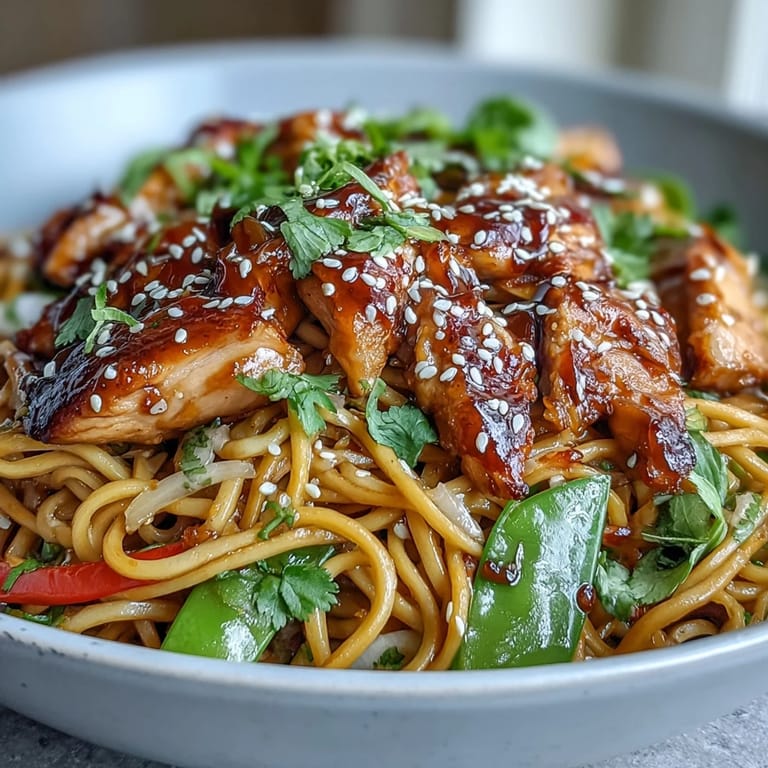
The magic here isn't in the vegetables or the chicken—it's in that glossy sauce coating every noodle and vegetable. The balance between salty soy sauce, sweet brown sugar, nutty sesame oil, and bright rice vinegar creates something that tastes way more complex than five minutes of whisking would suggest. When you taste it before it goes into the pan, it might seem intense or even a little sharp, but once it hits the warm chicken and coats the noodles, all those flavors settle into something harmonious and crave-worthy.
Timing and Temperature Matter
This whole meal lives or dies by not overcooking anything. The chicken should brown in that initial pan but still stay tender; the vegetables should have a little resistance when you bite them; the noodles should be cooked but not falling apart. Everything comes together in under thirty-five minutes because each component respects the others and doesn't linger longer than it needs to, which is partly why it tastes so vibrant and alive.
Customize Without Losing the Soul
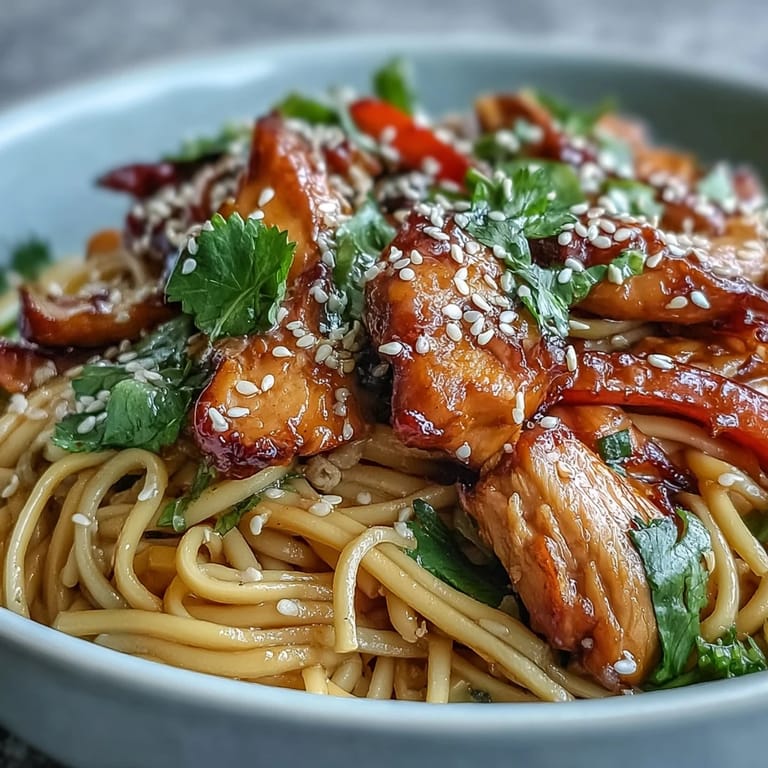
This bowl is flexible enough to work with whatever you have in the crisper or pantry, and I've made it a hundred different ways depending on the season and what I'm craving. Swap the chicken for pressed tofu if you want it vegetarian, throw in broccoli or mushrooms for more earthiness, add a pinch of chili flakes if you want heat, or even a splash of sriracha if you want it spicy. The sauce is forgiving and adaptable, which is part of why it's become such a staple in my kitchen.
- If you want to meal-prep, cook everything separately and store the sauce in a container so you can assemble bowls fresh rather than having them sit and get soggy.
- A squeeze of lime right before eating brightens up any leftover flavors and makes the whole thing taste freshly made even if you're reheating it.
- Try pairing this with a crisp white wine like Sauvignon Blanc if you're making it for a proper dinner—the acidity cuts through the richness of the sesame oil beautifully.
 Save
Save This bowl has become the meal I make when I want to feel like I've accomplished something in the kitchen without spending hours there. It's nourishing and delicious and comes together so smoothly that it never feels like work.
Recipe FAQs
- → Can I make this dish vegetarian?
Yes, substitute the chicken with firm tofu cubes. Press and pan-fry the tofu first to achieve a golden exterior and slightly chewy texture that stands up well to the sauce.
- → What type of noodles work best?
Udon noodles offer a satisfying chew and thickness that holds the sauce beautifully. Soba brings a nutty flavor, while rice noodles create a lighter, gluten-free option when paired with tamari.
- → How do I store leftovers?
Store components separately in airtight containers for up to 3 days. Keep noodles, chicken, vegetables, and sauce apart, then reheat gently and toss together to maintain the best texture.
- → Can I adjust the sweetness level?
Absolutely. Reduce the brown sugar to 1 tablespoon for less sweetness, or increase to 3 tablespoons if you prefer a stronger caramel-like glaze. You can also add chili flakes for heat balance.
- → What vegetables can I add?
Broccoli florets, sliced mushrooms, shredded cabbage, baby corn, or bok choy all work wonderfully. Add heartier vegetables like broccoli earlier in the stir-fry process so they cook through.
- → Is this gluten-free?
The dish can be gluten-free with simple swaps: use tamari instead of soy sauce, select rice noodles or certified gluten-free noodles, and verify all condiments are gluten-free.