 Save
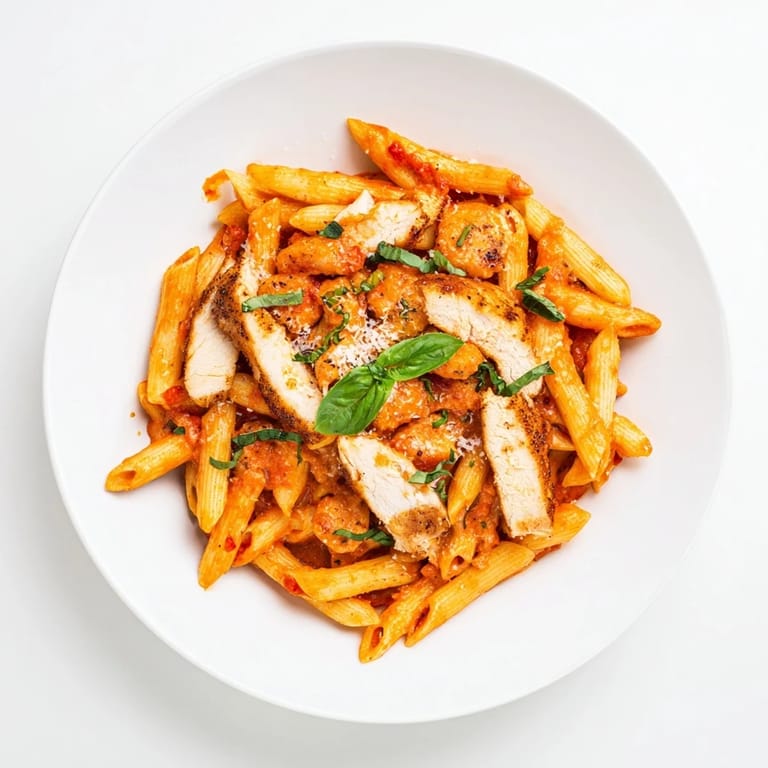
Save My roommate used to make this on Sunday nights when we were too tired to think but too hungry to order in again. She'd crank up the heat with whatever chili we had lying around, and the kitchen would smell like garlic and tomatoes within minutes. I started making my own version after I moved out, and now it's my go-to when I want something filling without spending an hour at the stove. The chicken gets this nice sear, and the sauce clings to every piece of penne like it was meant to be there.
I made this for a friend who claimed she didn't like spicy food, and she finished her entire plate without saying a word. Halfway through, she looked up and asked if I'd made the sauce from scratch, like it was some kind of magic trick. It wasn't magic, just good tomatoes and enough chili to make things interesting. That night taught me that people's taste boundaries are softer than they think, especially when the food is this comforting.
Ingredients
- Penne pasta: The ridges grab onto the sauce better than smooth pasta, and it holds up well if you need to reheat leftovers without turning mushy.
- Boneless, skinless chicken breasts: Slice them evenly so they cook at the same rate, and don't skip the resting step or all the juices run out onto your cutting board.
- Smoked paprika: This adds a subtle smoky depth that makes the chicken taste like it came off a grill even though it's just a skillet.
- Red chili: Fresh chili has a brighter heat than flakes, but either works depending on what's in your pantry and how brave you're feeling.
- Crushed tomatoes: Use a good quality can because this is the backbone of your sauce, and watery tomatoes make a watery dish.
- Tomato paste: It thickens the sauce and adds a concentrated sweetness that balances the acidity of the crushed tomatoes.
- Reserved pasta water: This starchy water is the secret to making the sauce cling to the pasta instead of pooling at the bottom of the bowl.
- Fresh basil: Tear it with your hands instead of chopping it with a knife to avoid bruising, and add it right before serving so it stays bright green.
- Parmesan cheese: Grate it fresh if you can, the pre-grated stuff doesn't melt the same way and lacks that nutty sharpness.
Tired of Takeout? 🥡
Get 10 meals you can make faster than delivery arrives. Seriously.
One email. No spam. Unsubscribe anytime.
Instructions
- Boil the pasta:
- Salt your water generously, it should taste like the sea, because this is your only chance to season the pasta from the inside. Don't forget to scoop out that pasta water before you drain, you'll need it later to loosen the sauce.
- Sear the chicken:
- Let the oil get hot before the chicken hits the pan, you want that sizzle sound immediately or it'll steam instead of sear. Resist the urge to move it around, just let it sit and develop that golden crust before flipping.
- Sauté the aromatics:
- The onion should go translucent and soft, not brown, so keep the heat at medium and stir occasionally. When you add the garlic and chili, give it just one minute because garlic burns fast and turns bitter.
- Simmer the sauce:
- Let it bubble gently for the full ten minutes so the flavors have time to marry and the raw tomato taste cooks off. Stir it now and then to keep the bottom from sticking, especially if your pan runs hot.
- Adjust the consistency:
- Add the pasta water a little at a time, it thickens as it cools so don't go overboard. Taste it now and fix the seasoning, this is your last chance before it hits the plate.
- Toss and serve:
- Add the pasta directly to the sauce pan and toss it together so every piece gets coated, not the other way around. Top with the sliced chicken and scatter the basil and cheese over everything while it's still steaming hot.
 Save
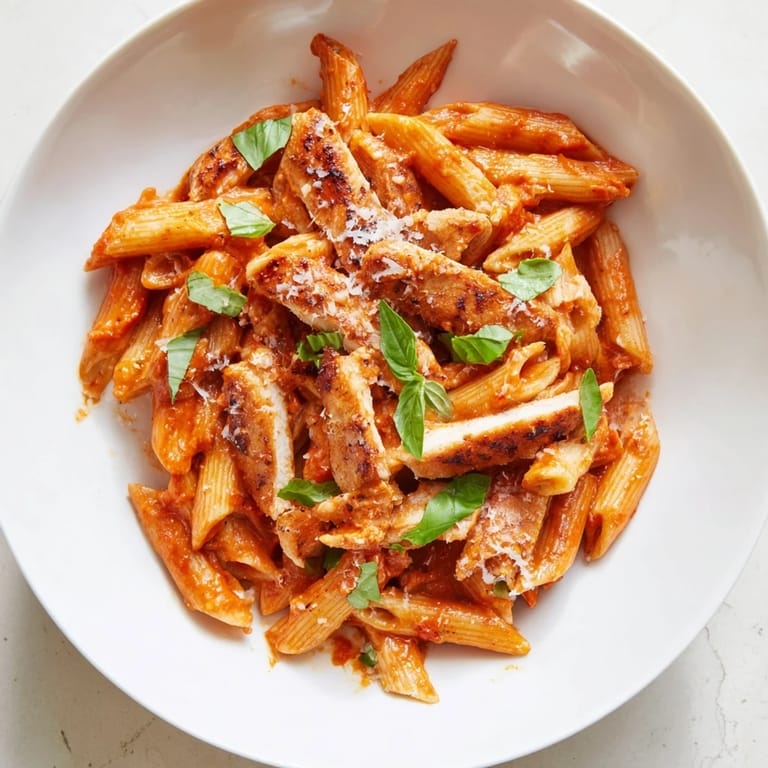
Save One winter evening, I made this after a long day and ate it curled up on the couch with a blanket and a glass of wine. The heat from the chili and the warmth of the pasta combined into this perfect, cozy feeling that made the whole day feel worth it. It's funny how a simple plate of pasta can do that, turn a forgettable Tuesday into something you actually remember.
How to Adjust the Heat Level
Start with half the chili the first time you make this, then taste the sauce before adding the pasta and decide if you want more. You can always add heat, but you can't take it away once it's in there. If you accidentally go too far, a spoonful of sugar or a splash of cream can tame it without dulling the other flavors. I learned that the hard way after making a batch so spicy I could barely finish it, and now I'm more careful with my chili measurements.
Making It Ahead and Storing
The sauce keeps beautifully in the fridge for up to four days and actually tastes better after the flavors have had time to sit together overnight. Store the chicken separately if you can, so it doesn't get soggy sitting in the sauce, then reheat everything gently on the stove with a splash of water. Cook the pasta fresh when you're ready to eat, because reheated pasta never quite has the same texture as fresh, no matter how hard you try. I usually make a double batch of sauce and freeze half for nights when I don't want to chop an onion but still want something homemade.
Variations and Substitutions
Swap the chicken for grilled shrimp if you want something lighter, or use firm tofu for a vegetarian version that still has plenty of protein. I've also made this with sausage instead of chicken, and the extra fat from the sausage makes the sauce even richer and more indulgent. If you don't have penne, any short pasta with ridges or tubes works, rigatoni, fusilli, or even shells all grab the sauce just as well.
- Add a handful of spinach or kale in the last minute of cooking the sauce for some green without changing the flavor.
- Stir in a spoonful of cream or mascarpone at the end if you want to mellow the heat and make it more luxurious.
- Use whole wheat or chickpea pasta if you're trying to sneak in extra fiber or protein without anyone noticing.
 Save
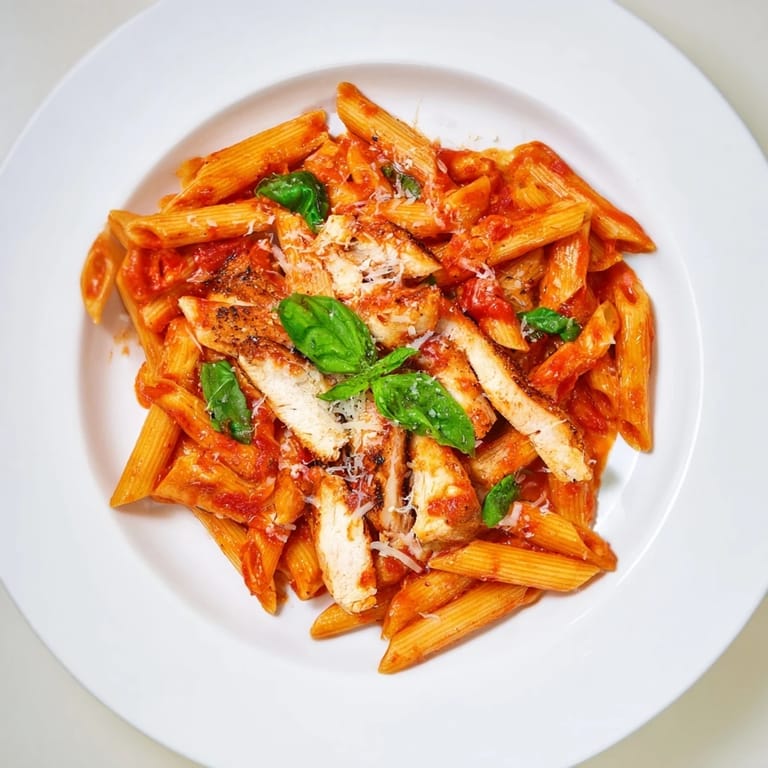
Save This recipe has become my reliable answer to the question of what to make when I want something satisfying without a lot of fuss. Every time I make it, I'm reminded that good food doesn't have to be complicated, it just has to be made with a little attention and a lot of appetite.
Recipe FAQs
- → Can I use chicken thighs instead of chicken breasts?
Yes, boneless, skinless chicken thighs work beautifully and offer richer flavor. They may require an extra 2-3 minutes per side when searing due to thickness.
- → How do I adjust the heat level?
Start with 1/2 teaspoon chili flakes and increase gradually to your preference. You can also drizzle chili oil at the end for a warming kick without overpowering the sauce.
- → What if I don't have fresh chili?
Red chili flakes work just as well. Use 1 teaspoon for medium heat and adjust to taste. Dried chili peppers can also be rehydrated and minced for deeper flavor.
- → Can I make this ahead?
Prepare the sauce up to 2 days in advance and refrigerate. Cook pasta fresh before serving and reheat the sauce gently. The seared chicken is best made fresh but can be prepared 4 hours ahead.
- → What pasta shapes work best?
Penne holds sauce beautifully, but rigatoni, fusilli, or farfalle are excellent alternatives. Avoid delicate shapes that break easily; thicker pastas capture the robust tomato sauce better.
- → Is this dish suitable for meal prep?
Yes, store components separately: sauce in airtight containers for 3 days, cooked pasta tossed with olive oil for 2 days, and chicken refrigerated for 3 days. Combine when ready to eat to maintain texture.