 Save
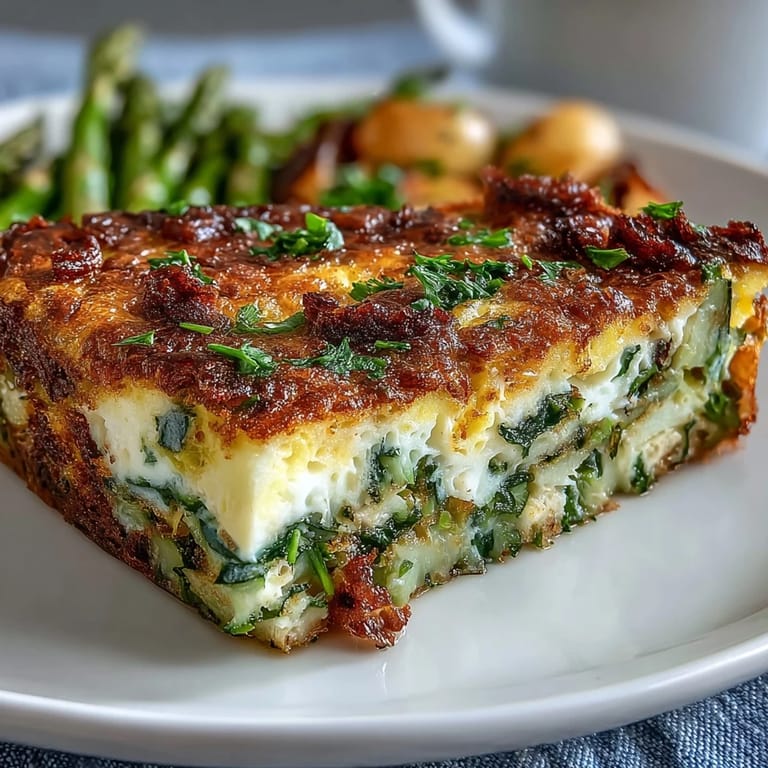
Save Last spring, I was standing in my kitchen on a Saturday morning when my neighbor stopped by with a bundle of fresh asparagus from her garden, still dewy and perfect. She mentioned she'd been craving something light but satisfying for brunch, and suddenly I remembered this frittata I'd made years ago but forgotten about—the kind of dish that feels fancy but comes together in under an hour. That morning, we chopped vegetables together while the sun streamed through the windows, and by the time the frittata emerged from the oven all golden and puffed, we couldn't stop smiling at how simple it all was.
I made this for a group of friends who showed up unannounced one Wednesday evening, and I realized halfway through chopping vegetables that I had exactly what I needed in my crisper drawer. There's something wonderful about feeding people without fuss, watching them get excited over something that took fifteen minutes of prep and felt completely effortless on my end. That night, everyone asked for the recipe, and one friend admitted she'd been intimidated by frittatas her whole life—turns out they're just baked scrambled eggs with vegetables, and that simple realization changed her entire approach to weeknight cooking.
Ingredients
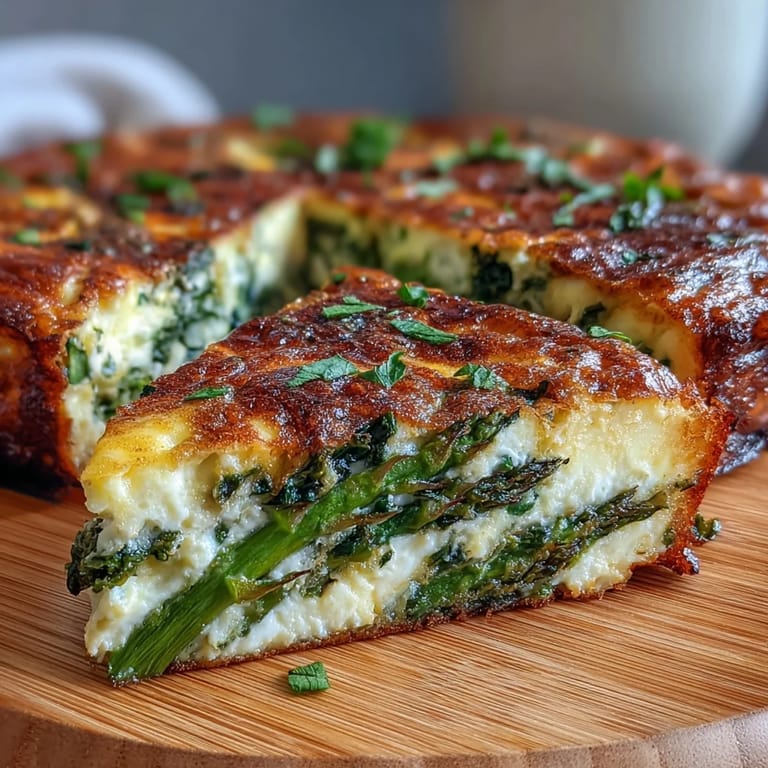
- Asparagus: Trim the woody bottoms by snapping them where they naturally break—this simple gesture means you're eating only the tender parts that deserve your attention.
- Baby spinach: Fresh spinach wilts dramatically when heat hits it, so don't be alarmed when a massive handful shrinks to nothing; it's exactly what you want.
- Zucchini: Dice it small so it softens in the same timeframe as the asparagus, and don't skip the dicing step even if you're tempted to slice it—the texture matters.
- Cherry tomatoes: Halving them prevents them from rolling everywhere and allows their juices to seep into the eggs, adding brightness and subtle sweetness.
- Green onions: Both the white and green parts contribute flavor; the white adds a slight bite while the green brings freshness, so use the whole thing.
- Large eggs: Room temperature eggs incorporate more smoothly into the milk, creating a silkier texture than cold eggs straight from the fridge.
- Whole milk or cream: This creates the custardy, tender crumb you want; skip it entirely and your frittata becomes dense and rubbery.
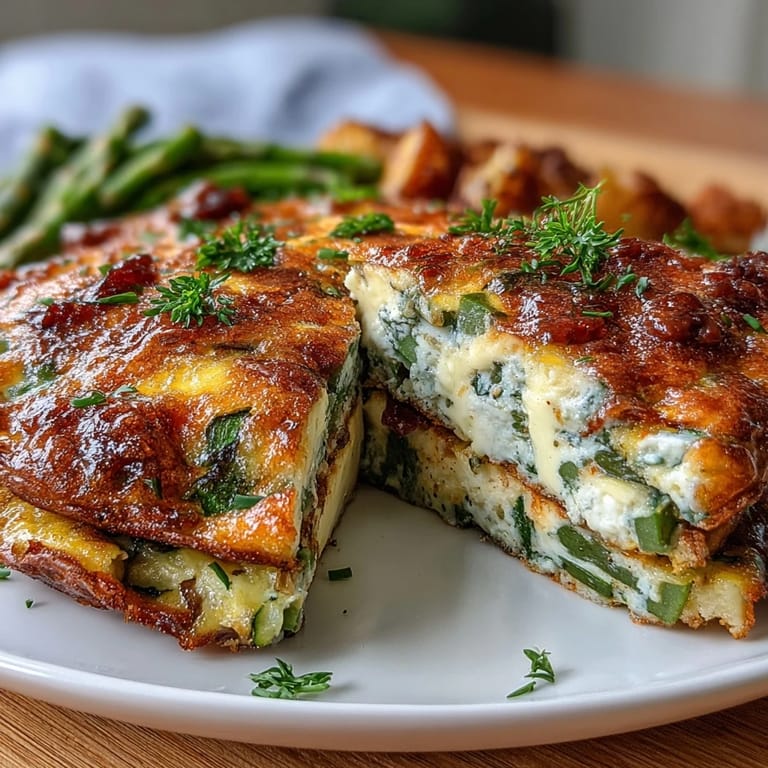
- Goat cheese: The tanginess cuts through the richness of the eggs and plays beautifully against sweet tomatoes—crumble it by hand rather than breaking it into dust.
- Parmesan cheese: This brings savory depth and helps the top brown beautifully, so don't substitute it with something milder.
- Fresh chives and parsley: These add a final whisper of spring and should go in at the very end so the heat doesn't diminish their delicate flavor.
- Olive oil: Quality matters here since it's one of the few prominent flavors; a good olive oil makes the entire dish taste more refined.
Tired of Takeout? 🥡
Get 10 meals you can make faster than delivery arrives. Seriously.
One email. No spam. Unsubscribe anytime.
Instructions
- Preheat your oven:
- Set it to 375°F and let it sit for a few minutes so it's truly hot when your frittata arrives. This temperature is the sweet spot—hot enough to set the center quickly without browning the edges too much.
- Build a flavor foundation:
- Heat olive oil in your skillet over medium heat until it shimmers, then add asparagus and zucchini. These vegetables need a head start since they're the sturdiest; cook them for three to four minutes until they soften just slightly but still hold their shape.
- Add the tender greens:
- Scatter in spinach, cherry tomatoes, and green onions, stirring gently for two minutes until the spinach darkens and collapses. The skillet should smell grassy and alive at this point, a signal that everything is cooking in harmony.
- Prepare your egg custard:
- In a separate bowl, whisk together eggs, milk, salt, and pepper until they're uniform and slightly foamy. Don't overbeat—just enough to combine everything thoroughly and introduce a little air.
- Unite everything:
- Pour the egg mixture slowly over the vegetables, letting it flow into gaps and settle evenly. Immediately sprinkle goat cheese, Parmesan, chives, and parsley across the top, distributing them so no bite will lack flavor.
- Start on the stovetop:
- Let it cook undisturbed for three to four minutes on medium heat until the edges begin to set and turn pale gold. You're not cooking it through; you're just getting the bottom anchored to the pan so the center can stay tender.
- Finish in the oven:
- Transfer the skillet to your preheated oven and bake for twelve to fifteen minutes until the center is just set and the top is slightly puffed. The frittata should jiggle ever so slightly in the very middle when you shake the pan—it will continue cooking as it cools.
- Rest and serve:
- Let it sit for five minutes before slicing; this allows the eggs to firm up slightly and makes serving cleaner. Slice it into wedges right in the skillet, or slide it onto a cutting board if you're feeling confident.
 Save
Save The moment I understood the true gift of a frittata was when my partner came home exhausted from work and I served him a slice straight from the skillet, still warm from the oven, with nothing but a simple salad on the side. He sat down, took one bite, and visibly relaxed—not because it was fancy, but because it tasted like someone had taken care of him. That's when food becomes more than sustenance; it becomes a gesture of love.
Why Spring Vegetables Matter Here
Spring vegetables have a delicate sweetness and tender texture that heavier root vegetables can't match, and they cook quickly enough that you're not waiting forever for dinner. The asparagus brings an earthy sophistication, the zucchini adds body and prevents the frittata from feeling too eggy, and the tomatoes provide brightness and acidity. Together, they create a vegetable medley that feels intentional rather than accidental, which is the difference between a frittata that tastes homey and one that tastes thoughtful.
The Role of Goat Cheese and Herbs
Goat cheese is the secret weapon in this recipe—its tanginess and slight creaminess elevate the entire dish from simple to craveable. I learned this after trying traditional cheddar in a frittata and finding it one-note and heavy; goat cheese brought complexity and brightness I didn't expect. The fresh chives and parsley finishing touch matter enormously too, adding a green flourish that makes the frittata taste like spring instead of just any other day.
Storage, Reheating, and Variations
A frittata actually improves after sitting overnight in the refrigerator, as the flavors meld and deepen—I've found that cold frittata with strong coffee is an underrated breakfast combination. You can reheat slices in a 300°F oven for five to seven minutes to restore some fluffiness, or eat them straight from the fridge if you prefer a denser texture. To vary this recipe endlessly, swap asparagus for artichoke hearts, add sun-dried tomatoes, replace goat cheese with feta, or toss in a handful of fresh basil—the formula remains bulletproof.
- Make this recipe on Sunday evening and you have breakfast sorted for three mornings.
- Leftover frittata travels beautifully in a lunchbox, making it perfect for meal prep.
- If your skillet isn't oven-safe, finish it under the broiler instead, watching carefully to avoid burning the top.
 Save
Save This frittata has become my answer to the question What should we make for dinner when I'm tired, when friends drop by unexpectedly, or when the crisper drawer needs rescuing. It's forgiving, flexible, and somehow always makes you look like you tried harder than you actually did.
Recipe FAQs
- → Can I substitute goat cheese with another cheese?
Yes, creamy cheeses like feta or ricotta can be used to maintain a similar texture and flavor profile.
- → How do I know when the dish is fully cooked?
The frittata is done when the center is set, puffed up, and slightly golden on top after baking for 12–15 minutes.
- → What vegetables work best in this dish?
Spring vegetables such as asparagus, spinach, zucchini, and cherry tomatoes complement the flavors and cook evenly in the frittata.
- → Is it possible to prepare this ahead of time?
Yes, the cooked dish can be refrigerated and gently reheated, though it's best enjoyed fresh for optimal texture.
- → Can I make a dairy-free version?
Omit the cheeses and substitute milk or cream with a plant-based alternative for a dairy-free option.