 Save
Save My friend texted me a photo of a sushi bake casserole from her favorite restaurant, and I knew immediately I had to recreate it at home. There's something about deconstructed sushi that feels less intimidating than rolling, more forgiving, yet still delivers that perfect marriage of creamy, savory, and fresh. The first time I layered it together, I was genuinely surprised how the oven transformed separate components into something that tasted like an upgraded sushi experience. Now it's become my go-to when I want sushi without the precision, and honestly, it might taste even better this way.
I made this for my family on a random Tuesday night, and my sister—who normally orders takeout sushi—asked for seconds. She couldn't believe I'd made it, and when I told her it was basically just rice, salmon, and toppings layered into a baking dish, she laughed at how simple it actually is. That moment when someone enjoys homemade food more than their usual restaurant go-to never gets old.
Ingredients
- Sushi rice: This is the foundation, and rinsing it until the water runs clear really does matter—it removes excess starch so you get fluffy grains instead of gluey clumps.
- Rice vinegar, sugar, and salt: This combination is what makes sushi rice actually taste like sushi rice; don't skip this step or use regular rice vinegar substitute.
- Salmon fillet: Fresh skinless salmon bakes beautifully and flakes into tender, moist pieces; I prefer wild-caught when I can find it.
- Soy sauce and sesame oil: These two season the salmon perfectly and add that recognizable Japanese flavor without overpowering the delicate fish.
- Cream cheese and Kewpie mayonnaise: The Kewpie makes a real difference—it's richer and slightly sweeter than regular mayo, creating a luxurious bind for the flaked salmon.
- Sriracha: Optional, but a teaspoon adds a subtle warmth that builds with each bite.
- Avocado: Added fresh at the end so it stays creamy and doesn't oxidize or get warm.
- Nori sheets: Cut into small squares, they add that oceanic umami flavor and a satisfying crunch.
- Toasted sesame seeds: Buy them already toasted to save a step, and sprinkle them generously for nutty flavor and visual appeal.
- Spring onions: A light, fresh finish that cuts through the richness of the creamy layer.
Tired of Takeout? 🥡
Get 10 meals you can make faster than delivery arrives. Seriously.
One email. No spam. Unsubscribe anytime.
Instructions
- Prepare the sushi rice:
- Rinse the rice under cold running water, stirring gently with your fingers until the water runs almost clear—this takes a few minutes but prevents a gluey mess. Combine with fresh water in a saucepan, bring to a boil uncovered, then immediately cover and drop the heat to low for 15 minutes, resisting the urge to peek.
- Season the rice:
- While the rice is still steaming, mix rice vinegar, sugar, and salt in a small bowl until the sugar dissolves. Fold this gently into the hot rice with a spatula or rice paddle, then spread it evenly into your greased 9x13-inch baking dish—this is where the magic foundation gets set.
- Bake the salmon:
- Place your salmon fillet skin-side down on parchment paper, brush it lightly with soy sauce and sesame oil, and dust with black pepper. Slide it into a 400°F oven for 12 to 15 minutes until it flakes easily with a fork and the thickest part is opaque throughout.
- Make the creamy layer:
- While the salmon cools slightly, blend softened cream cheese, mayonnaise, optional sriracha, and lemon juice until smooth and creamy. Flake the cooled salmon into bite-sized pieces, then fold it gently into the cream cheese mixture so you get pockets of salmon throughout.
- Assemble and bake:
- Spread the salmon mixture evenly over your rice layer, then return the whole casserole to the 400°F oven for 10 minutes until the top is warm and just barely golden. This second bake melds everything slightly without drying anything out.
- Top and serve:
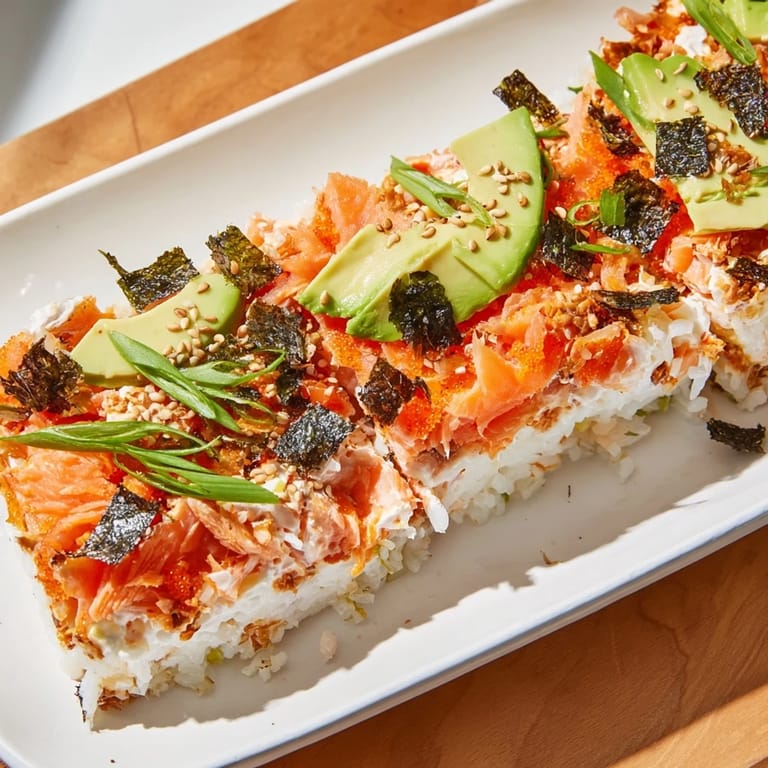
- Slice the avocado while the casserole finishes cooking, then top each serving with fresh avocado slices, nori squares, sesame seeds, and spring onions. Serve warm with small bowls of soy sauce, pickled ginger, and wasabi for dipping.
 Save
Save What started as an attempt to recreate takeout became something I actually prefer to order—there's comfort in knowing exactly what went into each layer, and the warm rice with cool, fresh toppings feels almost meditative to eat. My kitchen smelled incredible for hours after, like sesame and soy and the subtle sweetness of cooked rice, and that aroma alone made the whole effort feel worthwhile.
Why This Baked Approach Works
Traditional sushi requires steady hands, practice, and a certain zen-like patience with rolling. This casserole approach gives you all the flavors and textures without the technique barrier. The baking stage gently warms everything and helps the layers settle together, while keeping the toppings fresh and cool when served. It's the confidence boost version of sushi, and honestly, it might be more delicious because nothing gets compressed or overworked.
Building Flavor Layers
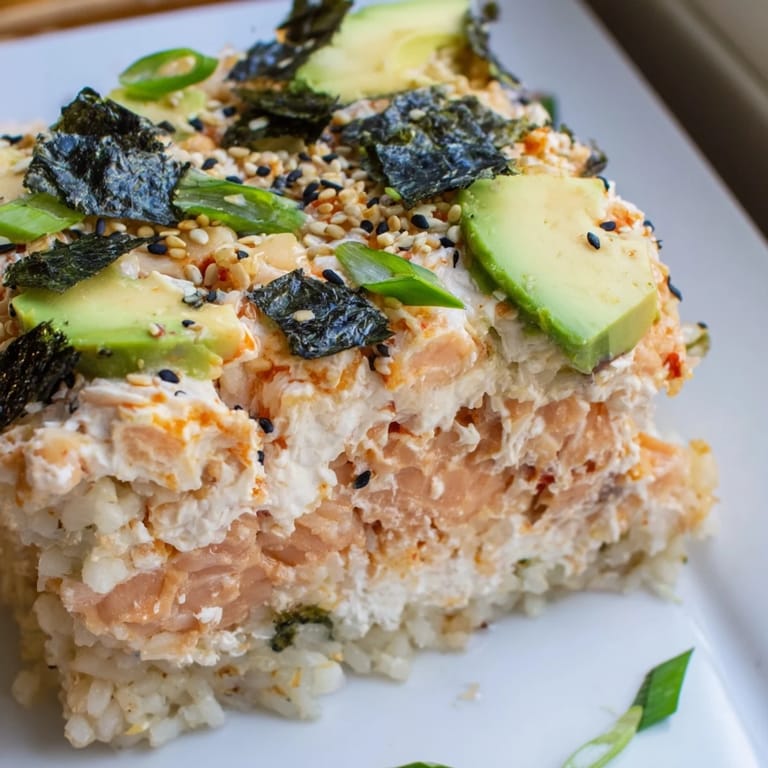
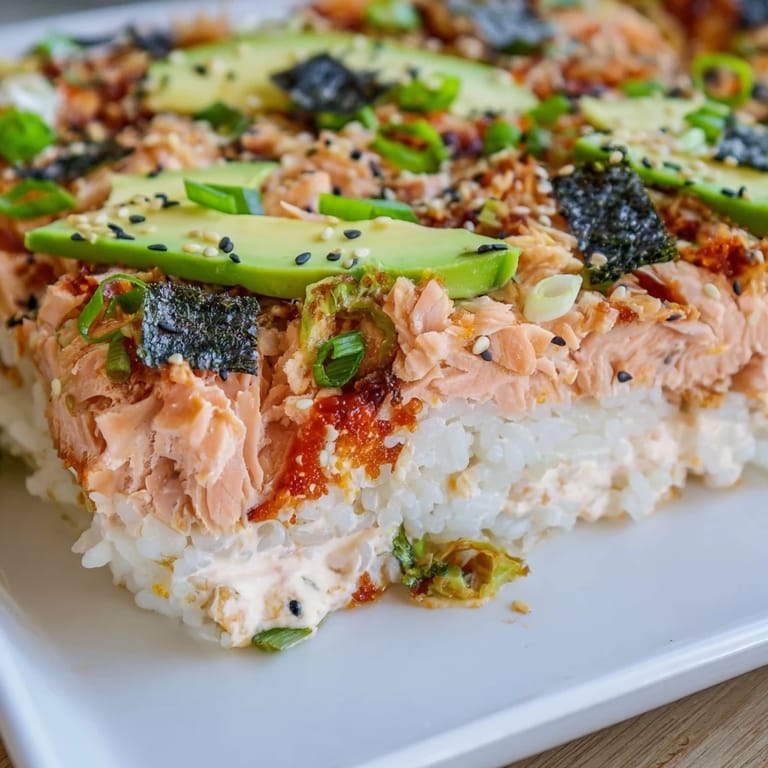
Each layer has a purpose and a flavor profile. The seasoned rice grounds everything with subtle sweetness and umami from the vinegar. The salmon layer, bound with creamy cheese and mayo, becomes almost luxurious—nothing like raw fish, but deeply satisfying. The cold avocado and fresh nori on top prevent any richness from becoming heavy, and the sesame and spring onions add brightness and texture. When you slice into it, you get all four layers in every bite, which is exactly the point.
Customizations and Variations
Once you understand the structure, this casserole becomes endlessly flexible. I've made versions with cooked crab meat when salmon prices spike, and with canned tuna when I forgot to thaw the good stuff. Shrimp works beautifully too if you cook it gently. For a lighter version, swap regular mayo for Japanese light mayo and use reduced-fat cream cheese without changing the technique. Some friends swear by adding panko breadcrumbs mixed with sesame seeds before the final bake for extra crunch.
- Try adding a thin layer of sriracha mayo between the rice and salmon for a spicy kick that builds with each bite.
- Substitute the avocado with cucumber ribbons or thin-sliced radish for a lighter, more refreshing version.
- Leftover casserole actually tastes great cold the next day if you keep the toppings separate and assemble just before eating.
 Save
Save This casserole has become my answer to 'what should we make for dinner when we want something special but don't want the stress.' It's taught me that deconstruction can be just as satisfying as tradition, and sometimes the simplest approach yields the most genuine moments around a table.
Recipe FAQs
- → What type of rice is best for this dish?
Sushi rice is ideal as it becomes sticky and holds together well, making layering easier and enhancing the overall texture.
- → Can I substitute the salmon with another protein?
Yes, cooked crab meat, canned tuna, or cooked shrimp can be used as alternatives without compromising the flavor balance.
- → How is the creamy layer prepared?
The creamy layer combines softened cream cheese, mayonnaise, sriracha, and lemon juice to create a smooth, flavorful topping that complements the salmon.
- → What is the purpose of nori in the casserole?
Nori adds a subtle umami and slightly crisp seaweed flavor, enhancing the overall taste and providing a distinctive texture contrast.
- → How should I serve this layered dish?
Serve warm, sliced into portions, with soy sauce for dipping and optional pickled ginger or wasabi to accentuate the flavors.
- → Can this dish be prepared ahead of time?
Yes, you can assemble it beforehand and bake when ready to eat, ensuring a fresh and warm experience with minimal last-minute effort.