 Save
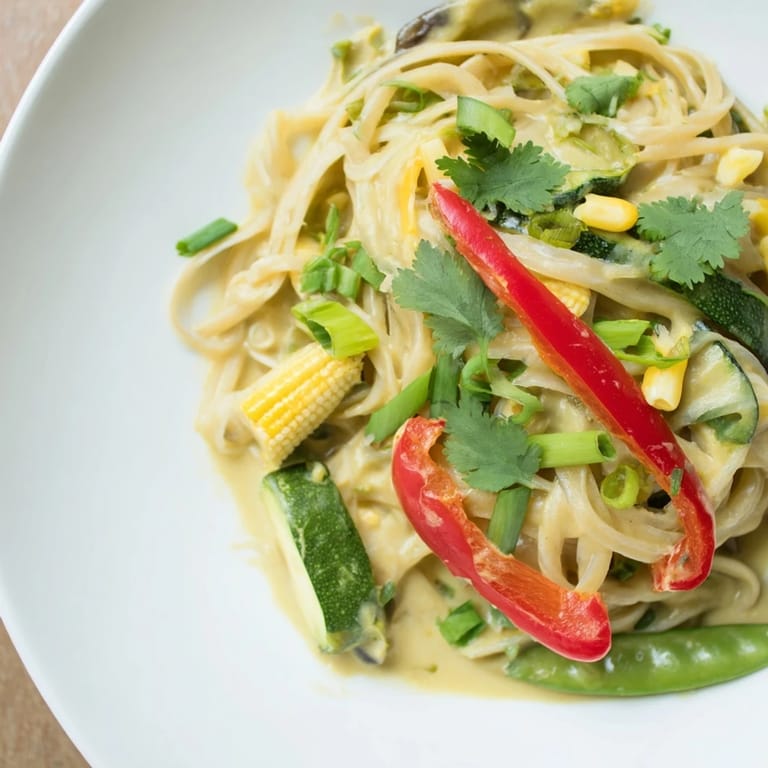
Save I discovered this dish on a rainy Tuesday when I was craving something bold but didn't want to choose between Thai takeout and the box of linguine sitting in my pantry. Out of pure improvisation, I grabbed a jar of green curry paste from the back of my cabinet and started building layers of flavor right there in my skillet. That first tangle of curry-coated pasta with vegetables still snappy from the pan changed how I think about fusion cooking—sometimes the best meals happen when you stop overthinking and just let ingredients talk to each other.
I made this for friends who were skeptical about pasta with curry, and I'll never forget watching them twirl their forks through those green-coated noodles and exchange that quiet look of surprise. By the second bite, someone asked if I'd order this from a restaurant, and I got to say I'd made it in my own kitchen. That moment felt like winning something small but real.
Ingredients
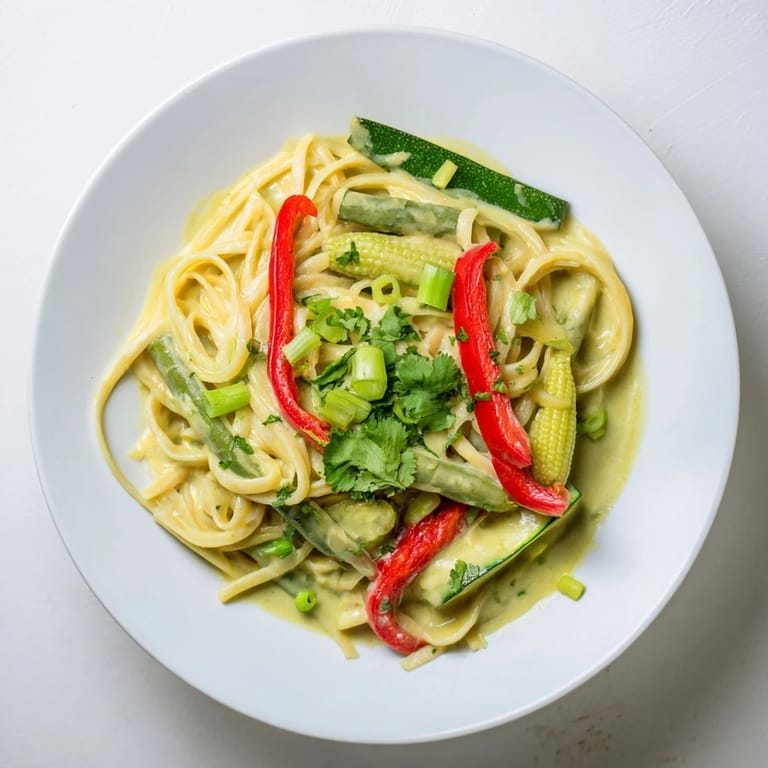
- Linguine or spaghetti (350 g): The thinner strands catch the curry sauce better than thicker pasta, and there's something satisfying about how they curl around the vegetables.
- Red bell pepper: Sweet and slightly fruity, it balances the heat and adds vibrant color that makes the dish look as good as it tastes.
- Zucchini: It stays tender without falling apart if you slice it right and don't overcook it, becoming almost silky in the sauce.
- Snap peas and baby corn: These keep their snap and crunch, reminding your mouth that vegetables belong in every bite.
- Spring onions: They finish the dish with a fresh, almost oniony whisper that cuts through the richness.
- Fresh cilantro: A handful scattered at the end lifts everything, turning it from good into memorable.
- Vegetable oil: Use a neutral oil that won't compete with the curry paste's complexity.
- Thai green curry paste (3 tbsp): This is where all the character lives—fragrant, spicy, and umami-rich, though you can dial it up or down depending on your heat tolerance.
- Coconut milk (400 ml): Full fat is essential; the cream creates that luscious mouthfeel that makes the dish feel indulgent without being heavy.
- Soy sauce: Just a tablespoon adds savory depth without making anything taste salty.
- Brown sugar: It mellows the heat slightly and lets the other flavors emerge instead of just screaming spice.
- Ginger: Fresh ginger matters here—the brightness it brings can't be faked with ground ginger.
- Lime juice: The final squeeze of acid is what transforms everything from good to bright and alive.
Tired of Takeout? 🥡
Get 10 meals you can make faster than delivery arrives. Seriously.
One email. No spam. Unsubscribe anytime.
Instructions
- Get your pasta water ready:
- Bring a large pot of salted water to a rolling boil and cook your pasta until it's al dente—still with a little resistance when you bite it. Before draining, grab about half a cup of that starchy pasta water and set it aside; you'll use it later to adjust the sauce's creaminess.
- Build the curry base:
- While pasta cooks, heat oil in your skillet over medium heat until it shimmers. Add the curry paste and ginger, and let them toast for a minute or two until your kitchen fills with that intoxicating aroma that says something good is happening.
- Create the sauce:
- Pour in the coconut milk along with soy sauce and brown sugar. Stir gently and let it simmer for a few minutes, stirring occasionally so nothing sticks to the bottom and the sugar dissolves completely.
- Cook the vegetables:
- Add your sliced bell pepper, zucchini, snap peas, and baby corn to the sauce. You want them to soften just enough to taste cooked but still hold a little resistance—usually about 5 to 6 minutes depending on how you like your vegetables.
- Bring it all together:
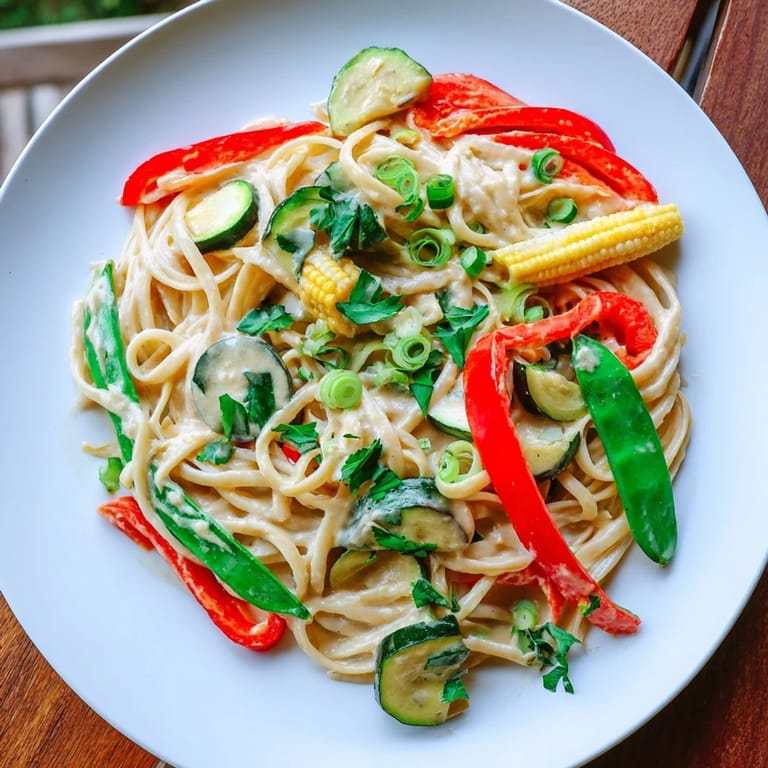
- Add your cooked pasta and a splash of that reserved pasta water to the skillet. Toss everything so the noodles are completely coated and swimming in sauce. Let it sit for a couple minutes so the pasta drinks in all those flavors.
- Finish with brightness:
- Stir in your spring onions, lime juice, and cilantro. Taste it and trust your instincts—if you want more spice, add another teaspoon of curry paste; if you want it creamier, add a splash more pasta water.
 Save
Save The first time someone asked for seconds and then thirds, I realized this dish had become something I'd make again and again without thinking. It's one of those meals that doesn't need an occasion—just a Tuesday night when you want something that feels a little fancy but doesn't demand hours in the kitchen.
Making It Your Own
This recipe is honestly just a starting point, and that's where its real magic lives. If you love broccoli more than snap peas, use broccoli. If you're cooking for someone who can't eat coconut, swap in heavy cream or cashew cream and you'll barely notice the difference. I've made this with shrimp on nights when I wanted something leaning more seafood, and with crumbled tofu on mornings when I needed it to be completely vegan. The green curry paste is flexible enough to work with whatever you've got in your kitchen, which is exactly why it became a regular dinner rather than a one-time experiment.
About the Heat
Thai green curry paste is genuinely spicy, but it's not the kind of heat that burns and disappears—it's complex and lingers in the best way. If you're cooking for people who prefer mild food, start with two tablespoons of paste instead of three, or stir in an extra splash of coconut milk to calm it down. You can always add more heat, but you can't take it back, so taste as you go and adjust without apology. The brown sugar and coconut milk both soften the spice, creating a balance where heat and creaminess dance together instead of one overpowering the other.
Timing and Serving
This dish is best eaten right after you finish cooking it, while the pasta still has that tender texture and the vegetables haven't released all their moisture into the sauce. If you need to make it ahead, cook the components separately and combine them just before serving—it takes five minutes and tastes infinitely better than reheating a finished dish. Serve it in a shallow bowl rather than a deep one so you can actually see all those colors, and don't be stingy with the garnishes; the lime wedges are there so everyone can squeeze their own brightness into each bite.
- Pair this with a crisp white wine like Sauvignon Blanc or Riesling—the acidity cuts through the richness and makes every bite taste even better.
- If you're feeding vegetarians and meat eaters at the same table, cook the vegetables and sauce together, then divide and add protein separately so everyone gets exactly what they want.
- Leftover curry sauce freezes beautifully for up to three months, so make extra and you've got an easy dinner waiting in your freezer.
 Save
Save This is the kind of recipe that proves you don't need a passport or takeout menu to eat something that makes you feel like you're sitting at a table somewhere warm and interesting. It's become one of those dishes I make when I want to feel capable in the kitchen without spending my whole evening there.
Recipe FAQs
- → Can the pasta be replaced with gluten-free options?
Yes, gluten-free pasta works well to accommodate dietary restrictions without altering the fusion flavors.
- → How do you adjust the spice level in this dish?
The spice intensity can be controlled by adding more or less green curry paste and by choosing whether to include sliced red chili garnish.
- → What vegetables can I substitute or add?
Broccoli, carrots, or snap peas are excellent alternatives or additions to customize the vegetable mix.
- → Is the coconut milk essential for the sauce?
Coconut milk provides the creamy texture and subtle sweetness crucial to the green curry profile but can be replaced with coconut cream for a richer taste.
- → Can I add protein to this fusion dish?
Yes, cooked chicken, shrimp, or tofu can be added for extra protein while maintaining the dish’s vibrant character.