 Save
Save There's something almost meditative about the way a wok sounds when you first heat it—that subtle shimmer before the oil catches. I discovered this noodle bowl on a Tuesday evening when I had leftover chicken and a crisper drawer full of vegetables that needed rescuing. Within twenty minutes, I'd created something so vibrant and balanced that my usually picky dinner guest asked for the recipe before even finishing their bowl. It became our go-to when we wanted something restaurant-quality but didn't have the energy for complicated techniques.
I remember making this for my coworker Sarah who'd just moved into her first apartment and was intimidated by cooking. Watching her arrange the colorful vegetables over the noodles and taste that first forkful—the way her whole face lit up—reminded me that good food is partly about how it looks before you even eat it. She started making it twice a week and texting me photos, which honestly made my day every single time.
Ingredients
- Boneless, skinless chicken breast or thighs (500 g): Thighs actually stay juicier when sliced thin, though breasts work perfectly fine and feel lighter—choose based on what you're craving that day.
- Tamari or low-sodium soy sauce (3 tbsp): Tamari's slightly deeper flavor is worth seeking out if you can, but regular soy sauce won't disappoint you.
- Fish sauce (1 tbsp): This seems scary to new cooks, but trust the ingredient—it's what makes the sauce taste restaurant-quality and sophisticated, not fishy.
- Rice vinegar (2 tbsp): The acidity brightens everything up and prevents the sauce from tasting too heavy or one-dimensional.
- Honey (1½ tbsp): Just enough sweetness to balance the salty and spicy notes without making anything cloying.
- Toasted sesame oil (2 tbsp): Buy the small bottle because a little goes a long way, and the toasted kind has more personality than regular sesame oil.
- Neutral oil like canola or sunflower (2 tbsp): This cuts the intensity of the sesame oil and helps the sauce emulsify more evenly.
- Garlic and ginger (3 cloves minced garlic, 1 tsp grated ginger): Fresh ginger might seem optional, but it adds a brightness that bottled versions struggle to match.
- Chili flakes or Sriracha (1 tsp optional): Leave this out if heat makes you nervous—you can always pass it at the table and let everyone control their own adventure.
- Dried rice noodles or wheat noodles (250 g): Rice noodles feel lighter and more delicate; wheat noodles hold their texture better and feel more substantial.
- Fresh vegetables—carrot, cucumber, bell pepper, spring onions, bean sprouts (as listed): These aren't just decoration; the raw crunch against the warm noodles and soft chicken is where the magic happens.
- Fresh cilantro (2 tbsp chopped) and toasted sesame seeds (2 tbsp): These finishing touches take the bowl from good to genuinely memorable.
- Lime wedges: Always squeeze fresh lime over everything—it's the final flavor note that ties the whole thing together.
Tired of Takeout? 🥡
Get 10 meals you can make faster than delivery arrives. Seriously.
One email. No spam. Unsubscribe anytime.
Instructions
- Build your sauce foundation:
- Whisk tamari, fish sauce, rice vinegar, honey, sesame oil, neutral oil, minced garlic, and ginger in a medium bowl until the honey dissolves completely and everything looks glossy and unified. Split this mixture in half—one half becomes your marinade, the other your final sauce, so you'll have something fresh and vibrant at the end.
- Marinate the chicken:
- Toss your thinly sliced chicken with the first half of the sauce and let it sit for fifteen minutes while you prepare everything else. This isn't just about flavor; it also helps the chicken stay tender when it hits the hot pan.
- Cook the noodles properly:
- Follow your package instructions, but here's the thing—drain them and rinse with cold water immediately, otherwise they'll keep cooking and turn mushy. Spread them out on a plate if you have time so they separate and cool faster.
- Sear the chicken:
- Get your skillet or wok genuinely hot over medium-high heat before adding the marinated chicken, then resist the urge to stir constantly. Let each piece sit for a moment so it develops a light golden color, which takes about five to seven minutes total. You want it cooked through but still tender, not dry and stringy.
- Assemble your bowls:
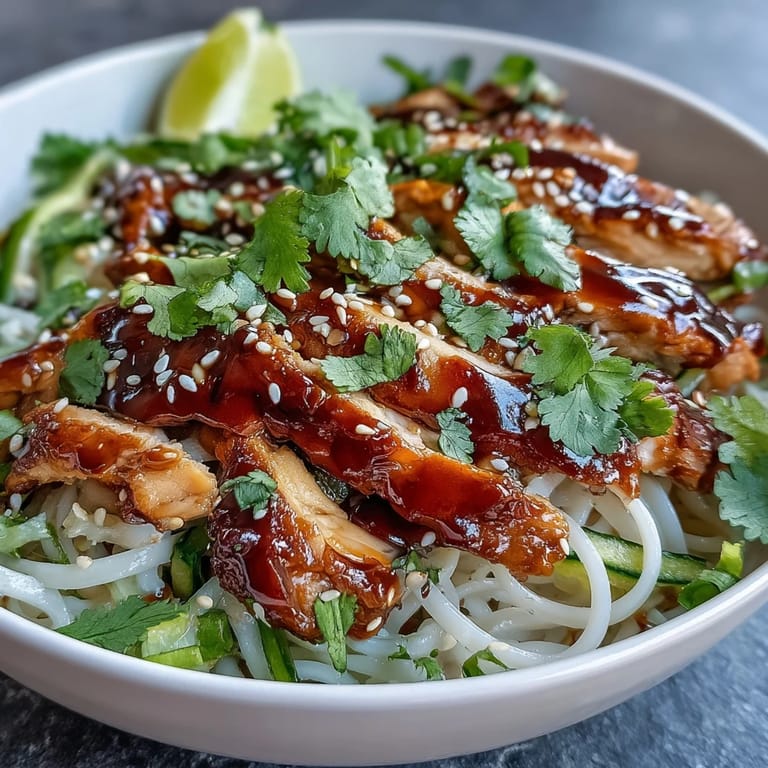
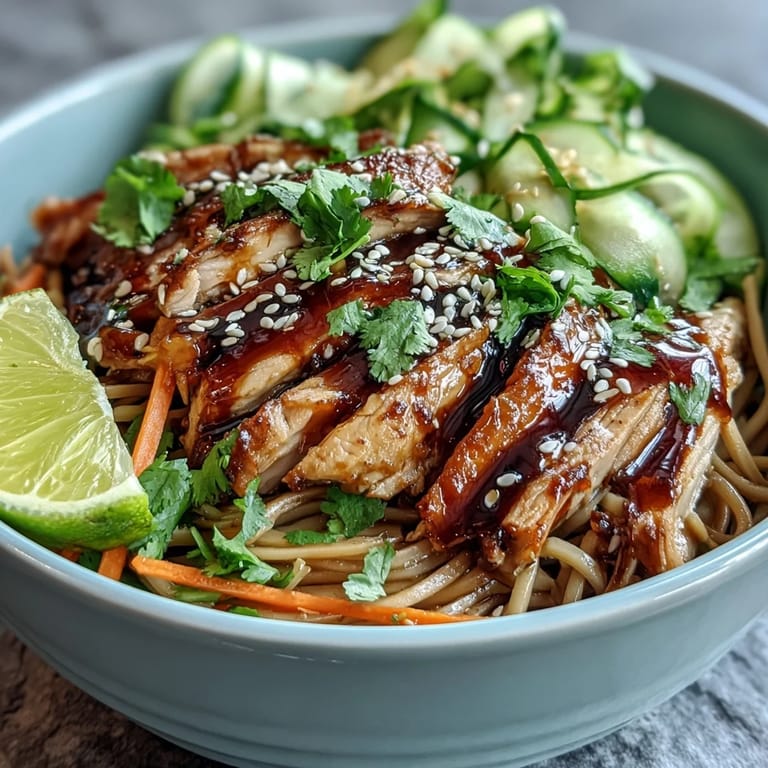
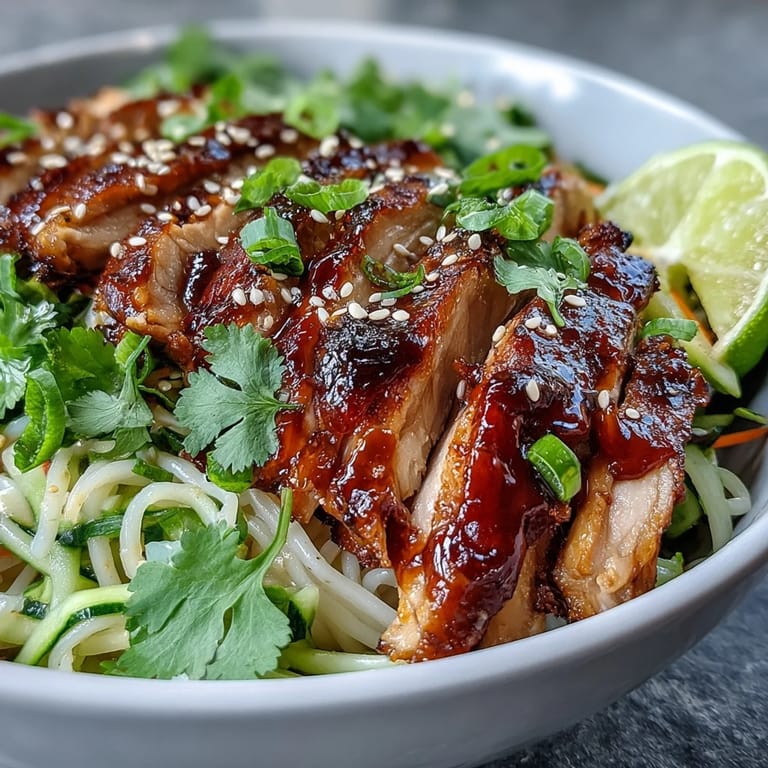
- Divide the cooled noodles among four bowls, then arrange your cooked chicken and all the raw vegetables on top in a way that looks appealing to you—this is your moment to be artistic. The contrast between textures is half the experience here.
- Finish with sauce and garnishes:
- Drizzle the reserved sauce evenly over each bowl, scatter cilantro and sesame seeds across the top, and serve with lime wedges on the side so everyone can squeeze fresh citrus to taste. Serve right away while the noodles are still slightly warm and the vegetables are still crisp.
 Save
Save My favorite thing that happened was when my neighbor—the one who claims she can't cook anything—made this for a dinner party and had everyone asking for her secrets. She called me grinning, admitting she'd just told them it was a family recipe passed down for generations. Sometimes the best compliment to a recipe is when people insist it must be more complicated than it actually is.
Why This Bowl Wins
Most noodle bowls feel like they're missing something—they're either too heavy, too bland, or they fall apart by the time you get halfway through. This one stays interesting from the first bite to the last because of the layering: the umami depth from fish sauce and soy, the bright acidity from vinegar and lime, the subtle sweetness from honey, and that gentle heat creeping in at the edges. It's balanced in a way that feels intentional and sophisticated, but the execution is so straightforward that you'll feel like you've unlocked a professional secret.
Customizing Your Bowl
The beauty of this recipe is that it genuinely works as a template rather than a rigid instruction manual. Swap the chicken for crispy tofu if you're feeding vegetarian friends—just use tamari and skip the fish sauce, or find a vegetarian fish sauce substitute if you want that umami depth. Add edamame, snap peas, shredded cabbage, or whatever vegetables are making you happy that week; the sauce works with everything. Some nights I add a soft-boiled egg, other times I'll toss in some cashews for richness, and it somehow always tastes exactly right.
Storage and Make-Ahead Tips
You can prep the vegetables and cook the chicken a few hours ahead, which means this becomes an absurdly easy dinner during hectic weeks. Keep the sauce separate until the very last moment—it'll stay fresher that way. The noodles are best served immediately, but if you're bringing this to work, pack everything separately and assemble it right before eating so the noodles don't absorb the sauce and turn soggy.
- Cooked chicken keeps refrigerated for three to four days, making this bowl a perfect lunch-prep foundation.
- The sauce actually tastes better the next day after flavors have married, so you can make extra and use it all week.
- If you're meal prepping, keep raw vegetables in airtight containers and assemble bowls fresh each time for maximum crunch and appeal.
 Save
Save This bowl has become my answer to the question of what to cook when I want something that feels like taking care of myself and the people I'm feeding. It's nourishing, it's beautiful, and it genuinely tastes like you know what you're doing in the kitchen.
Recipe FAQs
- → Can I make this bowl gluten-free?
Yes, use certified gluten-free tamari and rice noodles to make this entirely gluten-free. Always check labels on fish sauce and other condiments.
- → What vegetables work best in this bowl?
Julienned carrot, cucumber, and bell pepper provide crunch and color. You can also add edamame, snap peas, shredded cabbage, or baby corn for variety.
- → How should I store leftovers?
Store components separately in airtight containers for up to 3 days. Keep noodles and sauce apart to prevent sogginess, and add fresh garnishes just before serving.
- → Can I use different proteins?
Thinly sliced beef, shrimp, or firm tofu work beautifully. Adjust cooking time accordingly—shrimp cooks in 2–3 minutes, while beef may need 4–5 minutes to reach medium.
- → Is the sauce spicy?
The base sauce is mild with just chili flakes. Adjust the heat by adding Sriracha, fresh chili, or red pepper flakes to taste, or omit entirely for a family-friendly version.