 Save
Save My neighbor brought a container of black-eyed pea hummus to a potluck last spring, and I watched it disappear faster than the cornbread. When I asked for her secret, she laughed and said it was just tahini, lemon, and patience—nothing fancy. That afternoon, I realized I'd been overthinking dips for years, layering them with cream cheese when the answer was sitting right there in her food processor. Now this version lives in my fridge almost constantly, waiting for the moment someone needs something that tastes both comforting and sophisticated.
My daughter requested this on everything last summer—sandwiches, veggie plates, even as a base for grain bowls—and I realized how rare it is to find a dip that works equally well in a fancy ceramic bowl or straight from a mason jar at a picnic. The moment I knew this was a keeper was when my partner, who usually ignores dips entirely, started building little crudités just to eat another spoonful without looking like he was standing at the appetizer table too long.
Ingredients
- Black-eyed peas (2 cups cooked): These southern legumes have a slightly nutty flavor that balances tahini's earthiness; canned ones work beautifully if you rinse them well to remove excess sodium.
- Tahini (1/3 cup): This sesame paste is the soul of the hummus, creating that silky texture—stir it first if you see oil pooling on top, and invest in a jar from a store with good turnover so it's fresh.
- Extra virgin olive oil (2 tbsp, plus more for drizzling): Use one you actually enjoy tasting, since it's a main flavor here, not just a binding agent.
- Fresh lemon juice (2 tbsp): Bottled juice turns flat quickly, but fresh lemon brings brightness that saves the whole thing from feeling heavy.
- Garlic (1 minced clove): One clove is enough to whisper garlic, not shout it; add more only if you're brave about breath afterwards.
- Ground cumin (1/2 tsp): This spice connects everything to warmth and depth without making it taste like a specific cuisine.
- Salt (1/2 tsp): Start here and taste before adding more; tahini and black-eyed peas both carry subtle salts of their own.
- Water (2–4 tbsp): Add it slowly, one tablespoon at a time, because you can always thin more but you can't thicken without starting over.
- Smoked paprika or sumac (1/2 tsp garnish): Either one adds a whisper of color and complexity that makes people pause and ask what you did differently.
- Fresh parsley (2 tbsp chopped): This is not decoration; it adds a green, fresh finish that cuts through the richness.
Tired of Takeout? 🥡
Get 10 meals you can make faster than delivery arrives. Seriously.
One email. No spam. Unsubscribe anytime.
Instructions
- Gather and Prepare:
- Drain your black-eyed peas and let them sit in a colander for a moment so excess liquid drains away; this keeps your hummus from becoming thin and watery.
- Combine Everything:
- Throw the peas, tahini, olive oil, lemon juice, minced garlic, cumin, and salt into your food processor and let it run, listening for the moment when everything shifts from chunky to creamy.
- Blend Until Silky:
- Scrape down the sides occasionally with a spatula so nothing hides in the corners; you're looking for a texture that's smooth but still has character, never gluey or overworked.
- Adjust the Texture Slowly:
- Add water one tablespoon at a time, pulsing between additions so you don't accidentally make it too thin and have to compensate with more tahini.
- Taste and Balance:
- Take a spoon and taste it straight from the processor; this is your moment to add another squeeze of lemon if it needs brightness or a pinch more salt if it feels flat.
- Transfer and Finish:
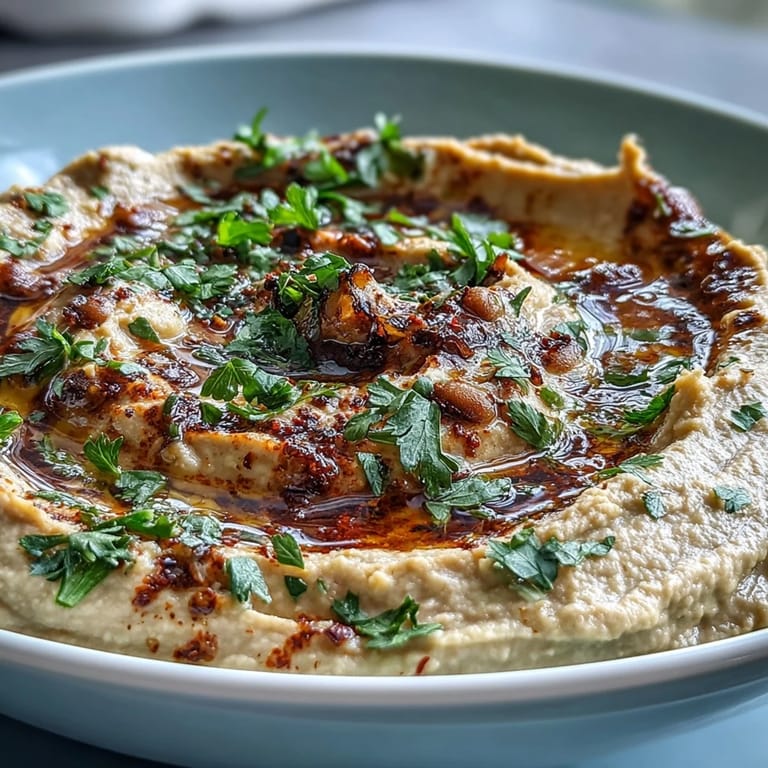
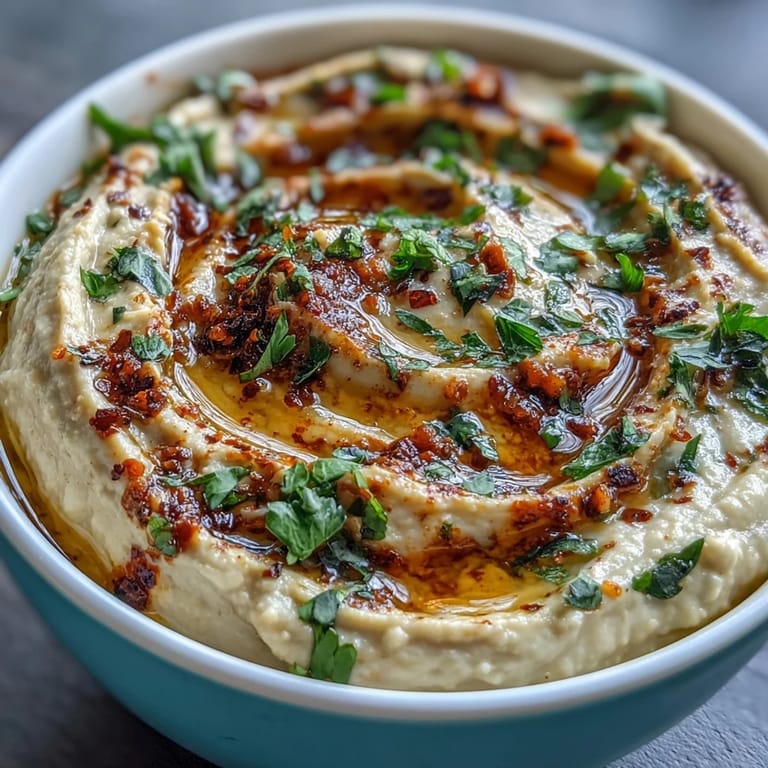
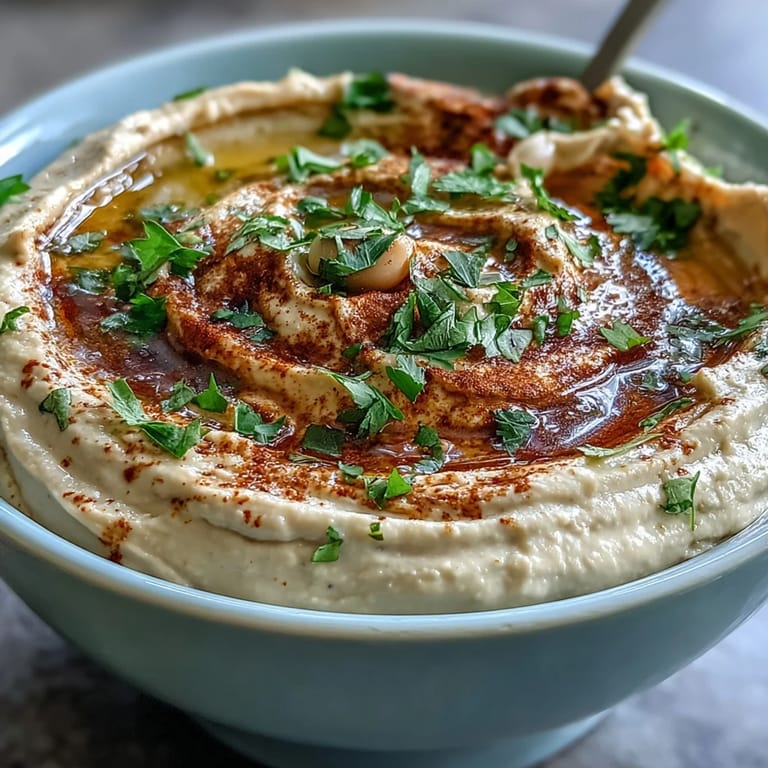
- Scoop into a serving bowl, create a shallow well in the center with the back of a spoon, and drizzle olive oil into it so it pools like an invitation.
- Garnish with Intent:
- Sprinkle paprika or sumac across the top and scatter parsley so it looks like you meant to make something beautiful, even though it took you five minutes.
 Save
Save There was an evening when I made this for my mother during one of her visits, and she stood in my kitchen looking at it with the kind of quiet surprise that means something clicked. She's not a hummus person in theory, but she sat on the counter with a piece of raw bell pepper in one hand and kept saying it tasted like something she'd forgotten she liked. That's when I understood that good food isn't about being trendy or complicated; it's about creating a moment where someone feels seen.
The Black-Eyed Pea Advantage
When people think of hummus, they think chickpeas—and chickpeas are wonderful, no argument there. But black-eyed peas bring something different to the table: they're slightly sweeter, they cook faster if you're using dried ones, and they have this gentle earthiness that plays beautifully with tahini without demanding to be the loudest ingredient in the room. I switched to black-eyed peas by accident when my local market was out of canned chickpeas, and now I can't imagine going back. There's something about how they meld into that creamy base that feels less like grinding and more like coaxing.
Making It Your Own
The beauty of this hummus is that it's a canvas, not a rigid instruction. I've made it with lime instead of lemon for a sharper edge, added smoked paprika directly into the blend for a deeper flavor, and even stirred in a tablespoon of roasted red pepper when I had one sitting around looking lonely in the fridge. My brother tried it with a hint of harissa one holiday and declared it his new favorite, which I think says everything about how forgiving and flexible this recipe can be. The bones stay the same—tahini, lemon, black-eyed peas—but everything else is yours to shape.
Serving Ideas and Storage
I've served this with everything from thick-cut pita and fresh vegetables to gluten-free crackers and even spooned alongside roasted cauliflower. It's equally at home on a charcuterie board, smeared on a sandwich in place of mayo, or drizzled with a little more olive oil and served as a warm dip. Store it in an airtight container in the refrigerator for up to four days, though honestly it never lasts that long in my house.
- Pair it with raw vegetables that have texture—carrots, bell peppers, cucumber—so there's a satisfying crunch against the creaminess.
- If it dries out slightly in the fridge, drizzle a little more olive oil and water on top and give it a stir to bring it back to life.
- Make a double batch on a Sunday and you'll have it ready for snacking, lunch additions, and those moments when someone stops by unexpectedly.
 Save
Save This hummus has become one of those recipes I make without thinking, the way you might butter toast or brew coffee. It's there when you need something fast and honest, something that tastes like care without requiring an apology for simplicity.
Recipe FAQs
- → Can I use canned black-eyed peas?
Yes, canned black-eyed peas work perfectly. Just drain and rinse them thoroughly before blending to remove excess sodium and canning liquid.
- → How long does this keep in the refrigerator?
Store in an airtight container for up to 4 days. The flavors actually develop and meld together, making it taste even better after a day or two.
- → What can I serve with this spread?
Fresh vegetables like carrots, cucumbers, and bell peppers work beautifully. Pita bread, crackers, or use it as a sandwich spread for extra protein and flavor.
- → Can I make this without tahini?
Tahini provides the signature creamy texture and nutty flavor. You could substitute with another seed butter, but the taste and consistency will be noticeably different.
- → Is this freezer-friendly?
Yes, freeze in an airtight container for up to 3 months. Thaw overnight in the refrigerator and give it a good stir before serving. You may need to add a splash of water to restore the creamy texture.
- → How do I make it spicier?
Add a pinch of cayenne pepper or blend in a small amount of harissa paste. You can also increase the smoked paprika or add minced fresh chili peppers to taste.