 Save
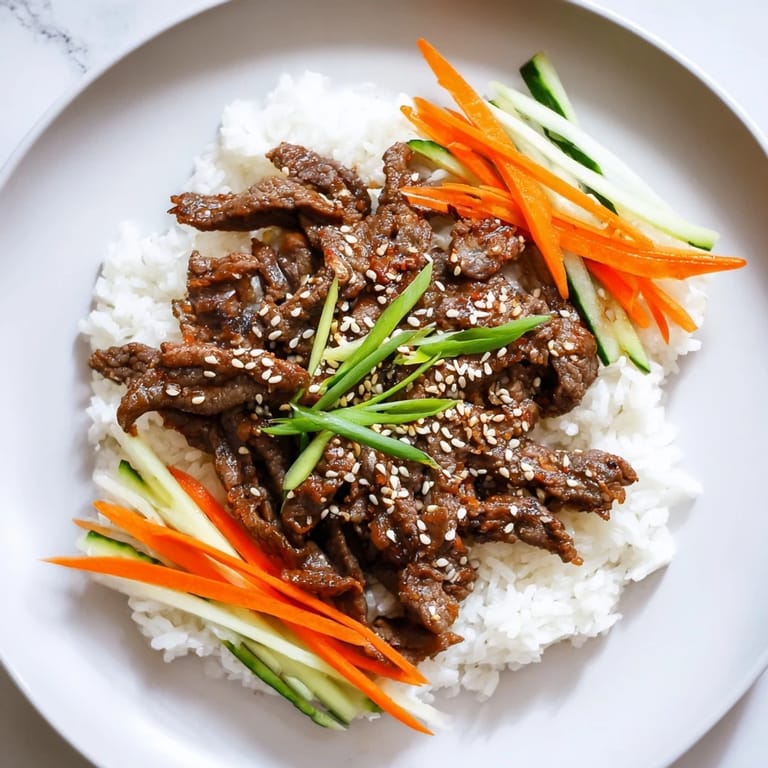
Save The first time I made bulgogi at home, I wasn't trying to recreate some fancy restaurant version—I just wanted that exact feeling of biting into tender, caramelized beef that somehow tastes both sweet and savory at once. My neighbor had brought back a container from a Korean market, and I spent an embarrassing amount of time trying to reverse-engineer it from memory and instinct. Turns out, the secret was simpler than I thought: good beef, a marinade that balances soy and sugar, and a screaming hot pan. Now this bowl sits at the top of my weeknight rotation, and there's something deeply satisfying about assembling it all at once—the warm rice, the cool vegetables, the beef still hot from the wok.
I made this for my partner on a random Tuesday when we were both tired and wanted something that felt special but didn't require a production. Watching their face when they tasted it—that flash of genuine surprise—reminded me that some of the best meals happen in the smallest moments, not the ones we plan for weeks.
Ingredients
- Beef sirloin or ribeye, thinly sliced: The thinner you can get it, the faster it cooks and the more it absorbs that marinade. I ask the butcher to slice it on the meat slicer—it's a small ask that makes everything easier.
- Soy sauce: This is your umami anchor, so don't skip it or use the cheap stuff. It's what makes you keep eating even when you're full.
- Brown sugar: Creates that glossy caramelization and balances the salt. The sweetness is gentle, not cloying.
- Sesame oil: Just one tablespoon is enough to add that warm, toasted note that makes you know it's Korean food, not just stir-fry.
- Rice vinegar: Keeps everything bright and prevents the marinade from feeling heavy.
- Garlic and ginger, minced and grated: These two together create a backbone of flavor that anchors every bite.
- Grated pear or apple: This was the ingredient that made me pause at first, but it's what transforms the marinade from good to unforgettable—it adds sweetness and a subtle enzyme that tenderizes the beef.
- Gochujang, optional: If you want a whisper of heat, add it. If you want to light things up, go generous. It's your call.
- Scallions and sesame seeds: These are your final flourishes—fresh, nutty, and they make the whole thing look effortless.
- Jasmine or short-grain rice: Use whatever rice you trust to be fluffy and slightly sticky, perfect for catching all those flavorful bits.
- Fresh vegetables—carrots, cucumber, bean sprouts: The crunch here is essential. It's what keeps the bowl from feeling heavy and gives you something to look forward to with each bite.
- Kimchi, optional but encouraged: If you have it, use it. It adds funk, heat, and complexity that elevates the whole thing.
Tired of Takeout? 🥡
Get 10 meals you can make faster than delivery arrives. Seriously.
One email. No spam. Unsubscribe anytime.
Instructions
- Build your marinade:
- In a large bowl, whisk together soy sauce, brown sugar, sesame oil, and rice vinegar until the sugar dissolves. Stir in the minced garlic, grated ginger, grated pear, gochujang if using, half the scallions, sesame seeds, and black pepper. Taste it—it should be balanced, not too salty or sweet, with a hint of warmth underneath.
- Coat the beef:
- Add your thinly sliced beef to the marinade and toss gently but thoroughly so every piece gets coated. Cover the bowl and let it sit for at least 15 minutes while you prep everything else, or up to an hour if you have time—the longer it sits, the deeper the flavor penetrates.
- Get your pan screaming hot:
- Set a large skillet or wok over high heat for about a minute. You want it so hot that when the beef hits the pan, it sizzles immediately and begins to caramelize on the edges.
- Sear the beef in batches:
- Working in batches to avoid crowding the pan, add the marinated beef and cook for 2 to 3 minutes, stirring occasionally. The beef should be just cooked through with some deeply browned edges. Don't overdo it—beef this thin can go from perfect to tough in seconds.
- Assemble your bowl:
- Divide the warm rice among bowls, then arrange the cooked beef on top alongside the carrots, cucumber, and bean sprouts. If you're using kimchi, nestle it in there too.
- Finish and serve:
- Scatter the remaining scallions and sesame seeds over everything. Serve immediately while the beef is still warm and the vegetables still have their snap.
 Save
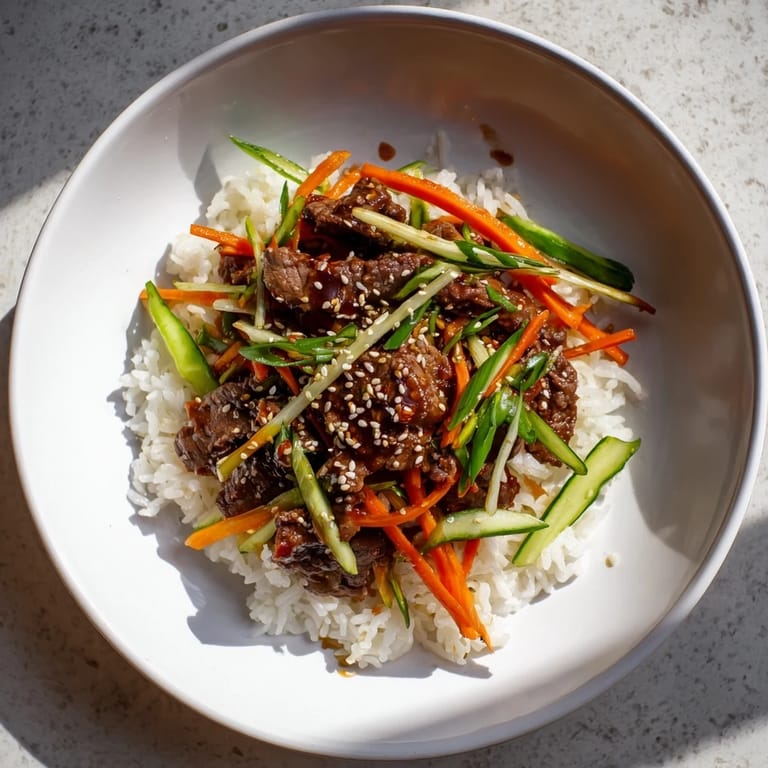
Save There's a moment after plating when I always pause and breathe in—that combination of sesame and caramelized beef and fresh vegetables somehow feels like a small victory. It's simple, but it's also completely satisfying in a way that lingers long after dinner.
The Magic of Marinade Timing
I learned early on that rushing the marinade is a false economy. Even 15 minutes makes a difference, but if you have an hour, the beef becomes almost impossibly tender and the flavors knit together into something cohesive. One evening I marinated everything in the morning before work, and when I came home and cooked it, the depth was remarkable—every bite tasted intentional. The pear works as both a sweetener and a natural tenderizer, so the longer the beef sits, the more it benefits.
Why the Rice Matters
Don't overthink this—jasmine or short-grain rice is ideal because it's slightly sticky and forgiving. It catches the glossy marinade that drips from the beef and absorbs all those savory flavors. I use a rice cooker because it's reliable, but a saucepan works just as well. The rice should be warm when you assemble the bowl, never cold, or the whole thing loses its comfort-food appeal.
Make It Your Own
This bowl is endlessly flexible, and that's part of why I keep making it. Some nights I add a fried egg on top for richness, other times I use cauliflower rice if I'm keeping things light. I've experimented with swapping the cucumber for avocado, adding a drizzle of gochujang mayo, or throwing in some sautéed mushrooms for extra umami. The core—the beef and its marinade—is what ties everything together, but everything else is negotiable based on your mood and pantry.
- For a spicy kick without gochujang, a pinch of sriracha or fresh chili flakes works beautifully.
- Leftover cooked beef keeps in the fridge for three days and makes an incredible addition to salads or sandwiches the next day.
- If you're cooking for a crowd, the marinade doubles easily and the searing is the only step that requires attention.
 Save
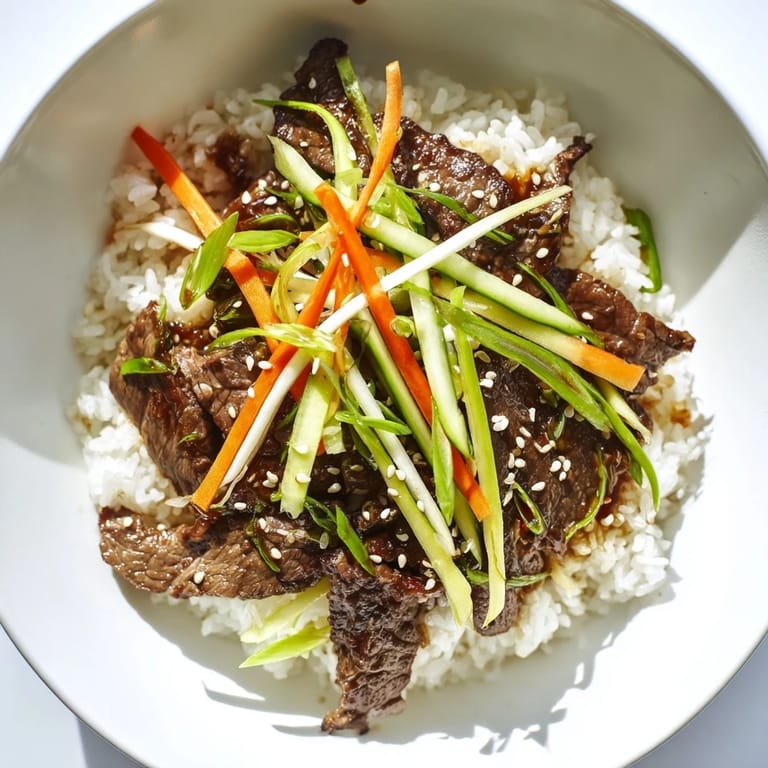
Save This is the kind of dish that reminds me why I love cooking at home—it's fast, it's craveable, and somehow it always feels like you've done something special. Make it once, and it'll become part of your rotation too.
Recipe FAQs
- → What cut of beef works best for this dish?
Lean, tender cuts like sirloin or ribeye work best due to their quick cooking time and flavor absorption.
- → Can I adjust the spiciness level?
Yes, the amount of Korean chili paste (gochujang) can be modified to suit your spice preference or omitted altogether.
- → What rice is recommended for the bowl?
Jasmine or short-grain white rice provides an ideal texture to complement the beef and vegetables.
- → Are there vegetarian alternatives to the beef?
Tofu or mushrooms marinated with similar seasonings can offer a satisfying plant-based option.
- → How long should the beef marinate?
A minimum of 15 minutes allows flavors to penetrate, but marinating up to an hour deepens the taste.