 Save
Save I discovered this salad on a particularly warm afternoon when my garden was exploding with snap peas and green beans faster than I could eat them. A friend mentioned she'd never quite figured out how to make vegetables interesting beyond roasting them, so I started playing with what I had—bright, crisp greens and a block of sharp white cheddar that had been sitting in my fridge. The moment I tasted that first combination of tender-crisp beans with tangy cheese, I knew I'd stumbled onto something special, something that felt both unexpected and somehow obvious at the same time.
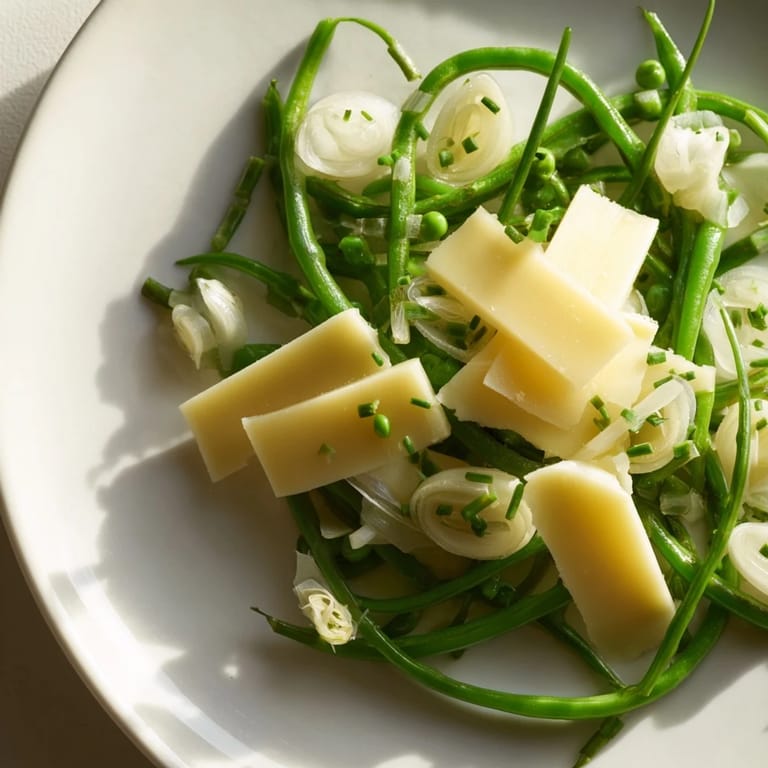
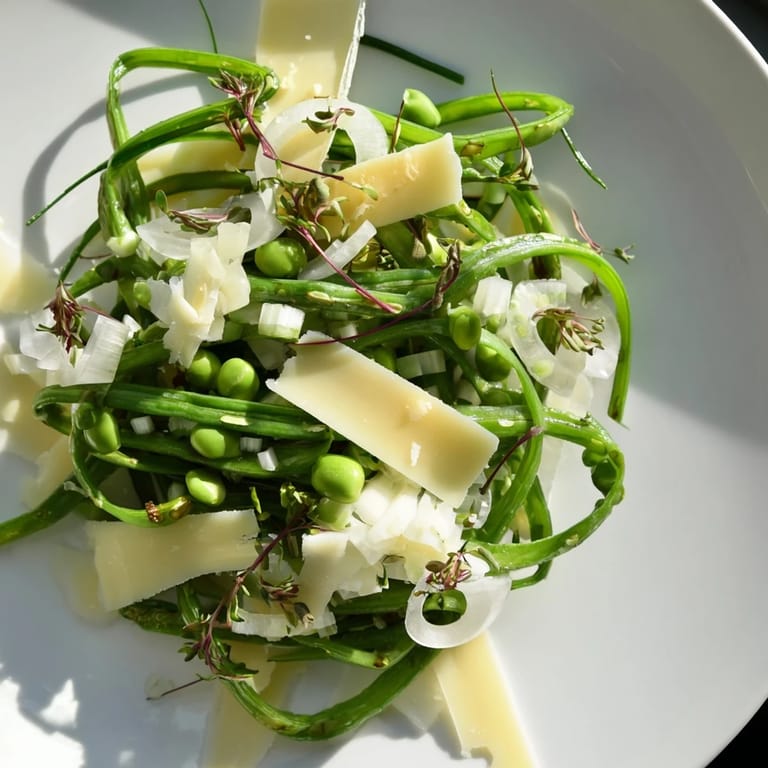
I made this for a dinner party last summer where everyone was supposed to bring something, and I nearly didn't because it seemed too simple. But when I plated those long, winding vines of green with shards of cheddar catching the light, one guest asked for the recipe before even tasting it—then immediately asked for it again after the first bite. That's when I realized that sometimes the most elegant dishes are the ones that don't try too hard.
Ingredients
- Snap peas: 200 g (7 oz), ends trimmed—these stay bright and snappy if you blanch them just right, and that pop of texture is half the magic.
- Green beans: 200 g (7 oz), ends trimmed—fresher is always better, but honestly, frozen ones work beautifully if blanched properly.
- Sharp white cheddar: 100 g (3.5 oz), cut into small cubes or shards—the sharpness cuts through the sweetness of the peas in a way milder cheese never could.
- Small shallot: 1, thinly sliced—raw shallot adds a gentle bite that makes everything taste more alive.
- Extra virgin olive oil: 2 tbsp—use one you actually like tasting, it matters here.
- Fresh lemon juice: 1 tbsp—bottled works, but fresh juice keeps that bright, clean feeling.
- Dijon mustard: 1 tsp—this small amount acts like a secret whisper that brings everything together.
- Honey: 1/2 tsp—just enough to round out the mustard's edge without sweetening the whole thing.
- Salt and freshly ground black pepper: to taste—don't skip the freshly ground part; it tastes completely different and worth the extra moment.
- Fresh chives: 2 tbsp, finely chopped—the final garnish that makes it feel finished and garden-fresh.
- Microgreens or pea shoots: optional but recommended—they add a peppery whisper and make it feel fancy without trying.
Tired of Takeout? 🥡
Get 10 meals you can make faster than delivery arrives. Seriously.
One email. No spam. Unsubscribe anytime.
Instructions
- Bring water to a boil:
- Fill a large pot with salted water and let it come to a rolling boil—you want it aggressively hot so the vegetables blanch quickly and stay bright. The salt matters; it's not just for flavor but for helping them cook evenly.
- Blanch the vegetables:
- Drop in your trimmed snap peas and green beans and set a timer for exactly 2 minutes—this is where most people go wrong by either leaving them in too long or fishing them out too soon. You're looking for that moment when they turn a vivid, almost neon green and still have a slight firmness when you bite one.
- Shock them in ice water:
- The moment those 2 minutes are up, scoop them out with a slotted spoon and plunge them into a bowl of ice water. This stops the cooking instantly and is the reason they'll stay crisp instead of going soft—don't skip this step. Drain well and pat them completely dry so they won't get watery on the plate.
- Make the dressing:
- In a large bowl, whisk together the olive oil, lemon juice, Dijon mustard, and honey until it emulsifies slightly and looks a little creamier than just oil and juice sitting together. Taste it before you add the vegetables—this is your moment to adjust salt and pepper to what feels right to you.
- Toss everything together:
- Add the blanched vegetables and sliced shallot to the dressing and toss gently but thoroughly, making sure each piece gets coated. Don't be timid here—the vegetables can handle a good toss.
- Arrange and garnish:
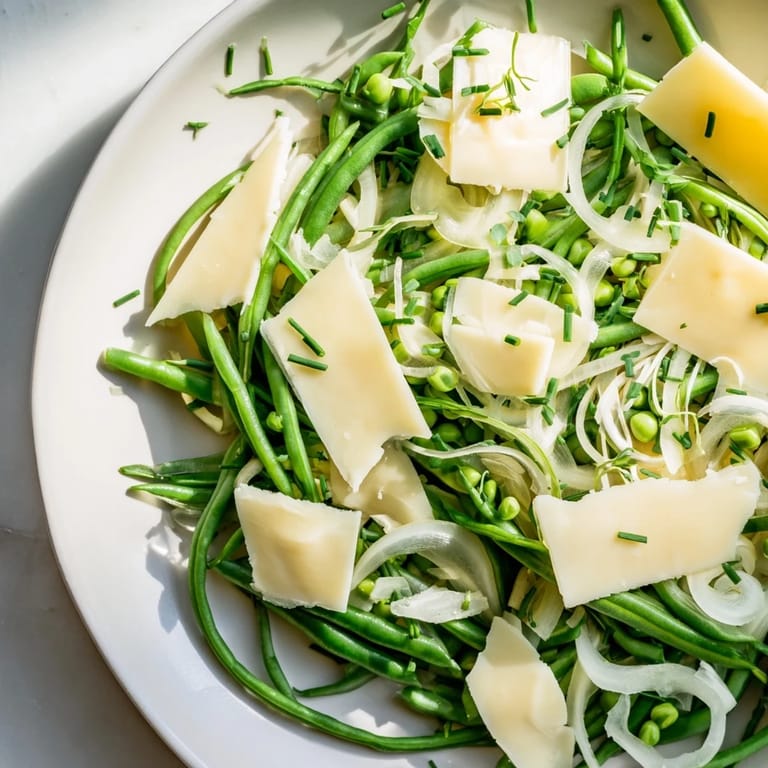
- On a serving platter, arrange the vegetables in long, winding vines like they're still growing, then scatter the cheddar shards over the top so they catch the light. Finish with chopped chives and microgreens if you have them, and serve immediately while everything is still cold and crisp.
 Save
Save There was an evening when I brought this salad to a potluck where someone's teenage daughter took one bite and actually said, "Wait, salad can taste like this?" It made me remember why I cook at all—not for complexity, but for those small moments when something simple surprises someone into paying attention.
Why This Salad Feels Different
Most green salads rely on dressing to carry the flavor, but this one is different because the vegetables themselves are the star—blanched just enough to stay sweet but not soft, then brightened with a perfectly balanced vinaigrette that doesn't overwhelm. The raw shallot and sharp cheddar add layers that make you taste each component separately before they come together. It's the kind of salad that makes you understand why British gardens inspired so much poetry; there's something about simplicity done well that feels almost luxurious.
Making It Your Own
The beauty of this recipe is that it invites gentle experimentation without losing its character. I've added toasted walnuts on nights when I wanted more body, swapped goat cheese when I was feeling tangy and French, and even thrown in thinly sliced fennel once because it was there and felt curious. The structure stays solid, but you can play within it.
Pairing and Serving
This salad sings alongside light proteins—grilled fish, a delicate chicken breast, or soft poached eggs that let the vegetables remain the focus. Serve it chilled, and it works beautifully as part of a composed plate or as the main vegetable element of a summer meal.
- A crisp Sauvignon Blanc or dry Riesling pairs beautifully if you're pouring wine.
- Make it just before serving to preserve the crunch and keep everything at its brightest.
- Leftovers are best eaten within a few hours before the vegetables soften, but honestly, there rarely are any.
 Save
Save This salad has quietly become one of those recipes I turn to whenever I want to feel like I'm cooking for someone with love, without it feeling fussy. It reminds me that sometimes the best meals are the ones that let good ingredients speak for themselves.
Recipe FAQs
- → How do I keep the vegetables crisp in this salad?
Blanch the snap peas and green beans briefly in boiling water, then immediately cool them in ice water to retain crunch and vibrant color.
- → Can I substitute the sharp white cheddar with another cheese?
Yes, goat cheese or feta work well for a tangier profile while maintaining creamy texture.
- → What dressing complements the salad best?
A dressing made with extra virgin olive oil, fresh lemon juice, Dijon mustard, and honey balances sharp and sweet flavors harmoniously.
- → Are there optional garnishes to enhance the dish?
Fresh chopped chives add mild oniony notes, while microgreens or pea shoots provide a fresh, decorative touch.
- → How can I add extra texture to this salad?
Adding toasted walnuts or almonds introduces a pleasant, nutty crunch that contrasts nicely with tender vegetables.