 Save
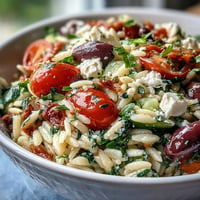
Save There's something about standing in front of an open farmers market stall on a warm afternoon that makes you understand why people move to Greece. I picked up the most perfect tomatoes—the kind that smell like summer itself—and suddenly had this urge to build something honest around them, something that didn't need a recipe so much as permission to taste really good without trying too hard. This Mediterranean salad became my answer, and it's been my go-to ever since, especially when I want to eat well without spending the whole evening in the kitchen.
I made this for a dinner party once when I was honestly too tired to cook anything proper, and someone asked for the recipe before dessert even came out. That's when I realized this wasn't just a side dish—it was the kind of thing people remember, the bowl people go back to. Now I make it whenever I need something that looks effortless but tastes like you actually know what you're doing.
Ingredients
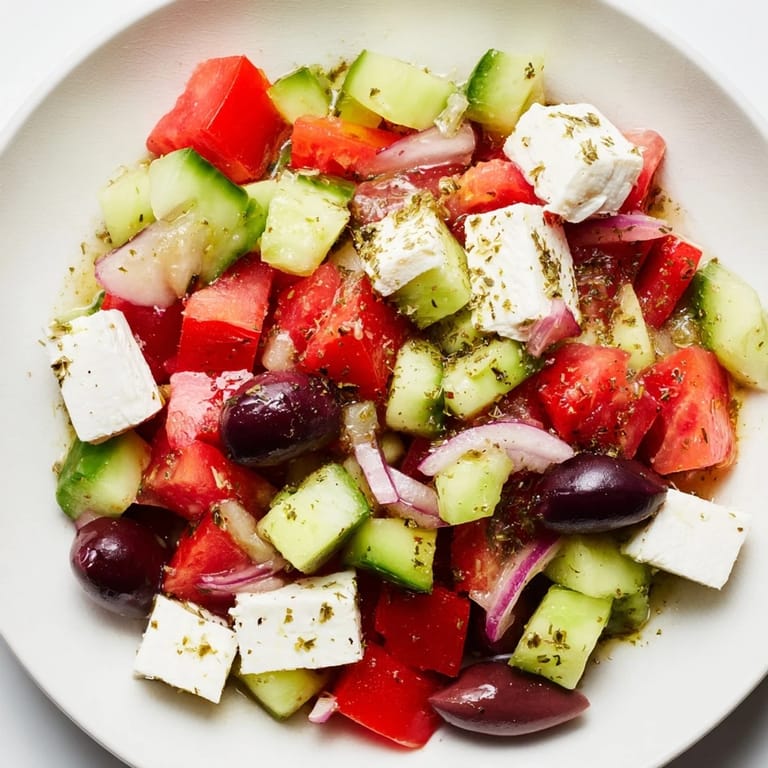
- Tomatoes (4 medium, ripe): Pick ones that smell fragrant and give slightly when you squeeze them—this is where most of your flavor lives, so choose generously.
- Cucumber (1 large): English cucumbers stay crispier longer and have fewer seeds, but any good cucumber works.
- Red onion (1 small, thinly sliced): The slices mellow as they sit in the dressing, trading their sharp bite for sweetness.
- Feta cheese (150 g): Buy a block and crumble it yourself if you can—it stays fresher and has better texture than pre-crumbled versions.
- Kalamata olives (100 g, pitted and halved): These dark, meaty olives are worth seeking out; they're nothing like the canned stuff.
- Extra virgin olive oil (3 tbsp): This is your star ingredient, so splurge a little here—taste matters.
- Red wine vinegar (1 tbsp): The acidity brings everything into focus and prevents the salad from tasting flat.
- Dried oregano (1/2 tsp): Crush it between your fingers before adding to wake up its flavor.
- Salt and black pepper: Freshly ground pepper makes a real difference in how sharp and alive this tastes.
- Fresh parsley or mint (optional): A handful of either adds brightness and makes the dish feel more finished.
Tired of Takeout? 🥡
Get 10 meals you can make faster than delivery arrives. Seriously.
One email. No spam. Unsubscribe anytime.
Instructions
- Prep Your Vegetables:
- Dice your tomatoes and cucumber into roughly equal-sized pieces so everything eats together nicely. Slice the red onion thin enough that light passes through it.
- Combine in the Bowl:
- Toss the tomatoes, cucumber, onion, and olives together gently, letting them mingle. There's no rush here—let your hands work slowly.
- Add the Feta:
- Crumble or cube your feta and scatter it over the vegetables like you're being deliberate about placement. The less you stir at this point, the better the chunks stay intact.
- Make the Dressing:
- In a small bowl, whisk the olive oil, red wine vinegar, oregano, salt, and pepper until the vinegar and oil start to look like they're actually getting along. Taste it on your finger—it should make your mouth wake up.
- Dress and Serve:
- Pour the dressing over everything and toss gently, using a folding motion rather than aggressive stirring. Scatter herbs on top if you're using them, and serve right away or let it sit for a few minutes while flavors settle.
 Save
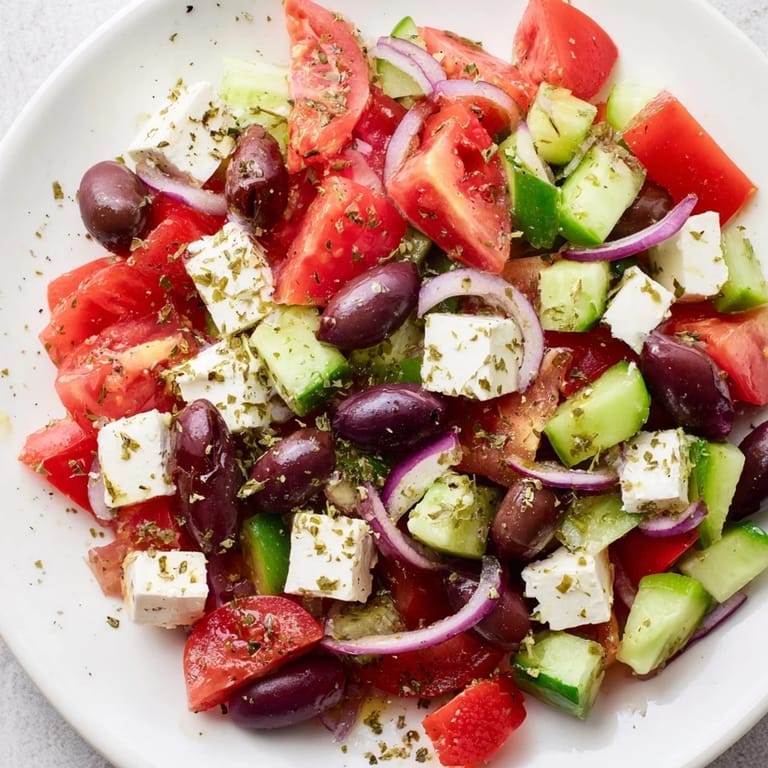
Save There was a moment, midway through last summer, when I made this salad for a group of friends who'd driven up for the weekend, and we ended up eating the whole bowl while sitting on the porch, talking until the light changed. That's when I understood that the best meals aren't the ones that impress people—they're the ones that disappear because everyone's too busy enjoying themselves to notice.
The Mediterranean Advantage
This salad works because it respects its ingredients rather than trying to transform them. Tomatoes, feta, olives, and good oil have been hanging out together for thousands of years around the Mediterranean—they know each other's language. When you bring them together with intention, you're not inventing flavor, you're just assembling something that was always supposed to happen. There's real freedom in that simplicity.
Playing With Variations
Once you understand this basic framework, you can start thinking about what else wants to be here. Bell peppers add sweetness and crunch, capers bring a different kind of brine than olives, and fresh herbs can shift the whole mood depending on what you choose. I've added chickpeas on days when I needed more protein, or a handful of torn bread when I wanted something closer to panzanella. The blueprint stays the same; the expression changes.
Timing and Temperature
Cold salad served room temperature is honestly the best version of this dish. If you're serving it straight from the fridge, pull it out 10 minutes early so the olive oil loosens back up and the vegetables aren't shocking your mouth with cold. The tomatoes taste better when they're not fighting against the chill, and the feta softens just enough to melt a little on your tongue. This simple adjustment changes how the whole salad feels.
- Make it in the afternoon and let it rest, covered, until dinner—the flavors deepen as everything marries.
- If you're taking it somewhere, pack the dressing separately and toss just before serving.
- On warm evenings, this is all the dinner you need, especially with crusty bread and cold wine.
 Save
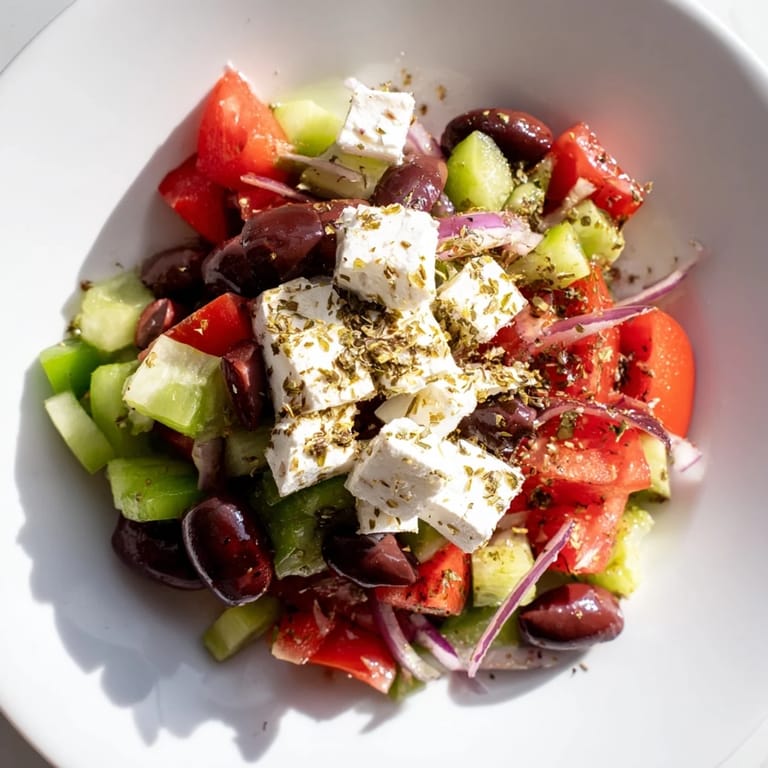
Save This is the kind of recipe that gets better the more you make it, because you start learning what you actually like instead of just following instructions. Make it once, make it a hundred times, and eventually it stops being someone else's recipe and becomes entirely yours.
Recipe FAQs
- → What type of olives are best for this salad?
Kalamata olives are ideal for their rich, briny flavor that complements the fresh vegetables and feta.
- → Can I make the salad ahead of time?
For the freshest taste and texture, it's best to assemble the salad just before serving.
- → What dressings enhance Mediterranean flavors?
A simple mix of extra virgin olive oil, red wine vinegar, and oregano highlights the salad's natural ingredients.
- → Are there suitable substitutions for feta cheese?
For a dairy-free option, vegan feta or firm tofu can be used while maintaining the creamy texture.
- → How can I add more texture to this dish?
Incorporating sliced bell peppers or crunchy capers adds an extra layer of texture and flavor.