 Save
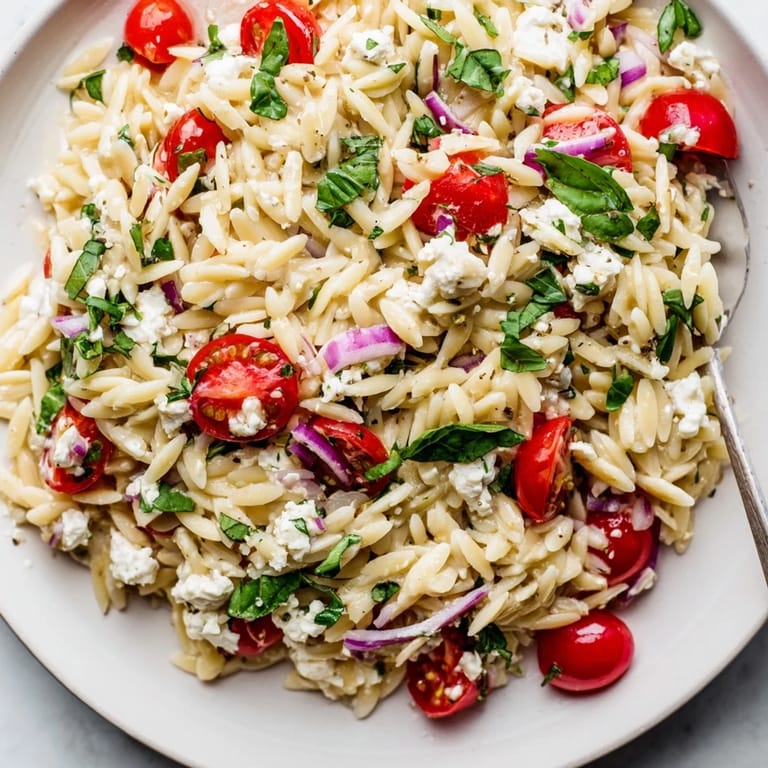
Save There's something about the way a Mediterranean salad comes together that feels like you're stealing a secret from someone's sun-drenched kitchen. I discovered this orzo version at a farmers market where a woman was selling bundles of basil so fragrant I had to buy three, and a vendor handed me the most perfect cherry tomatoes I'd ever seen. That evening, I threw them together with some feta I had on hand, and it became the dish I reach for whenever I want to feel transported without leaving my kitchen.
I made this for a potluck last summer where everyone showed up with casseroles and elaborate sides, and somehow this simple pasta salad was the first thing gone. A friend came back for thirds and asked if I'd catered it—turns out simplicity done right speaks louder than complexity dressed up.
Ingredients
- 250 g orzo: This rice-shaped pasta holds dressing beautifully and cooks faster than you'd expect, creating a tender canvas for everything else.
- 300 g cherry tomatoes, halved: Their juices mingle with the olive oil and vinegar, creating a natural sauce that coats every bite.
- 1 small red onion, finely diced: The sharpness mellows as it sits, adding complexity without overpowering the delicate herbs.
- 150 g feta cheese, crumbled: Cold from the refrigerator, it stays creamy and distinct rather than melting into everything.
- 3 tbsp fresh basil, chopped: Add this last—bruised basil loses its brightness, and you want that grassy, peppery note front and center.
- 2 tbsp fresh parsley, chopped: It's not a showstopper, but it rounds out the herb flavor with gentle earthiness.
- 3 tbsp extra-virgin olive oil: Use your best bottle here; there's nowhere for it to hide in something this simple.
- 1 tbsp red wine vinegar: The acid wakes everything up and keeps the feta from feeling too heavy.
- 1 garlic clove, minced: One is plenty—you want to taste it whisper, not shout.
- 1/2 tsp dried oregano: It sounds like a small amount, but dried oregano is concentrated and carries the whole Mediterranean spirit.
- Salt and freshly ground black pepper, to taste: Taste as you go; the feta brings salt, so you might need less than you think.
Tired of Takeout? 🥡
Get 10 meals you can make faster than delivery arrives. Seriously.
One email. No spam. Unsubscribe anytime.
Instructions
- Boil the orzo until it's just tender:
- Bring a large pot of generously salted water to a rolling boil and add the orzo, stirring occasionally so it doesn't stick. Watch the clock—al dente means it still has a slight bite, which matters because it will soften slightly as it cools and sits in the dressing.
- Make the dressing while the pasta cooks:
- In your salad bowl, whisk the olive oil, red wine vinegar, minced garlic, oregano, salt, and pepper together until the vinegar and oil emulsify slightly. Taste it straight—it should make your mouth water and want more, because this is the backbone of everything.
- Combine everything gently:
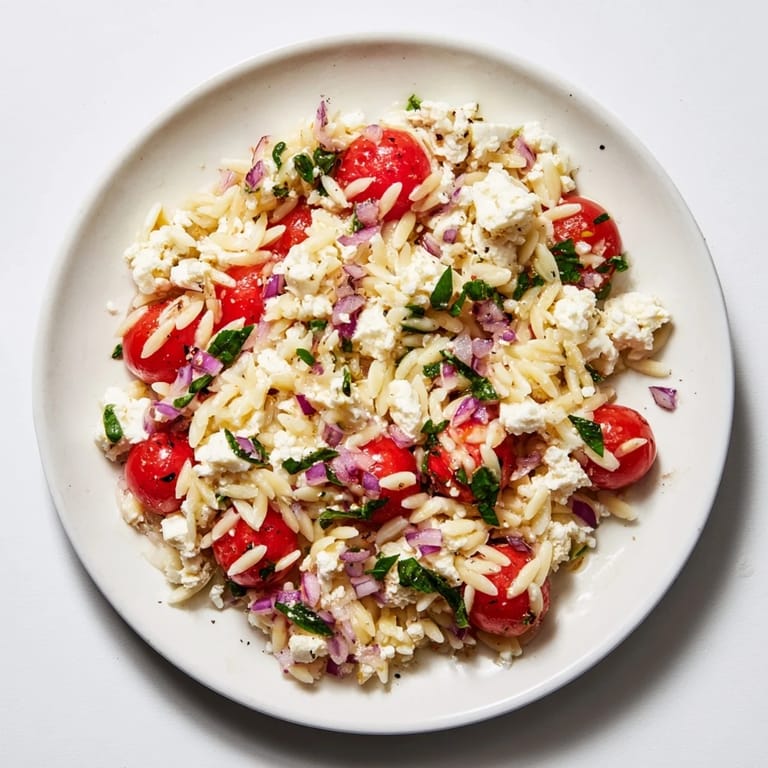
- Add the cooled orzo, halved tomatoes, diced red onion, crumbled feta, basil, and parsley to the dressed bowl and toss with a light hand, just until everything is coated. The feta should stay in distinct pieces, not broken into dust.
- Let it rest before serving:
- If you have time, let it sit for 15 minutes to an hour before eating—the flavors will settle into each other and the temperature will even out. It's actually better this way, and you can make it hours ahead.
 Save
Save This dish taught me that the best meals aren't the most complicated ones—they're the ones that let you taste summer in every single bite. It's become the recipe I make when I want to remind someone that eating well doesn't have to be precious or fussy.
When This Dish Shines
Picture this: your kitchen is chaos, you've got guests arriving in an hour, and you want something that looks like you spent all day thinking about it. This salad is your answer, especially in late summer when tomatoes are at their peak and the farmers market is overflowing. It's equally at home on a picnic blanket as it is on a dinner table, and it won't wilt or fall apart in transit.
Playing With Add-Ons
The beauty of this salad is that it welcomes additions without losing its identity. I've stirred in sliced Kalamata olives when I'm feeling briny, scattered roasted red peppers when I want richness, and even thrown in fresh dill when I'm having an experimental mood. The core formula is strong enough that anything you add just amplifies what's already there, rather than muddling it.
Making It Your Own
Some nights I serve this as a side to grilled fish or chicken, and other nights it becomes the whole meal with crusty bread. You can swap in whole wheat orzo for earthiness, use whatever fresh herbs you have on hand, or even crumble in goat cheese if feta isn't calling to you. The framework doesn't change—you're just coloring within the lines differently each time.
- Serve it at room temperature or chilled, depending on the weather and your mood.
- Make it up to four hours ahead, but add the basil just before serving to keep it bright green.
- Taste and adjust the salt and acid right before eating, because flavors shift as everything sits together.
 Save
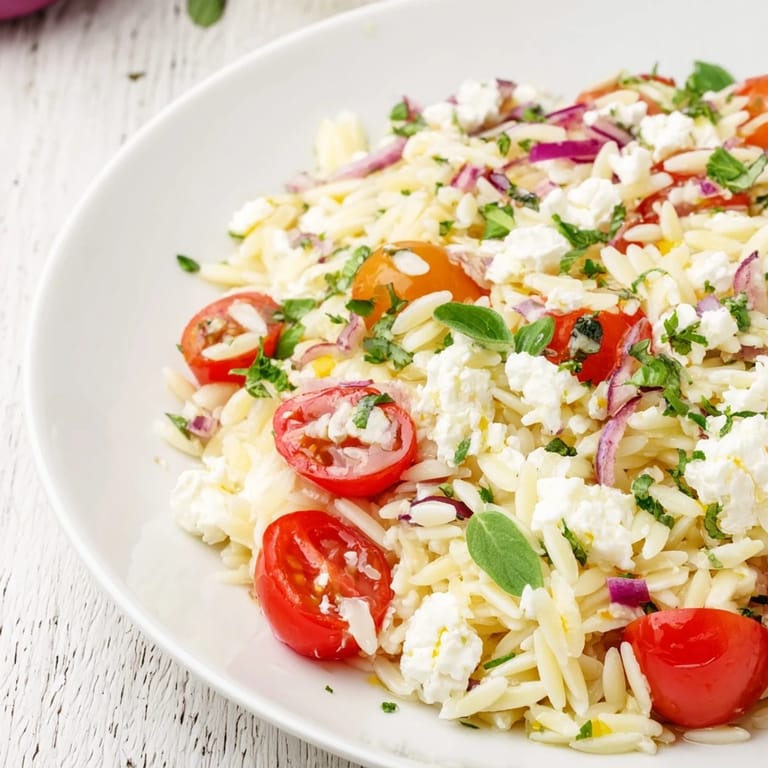
Save This recipe has quietly become one of those dishes I make almost without thinking, the way some people make scrambled eggs. It's reliable, it's forgiving, and it never fails to make me feel like I'm eating something fresh and alive.
Recipe FAQs
- → Can I use a different pasta instead of orzo?
Yes, small pasta shapes like couscous or acini di pepe can work well to maintain a similar texture and bite.
- → How can I make this dish gluten-free?
Swap the orzo for a certified gluten-free small pasta or use gluten-free grains to keep it safe for gluten sensitivities.
- → What herbs are best for this dish?
Fresh basil and parsley bring bright, aromatic notes that complement the tomatoes and feta perfectly.
- → Is it better served chilled or at room temperature?
Both work well. Serving chilled allows the flavors to meld, while room temperature offers a fresh, vibrant taste.
- → Can I add other vegetables or toppings?
Absolutely! Kalamata olives, roasted red peppers, or diced cucumber enhance the flavor and texture diversity.