 Save
Save I discovered the magic of a Celtic cross cheese platter at a gallery opening in Dublin, where a local caterer had arranged cheeses in this geometric pattern that somehow made everyone gather around it like it held secrets. The cross shape felt intentional, almost sacred, but what really struck me was how the arrangement made each cheese feel like its own story rather than just items on a board. That night, I watched people who normally avoided each other find themselves side by side, reaching for different quadrants, tasting, comparing, sharing. It wasn't just about the cheese—it was about how presenting food with intention changes how people connect over it.
I made this for my partner's book club once, terrified it would seem too simple, but what happened was the opposite—people kept gravitating back to it throughout the evening, and I realized the beauty was in the restraint. Someone mentioned it reminded them of medieval feasts arranged in illuminated manuscripts, which made me smile because I'd never thought of it that way. By the end of the night, the platter was almost completely bare, and that felt like the highest compliment possible.
Ingredients
- Irish cheddar: Use a good-quality aged version if you can find it—the sharpness cuts through the richness of the other cheeses and reminds everyone that this platter has backbone.
- Brie: Choose one that's just ripe enough to have a slight give when you press it gently; too firm and it feels ungenerous, too soft and it becomes a melting mess on the board.
- Blue cheese: The crumbles are your drama, your punch, your moment of 'wait, that's bold'—don't apologize for it.
- Manchego: This Spanish cheese bridges tradition and elegance, with a nuttiness that makes people pause and say 'what is this?'
- Sour cream or Greek yogurt for the dip: Greek yogurt gives you a lighter, tangier base that doesn't feel heavy, which matters when people are standing and grazing.
- Fresh chives: Dried chives are a betrayal here—the fresh ones give the dip a subtle onion brightness that makes the whole thing taste alive.
- Lemon juice: Just enough to prevent that dip from tasting one-note and flat.
- Grapes, dried apricots, and walnuts: These aren't just fillers; they're your color story and your texture surprises.
- Honey: Drizzle it over the blue cheese quadrant, and suddenly the strongest flavor becomes approachable and elegant.
- Crackers and baguette: Pick rustic ones with character—thin, uniform crackers feel corporate, while something with irregular texture and real grain feels like you actually know what you're doing.
Tired of Takeout? 🥡
Get 10 meals you can make faster than delivery arrives. Seriously.
One email. No spam. Unsubscribe anytime.
Instructions
- Make the dip first:
- Combine your sour cream or Greek yogurt with the chives, lemon juice, salt, and pepper in a small bowl. Taste it once, then taste it again—this center point of the entire platter should taste bright and intentional, not like an afterthought.
- Place the dip at the heart:
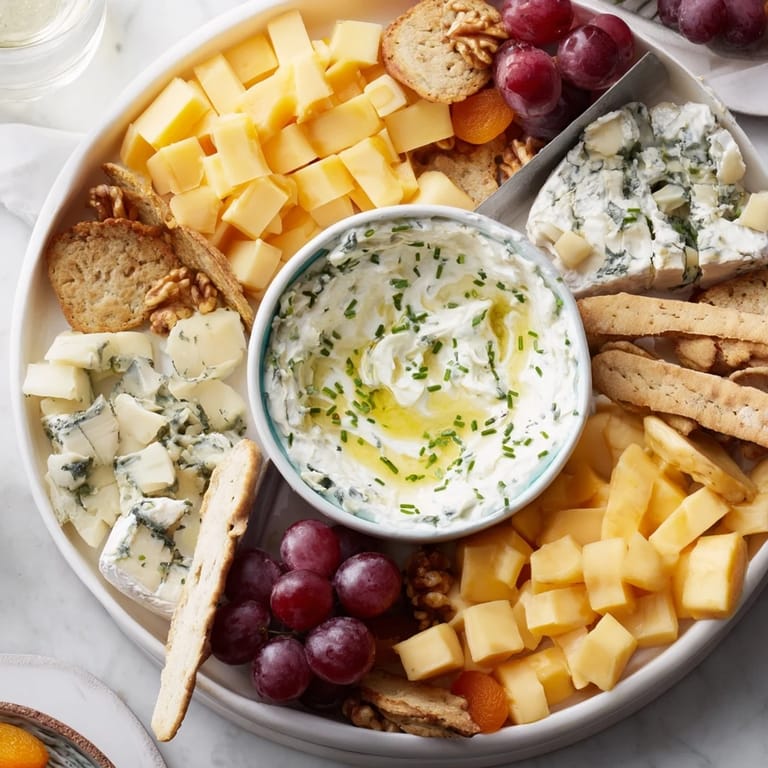
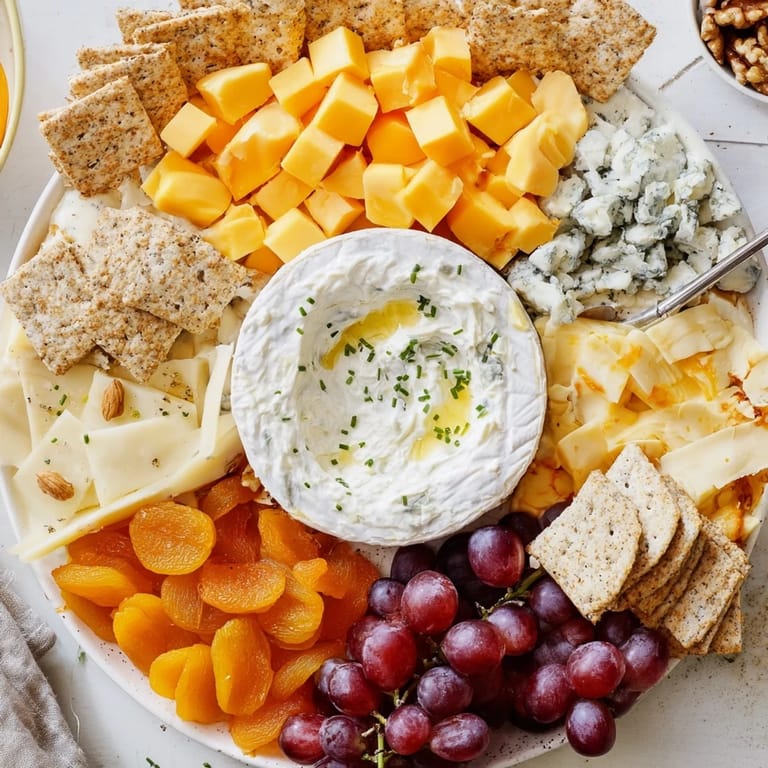
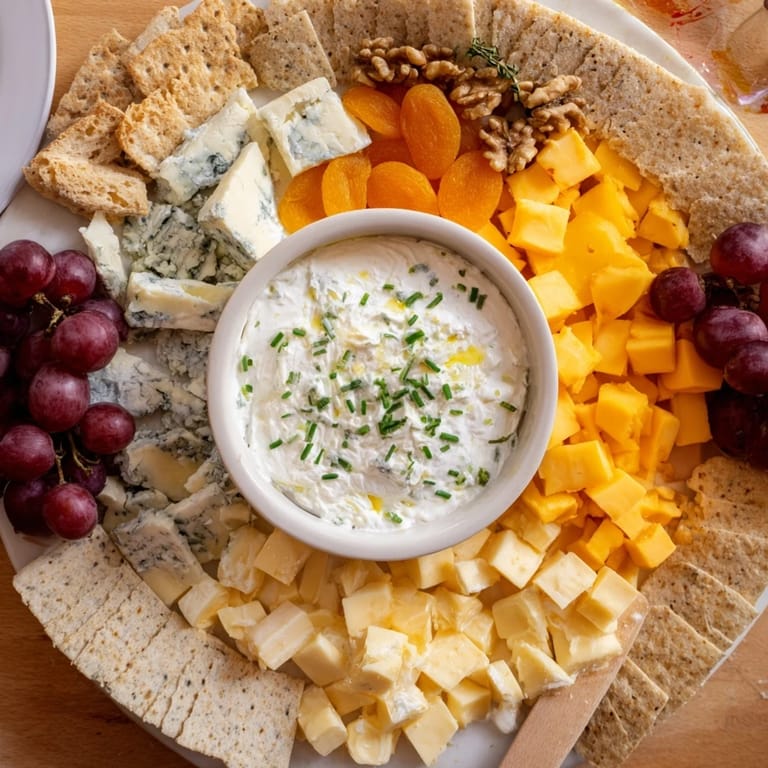
- Set that small bowl of dip right in the center of your large round platter and imagine it as the crossroads, the meeting point where all four directions begin.
- Visualize your quadrants:
- Look at your empty platter like you're dividing it into north, south, east, and west. This doesn't need to be perfect or geometric—it just needs to feel like you meant it.
- Arrange each cheese into its own territory:
- Irish cheddar in one quadrant, Brie in another, blue cheese in the third, Manchego in the fourth. Fan the slices or group them in clusters depending on the cheese's personality—whatever looks right to your eye in that moment.
- Fill the gaps with color and texture:
- Scatter your grapes, apricots, and walnuts in the spaces between the cheese quadrants, creating a visual rhythm that makes people want to reach in. This is where you create the sense that someone who understood composition put this together.
- Add the honey moment:
- Drizzle honey delicately over the blue cheese quadrant and watch how it transforms something sharp into something approachable.
- Frame it with crackers and bread:
- Arrange your crackers and baguette slices around the outer edge, close enough to invite but not so close they overwhelm the cheeses.
- Rest and taste:
- Let everything come to room temperature if it hasn't already—cold cheese tastes muted and selfish. Once the flavors are awake, serve it and watch what happens.
 Save
Save There's something sacred about a cheese platter done well—it becomes an excuse for people to slow down and actually taste things instead of just eating them. I think that's when food stops being fuel and becomes a reason to sit across from someone and be present.
The Story of the Celtic Cross
The Celtic cross design isn't accidental here; it's a nod to ancient tradition and a visual language that feels intentional without being pretentious. When you arrange food in this pattern, you're tapping into something that feels both modern and timeless, which is exactly what makes it such a perfect centerpiece. The geometry itself becomes a quiet conversation starter, a gentle suggestion that thought went into this presentation.
Reading Your Guests
Pay attention to which quadrant people reach for first—it tells you something about their taste in that moment, their mood, their preference for safety or adventure. The beauty of four distinct cheeses is that everyone finds their entry point into the board. Someone might spend the whole evening in the Manchego corner, while another person works their way through all four like they're on a flavor journey.
Building Your Perfect Platter
The real skill here isn't in following rules—it's in understanding balance: the contrast between the earthy walnuts and bright apricots, between the assertive blue and the gentle Brie, between the density of cheese and the play of fresh fruit. Think of yourself as conducting rather than executing, letting each element support the others without competing. When everything is in conversation instead of in competition, that's when a platter becomes memorable.
- If you're worried about it looking too sparse, remember that negative space on a platter signals confidence and intention, not emptiness.
- Prep your ingredients the morning of serving but don't assemble until thirty minutes before guests arrive—freshness matters, and a platter assembled hours earlier starts to look tired.
- Always place one small cheese knife or spreader near each cheese quadrant so people know they're welcome to take it, rather than feeling like they're reaching into someone's personal plate.
 Save
Save This platter is an invitation, a small act of generosity arranged in a circle. Serve it, then step back and watch what it does.
Recipe FAQs
- → How should the cheeses be arranged on the platter?
Divide the platter into four quadrants, placing each cheese variety in its own section around the central dip to highlight contrasts.
- → What is included in the central dip?
The dip consists of sour cream or Greek yogurt mixed with fresh chives, lemon juice, salt, and pepper for a tangy, creamy complement.
- → Can the platter be customized with other ingredients?
Yes, you can add apple or pear slices or swap cheeses for regional favorites to enhance flavor and variety.
- → What accompaniments enhance the cheese flavors?
Seedless grapes, dried apricots, walnuts, and a light honey drizzle add texture, sweetness, and balance to the cheese selection.
- → What breads work best with this platter?
Rustic crackers and sliced baguette provide a crunchy, neutral base to enjoy alongside the cheeses and dip.
- → How should the cheeses be served for best taste?
Allow cheeses to reach room temperature before serving to maximize their flavor profiles and texture.