 Save
Save There's something about a blank slate—literally—that stopped me in my tracks at a gallery opening one evening. While others sipped wine, I found myself mesmerized by a minimalist installation that was all sharp lines and industrial edges. That night, I went home thinking about how food could feel that way too: bold, architectural, almost rebellious in its restraint. The next morning, I pulled out our heaviest serving board and started arranging meats and cheeses like I was composing something meant to be looked at before it was eaten.
I made this for a dinner party where someone had just moved into a loft with exposed brick and concrete floors. They wanted the food to match the space—nothing fussy, nothing apologetic. When I set that slate down in the center of their table, the room actually got quiet for a second. Then someone laughed and said it was too beautiful to eat, but they ate it anyway. That's when I knew I'd found something.
Ingredients
- Smoked Prosciutto (100 g): Buy it sliced thin from a good counter; the smoke flavor cuts through the richness of the other meats and keeps everything from feeling heavy.
- Soppressata (100 g): This one's peppery and dense, so a little goes a long way; slice it yourself if you can, it makes a difference in how it sits on the board.
- Coppa (100 g): The marbling in coppa is almost decorative, so let that be part of the visual story you're telling on the slate.
- Mortadella (100 g): Slice it thick enough that it doesn't disappear; it's mild and buttery, a nice counterpoint to the sharper meats.
- Aged Cheddar (100 g): The sharper the better; look for one with crystalline bits that catch the light when you slice it.
- Manchego (100 g): This has a subtle nuttiness that bridges the gap between the meats and the sweeter accompaniments like grapes.
- Gruyère (100 g): It's salty and complex, so it deserves its own line on the board; never hide it between other things.
- Blue Cheese (100 g): Crumble it loosely rather than slicing it; that irregular texture is part of the design.
- Seedless Red Grapes (1 small bunch): Break them into tiny clusters so they feel intentional, not like you forgot to slice them.
- Cornichons (50 g): Their acidity and snap are what save you from cheese fatigue halfway through; don't skip them.
- Whole Grain Mustard (50 g): A good one with visible seeds makes the board look intentional, almost architectural.
- Mixed Olives (50 g): Use both colors; the visual contrast matters as much as the taste.
- Freshly Cracked Black Pepper: Grind it yourself just before serving; the aroma is half the point.
Tired of Takeout? 🥡
Get 10 meals you can make faster than delivery arrives. Seriously.
One email. No spam. Unsubscribe anytime.
Instructions
- Start with the Stone:
- Place your slate or unpolished stone board in front of you like you're about to draw on it. If you have time, chill it in the freezer for fifteen minutes; the cold keeps everything fresher longer and the stone feels more intentional that way.
- Map Your Territory:
- Mentally divide the board into two sides, one for meats and one for cheeses. This isn't precious—the lines are meant to be broken eventually, but they start clean.
- Line Up the Meats:
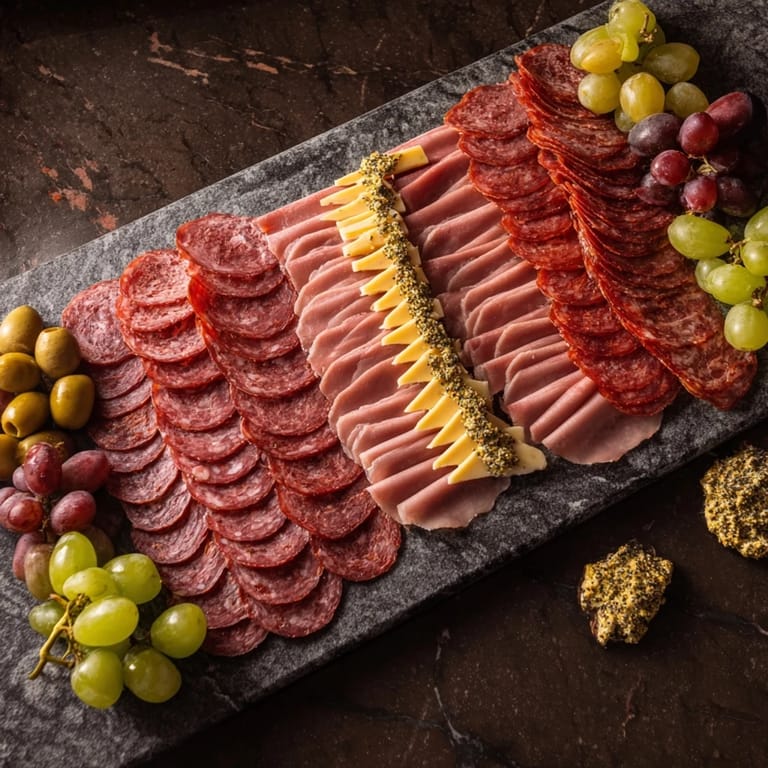
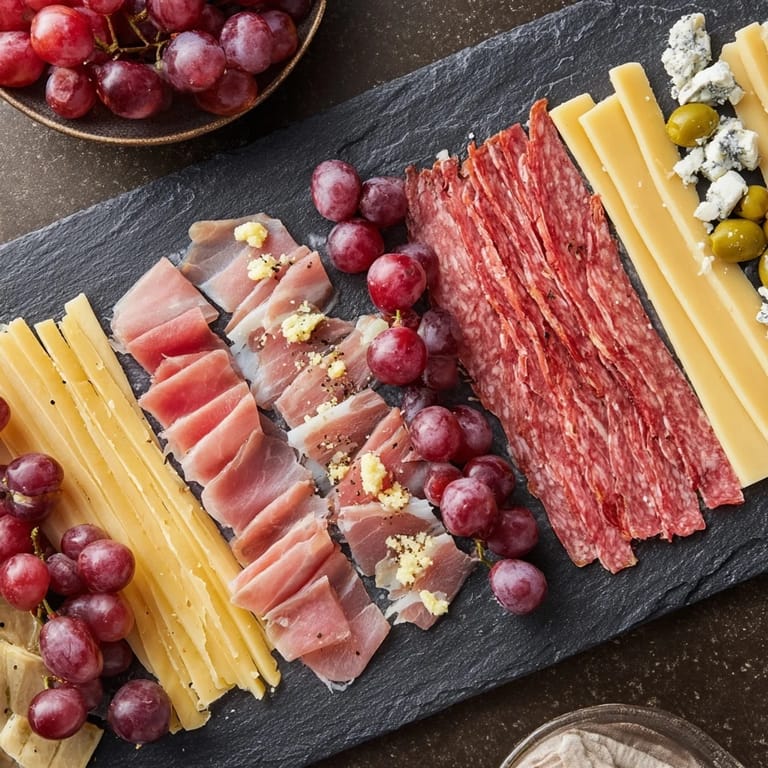
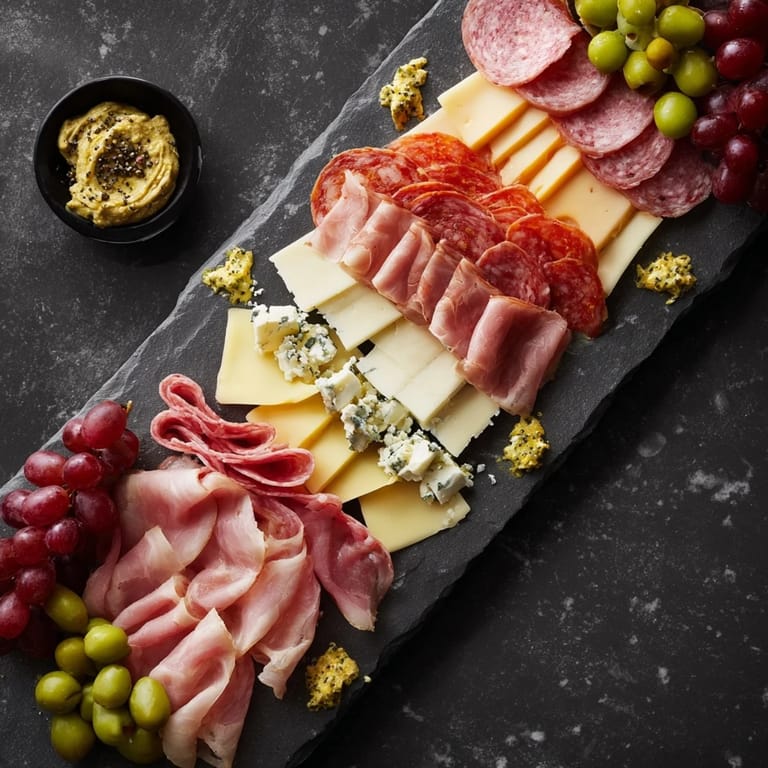
- Arrange each type of meat in its own parallel line, overlapping them slightly so they look both organized and generous. The prosciutto should be delicate, the soppressata bold, each one distinct enough that you can see where one ends and another begins.
- Mirror with Cheese:
- Opposite the meats, arrange your cheeses the same way—straight lines, grouped by type, sliced consistently. The repetition of the pattern is what makes this feel designed rather than random.
- Fill the Spaces:
- Cluster grapes, cornichons, and olives between the meats and cheeses like you're adding punctuation to a sentence. They're not filler; they're the rhythm.
- Add the Mustard:
- Place small dollops in a line or in a corner dish. This is your accent color, so let it be seen.
- Finish with Pepper:
- A light scatter of freshly cracked black pepper over the meats and cheeses brings everything together and fills the air with aroma the moment it hits the slate.
 Save
Save Someone once told me that food doesn't have to choose between being beautiful and being delicious, and that stuck with me. Watching people approach this board, hesitating because it looked so considered, then throwing that hesitation away and eating with their hands—that's when I realized the industrial aesthetic was just an excuse. The real point was permission to slow down and pay attention.
The Art of the Cold Platter
There's a reason charcuterie boards live on in every Pinterest feed and dinner party: they're honest. Nothing is cooked, nothing is hidden, everything is exactly what it appears to be. What makes this version different is the commitment to the lines, to the geometry. It's not about being rigid; it's about being deliberate. When you arrange things this way, you're saying something about how you approach food, and people respond to that intention.
Pairing and Serving
The stone itself becomes part of the story you're telling. An unpolished slate board is rough and weathered, like something that's been through something, and that rawness contrasts beautifully with the refined meats and cheeses. Serve this with a crisp white wine if you want to keep things elegant, or go bold with a Cabernet Sauvignon if your crowd leans that way. The wine becomes part of the conversation, not an afterthought.
Making It Your Own
The framework here is strong enough to hold whatever you want to put on it. If someone at your table is vegetarian, skip the meats entirely and line the board with marinated artichokes, roasted nuts, and fresh herbs. The geometry works just as well. The point isn't the specific ingredients; it's the decision to arrange them with intention and then let people come to them however they want.
- Chill the slate in the freezer before plating to keep everything cooler for longer.
- Arrange components no more than thirty minutes before serving so nothing starts to dry out or soften.
- Let the black pepper settle onto the board just before guests arrive, so they get that fresh-ground aroma as their first impression.
 Save
Save This is a platter for people who want to linger, who want to make choices, who want their food to feel like an experience rather than just fuel. It's generous without being fussy, bold without being loud.
Recipe FAQs
- → What types of meats are best for this platter?
Cold smoked prosciutto, soppressata, coppa, and mortadella provide distinct flavors and textures, making them ideal choices for a balanced cold meat selection.
- → How should the cheeses be prepared for serving?
Cheeses like aged cheddar, Manchego, Gruyère, and blue cheese should be sliced or crumbled evenly to create neat lines that contrast the meat arrangement.
- → What accompaniments complement the meats and cheeses?
Seedless red grapes, cornichons, mixed olives, and whole grain mustard offer refreshing and tangy contrasts that enhance the platter's flavor profile.
- → Can this platter be made vegetarian?
Yes, simply omit the meats and add marinated artichoke hearts and roasted nuts to maintain both visual appeal and flavor complexity.
- → How can food safety be ensured when serving cold items on a stone slate?
Chilling the slate before arranging ingredients helps keep everything cool longer, preserving freshness and safety for guests.