 Save
Save One afternoon, I was scrolling through my phone between meetings and landed on a video of someone arranging vegetables and cheese on a wooden board with the kind of casual confidence that made it look effortless. I'd always thought of charcuterie boards as something you needed a special occasion for, but this was different—no cured meats, no pretense, just colorful vegetables and good cheese arranged so it practically begged you to pick something up. I made one that weekend on a whim, and suddenly I understood why this had become the snack everyone was talking about.
I brought one to a friend's house for a casual lunch gathering, and I watched people gravitate toward it like it was somehow more interesting than the actual meal we were planning to eat. Someone kept coming back for snap peas dipped in ranch, another person only wanted the cheese and nuts, and my friend's kid discovered he actually likes hummus this way. That's when I realized the magic wasn't about any single ingredient—it was about giving people options and letting them build exactly what they wanted.
Ingredients
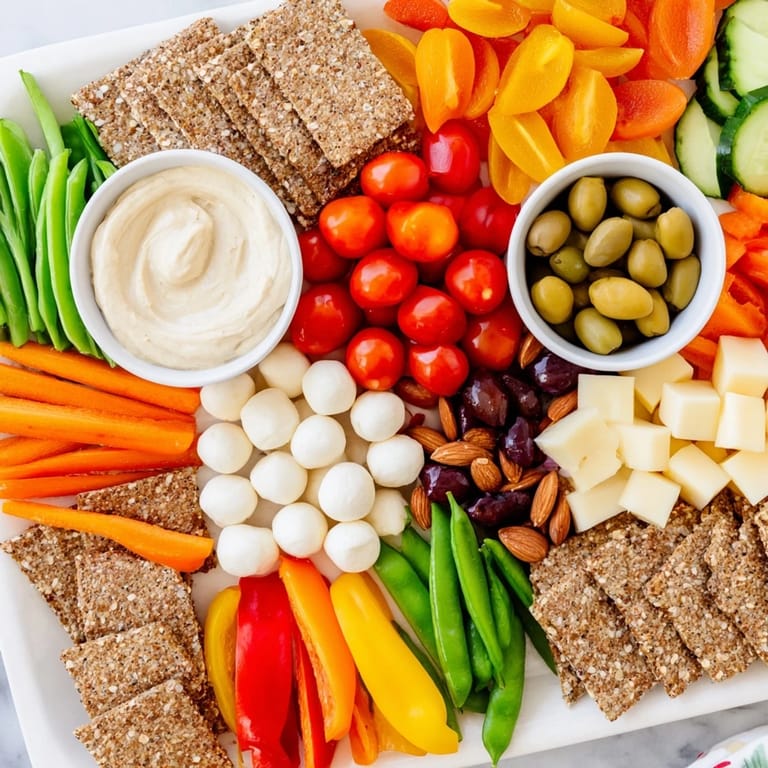
- Baby carrots: Sweet and crisp, they're easier to eat than chunks and look cheerful on the board.
- Cucumber slices: Cool and refreshing, these are your hydration heroes and they take minutes to prepare.
- Cherry tomatoes: Pick smaller ones so they don't roll around or get squished under crackers.
- Bell pepper strips (mixed colors): These add brightness and sweetness—go for red, yellow, and orange if you want maximum visual appeal.
- Sugar snap peas: People always eat these first because they're satisfyingly crunchy and naturally sweet.
- Hummus: A creamy anchor for the vegetables, pick a flavor that matches your mood or whatever's in your fridge.
- Ranch dressing or Greek yogurt dip: Ranch tastes like comfort, but Greek yogurt mixed with herbs is lighter if that's what you're after.
- Cheddar cheese, cubed: Familiar and sharp enough to taste like something, not just filler.
- Mozzarella balls (bocconcini): Mild and slightly chewy, they're fun to pop into your mouth and look delicate on the board.
- Gouda or Swiss cheese, sliced: These bring depth and pair beautifully with crackers and nuts.
- Whole grain crackers: They hold up to dips without falling apart and taste like actual food, not air.
- Roasted nuts: Toast them yourself if you can—almonds, cashews, or walnuts all work, and toasting brings out their flavor.
- Olives: These add a briny, sophisticated note that makes the whole thing feel less like a kids' snack and more like something grown-up.
- Dried fruit: Apricots, cranberries, or figs create unexpected sweet moments between salty and savory bites.
Tired of Takeout? 🥡
Get 10 meals you can make faster than delivery arrives. Seriously.
One email. No spam. Unsubscribe anytime.
Instructions
- Prep your vegetables with intention:
- Wash everything thoroughly and pat it completely dry—wet vegetables will make your board look sad and cause crackers to get soggy if they sit too long. Slice your cucumbers and peppers while your board is still empty so you have a clear space to work.
- Start with the vegetables as your foundation:
- Arrange them in loose clusters by type rather than scattering them randomly—this makes the board look organized and helps people find what they're looking for. Think of them as anchors that hold the rest of the board together.
- Nestle the dips into prime real estate:
- Place small bowls of hummus and dip where they're visible but not hogging space, maybe slightly off-center so there's room to arrange around them. These are destinations, not obstacles.
- Add the cheese in confident clusters:
- Group your three different cheeses together but keep each variety separate so people can choose rather than accidentally grabbing something unexpected. Cubes and balls look playful next to sliced cheese.
- Fill every gap thoughtfully:
- Use crackers, nuts, olives, and dried fruit to fill spaces while creating visual rhythm—scatter them so no area feels too empty or too crowded. Step back and look at it before you call it done.
- Keep it fresh until serving:
- Serve immediately if people are standing around waiting, or cover loosely with plastic wrap and refrigerate until you're ready. The vegetables stay crispest in the first couple of hours, so don't make it too far ahead.
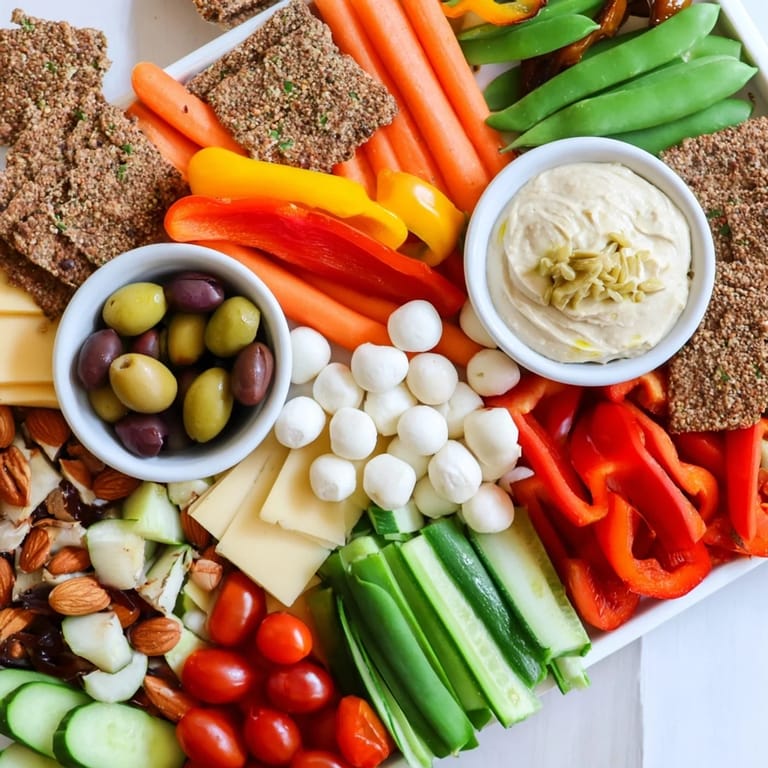 Save
Save My favorite part of making these boards is the moment right before someone digs in, when it's still perfectly arranged and full of possibility. There's something about the simplicity of it that makes people relax—no complicated recipes, no waiting around, just good things to eat when you feel like it.
Building Your Perfect Board
The beauty of this snack board is that it's completely customizable without losing its charm. Think about what you actually like to eat, not what you think should be on a fancy board. If you prefer spicy over mild, load up on jalapeños and sriracha dip. If you're nuts-averse, skip them entirely and add roasted chickpeas instead. The only real rule is that everything should look fresh and be arranged so you want to pick something up immediately.
Timing and Storage Smarts
Fifteen minutes of prep time is genuinely realistic—you're not cooking anything, just washing and slicing. The magic is that you can assemble this right before people arrive, or make it a few hours ahead and cover it loosely. Just know that vegetables stay crispest in the first two to three hours, so don't prep it the night before unless you want to refresh everything the morning of. The cheese and crackers are fine for longer, so if you're preparing for a longer event, you can assemble the main board and keep the vegetables separately, then add them as the event goes on.
Making It Your Own
Once you've made one of these, you'll start seeing ingredients everywhere as potential board additions. Hard-boiled eggs with a sprinkle of salt, thinly sliced deli turkey for people who want more protein, marinated artichoke hearts for tang, roasted chickpeas for crunch, or even a small cheese grater so people can shave fresh cheese over their selection—these little touches are what turn a snack into an experience. The vegetables are your canvas, and everything else is how you make it yours.
- Toast your nuts yourself if you have time, even just in a dry pan for a few minutes—it makes a real difference in flavor.
- Keep your dips cold by placing their bowls on ice or chilling them ahead of time so they stay fresh and appealing.
- Odd numbers of ingredients in each cluster look more natural and intentional than perfectly symmetrical arrangements.
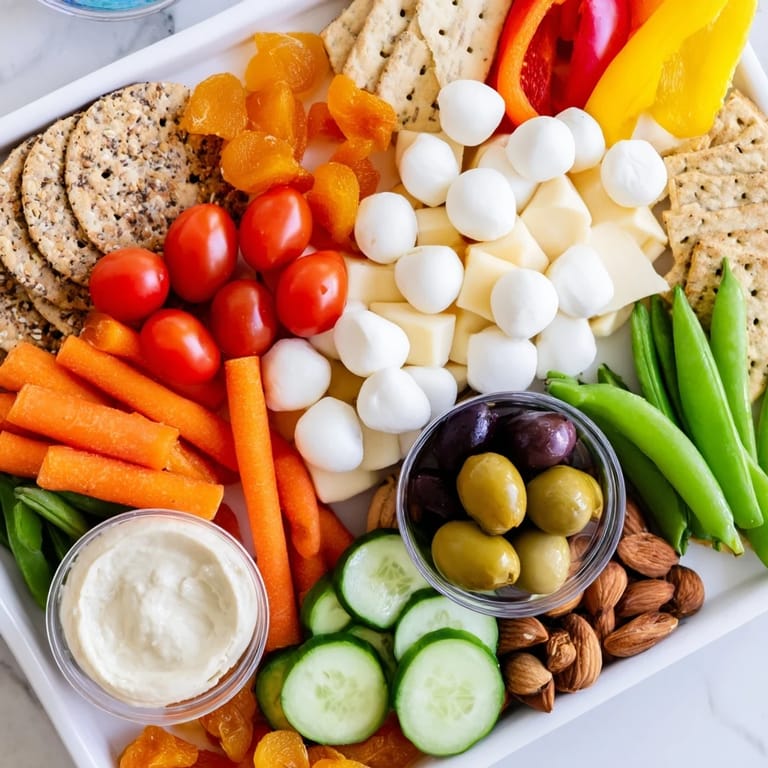 Save
Save There's something quietly satisfying about a snack board that sits between a meal and an afterthought but somehow feels like both and neither. It's become my go-to for anyone who drops by unexpectedly because it looks thoughtful without requiring any actual cooking.
Recipe FAQs
- → What vegetables work best for this board?
Fresh, crisp vegetables like baby carrots, cucumber slices, cherry tomatoes, bell pepper strips, and sugar snap peas provide a colorful and crunchy variety.
- → Which dips complement the flavors?
Hummus, ranch dressing, and Greek yogurt dips offer creamy textures and tangy notes that pair well with the fresh vegetables and cheeses.
- → Can I substitute the cheeses?
Yes, swap in dairy-free alternatives or other mild cheeses like gouda or Swiss to adjust flavor and accommodate dietary needs.
- → How should the board be assembled?
Arrange vegetables in sections, place dips in small bowls, cluster the cheeses, and fill gaps with crackers, nuts, olives, and dried fruits for an inviting presentation.
- → What are good beverage pairings?
Light white wine, iced tea, or sparkling water complement the fresh and savory flavors of the snack board nicely.
- → Is this suitable for gluten-free diets?
Use gluten-free crackers to ensure the board fits gluten-free preferences without sacrificing texture or taste.